
I’ll be honest—two years ago, when I first plugged an Intel Arc A770 into my rig, I felt a mix of excitement and slight anxiety. Coming from a long line of NVIDIA cards, jumping ship to a newcomer felt like a gamble. But man, looking back from 2026, that gamble has paid off in ways I never expected. If you’re shopping for a GPU right now, hear me out: Intel Arc is not just a “budget alternative.” It’s a legitimate contender that keeps getting better with age.
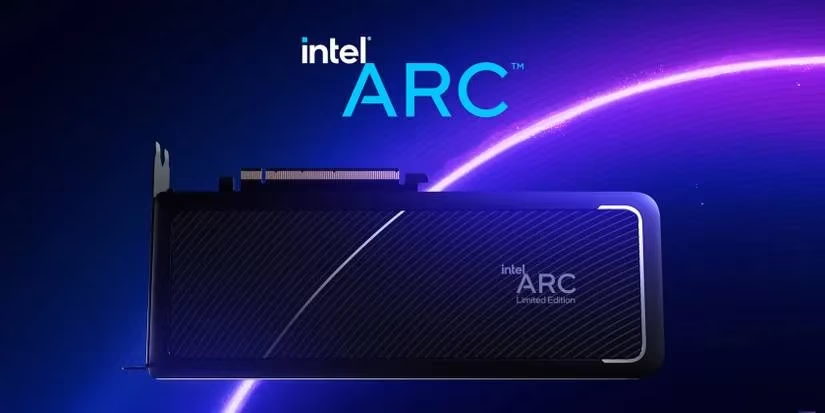
Let’s start with the elephant in the room: price. When Intel first launched the Arc series, the pitch was simple—deliver solid 1440p performance at a price that didn’t make your wallet cry. In 2026, that philosophy hasn't just survived; it’s become the backbone of Intel's GPU division. The original Arc A750 launched at $249, and I snagged mine for even less during a holiday sale. Now, with the second-gen Arc Battlemage cards on shelves, the pricing strategy remains aggressive. The newest B770 offers performance rivaling an RTX 4070 Ti, yet sits comfortably under $500. Meanwhile, Team Green’s latest mid-ranger has inched closer to $800. That price gap? It’s real, and it’s widening.
What really sealed the deal for me, though, wasn’t just the upfront cost. It was watching the card improve in my own machine, driver update after driver update. Remember how rough Intel’s ARC drivers were at launch? I experienced some of those early stutters myself in DirectX 11 titles. But in 2026, that’s ancient history. Intel has been on a relentless driver optimization spree. A single update in late 2024 boosted my A770’s performance in Cyberpunk 2077 by nearly 15% at 1440p with ray tracing enabled. It felt like getting a free hardware upgrade. This slow-burn improvement has become a running joke in the community: buy an Arc card today, and it’ll be faster next month. And honestly, it’s true.
Now, you might be thinking, “Sure, price and drivers are nice, but does an Arc GPU actually do the things my old card does?” The answer is a resounding yes, and then some. When I first got the A770, I was worried I’d miss DLSS or NVIDIA’s broadcast tools. Instead, I discovered Intel XeSS, which has matured into a fantastic upscaler. In games like Hogwarts Legacy or the newest Forza, the quality holds up beautifully, often blurring the line with DLSS 3. And yes, ray tracing works. Admittedly, it’s not quite at the level of a dedicated RTX 4090—but for a sub-$400 card (even today), having playable ray-traced reflections at 60+ fps is mind-blowing.
Other features have piled on. The Arc Control overlay is now slick and intuitive, giving me one-click access to performance monitoring, overclocking, and even AI-powered noise cancellation for streaming. Intel has also leaned heavily into creator workloads. I occasionally dabble in video editing with DaVinci Resolve, and the Arc’s AV1 hardware encoder makes rendering and exporting a breeze. In fact, many of my friends in content creation have switched to Arc cards purely for the AV1 encoding quality—something that used to be a niche perk and is now a mainstream differentiator.
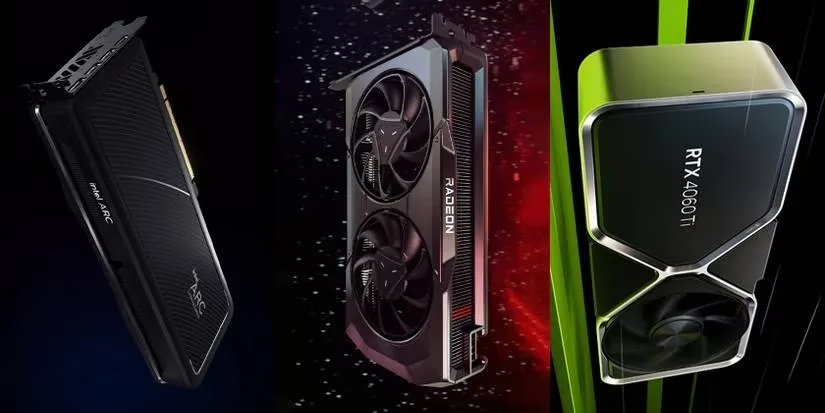
I can’t ignore the bigger picture, either. Intel’s entry into the GPU market has been the shake-up we all desperately needed. For years, I watched NVIDIA and AMD trade blows while prices climbed higher and higher. The 2023 era of $1,600 flagship GPUs felt unsustainable. Intel forced a reset. Today, both competitors have had to respond—NVIDIA with more aggressive pricing on its lower-tier cards and AMD doubling down on software features. Even if you never buy an Arc, if you’re a PC gamer in 2026, you’ve benefited from Intel’s presence. It’s brought some sanity back to the market.
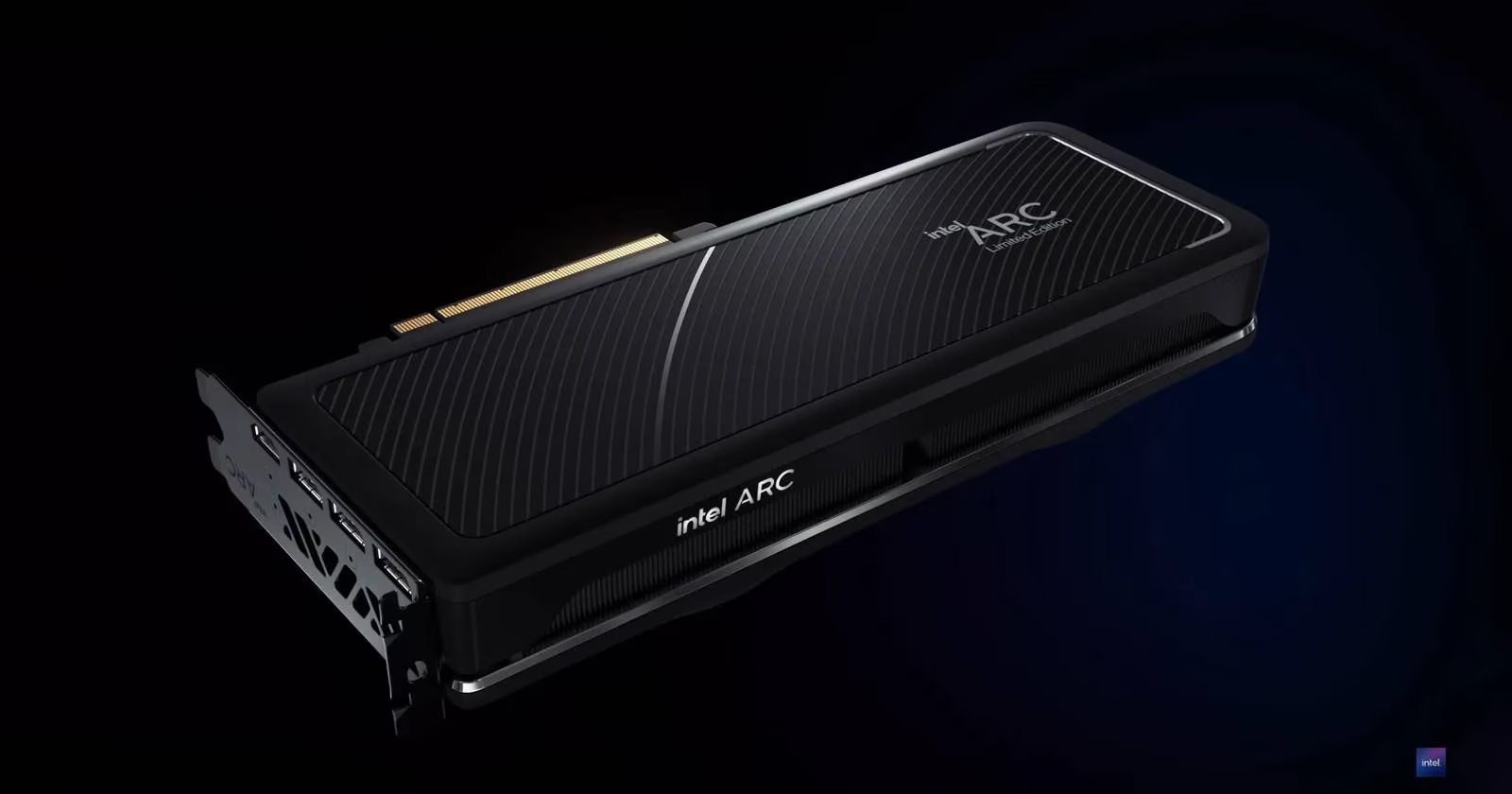
Let me give you a few practical highlights from my own experience over the past two years that might help you decide:
-
🎮 Game compatibility: Early fears about broken games are gone. The 2025 driver milestone brought “Day 0” game-ready drivers that cover every major AAA launch. I recently played Elder Scrolls VI on launch day with zero issues.
-
💡 Power efficiency: The Battlemage architecture has caught up fast. My B770 sips power compared to an equivalent NVIDIA card, saving me a few bucks on electricity each month.
-
🤖 AI workloads: With the explosion of local AI models, Intel’s XMX cores handle stable diffusion and small LLM inference surprisingly well. It’s not a CUDA replacement yet, but for hobbyists, it’s a treat.
Of course, no product is perfect. Resale value on Intel cards hasn’t held as strongly as NVIDIA’s, and if you’re chasing absolute 4K ultra performance, you’ll still look to the high end. But for the vast majority of gamers sitting at 1440p—which by 2026 is the new sweet spot—Arc delivers incredible value.
So, should you give Intel Arc GPUs a shot in 2026? I’d say if you’re building a new PC or upgrading from something from the RTX 20 or RX 5000 series, absolutely. You’re not just buying a video card; you’re buying into a platform that’s on a steep upward trajectory. My A770 is still going strong in a secondary PC, and my daily driver Battlemage B770 feels like it’s barely breaking a sweat. For the price of a mid-range card, I’m getting high-end features and a front-row seat to a genuine underdog story. That’s a buy recommendation I can get behind, no hesitation.