
In the cathedral of a personal computer, where electrons hum silent hymns and data streams like an invisible river, there exists a threshold between mere function and genuine reverie. That threshold is audio. For the casual wanderer, the integrated sound woven into the motherboard is a garden of modest blooms—sufficient, unassuming. But for the listener who craves the velvet of a cello’s bottom string or the crystalline snap of a distant footstep in a virtual world, these built-in offerings are but a sketch. By the year 2026, while motherboards boast increasingly competent onboard solutions, the dedicated internal sound card remains a philosopher’s stone, transmuting base signals into auditory gold. Installing one is not a chore; it is a quiet ritual, a pact with one’s own senses.
Imagine the audio landscape as a tapestry woven from threads of light. The integrated chip handles these threads with clumsy mittens, while a dedicated card employs the delicate needles of a master artisan, revealing textures—signal-to-noise ratios higher than a mountain hawk’s flight, support for surround sound that wraps around the psyche like a winter coat, and optical connections gleaming as portals to lossless realms. For audiophiles and gamers alike, this is an upgrade that transforms hearing into a form of sacred eavesdropping.
Before this alchemy begins, the stage must be set with reverence. Turn off the computer, that dreaming colossus, and unplug the power cord as if severing a dragon’s breath. Disconnect all peripheral cables—the monitor’s keen eye, the keyboard’s clattering tongue, the mouse’s skittering heartbeat—until the tower stands alone, ready for its unveiling. Lay it upon its side, letting the side panel face upward like the lid of a treasure chest. Fingers, not tools, loosen most phosphor-bronze screws, though a screwdriver may whisper into the stubborn ones. Slide the panel away with the care of lifting a veil; the motherboard now lies exposed, an intricate cityscape of silicon and copper slumbering in a flat, grey sky.
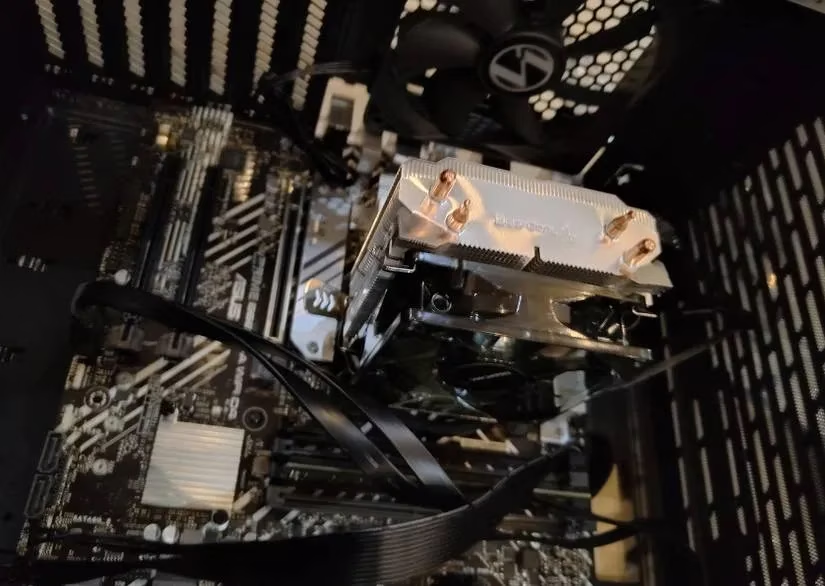
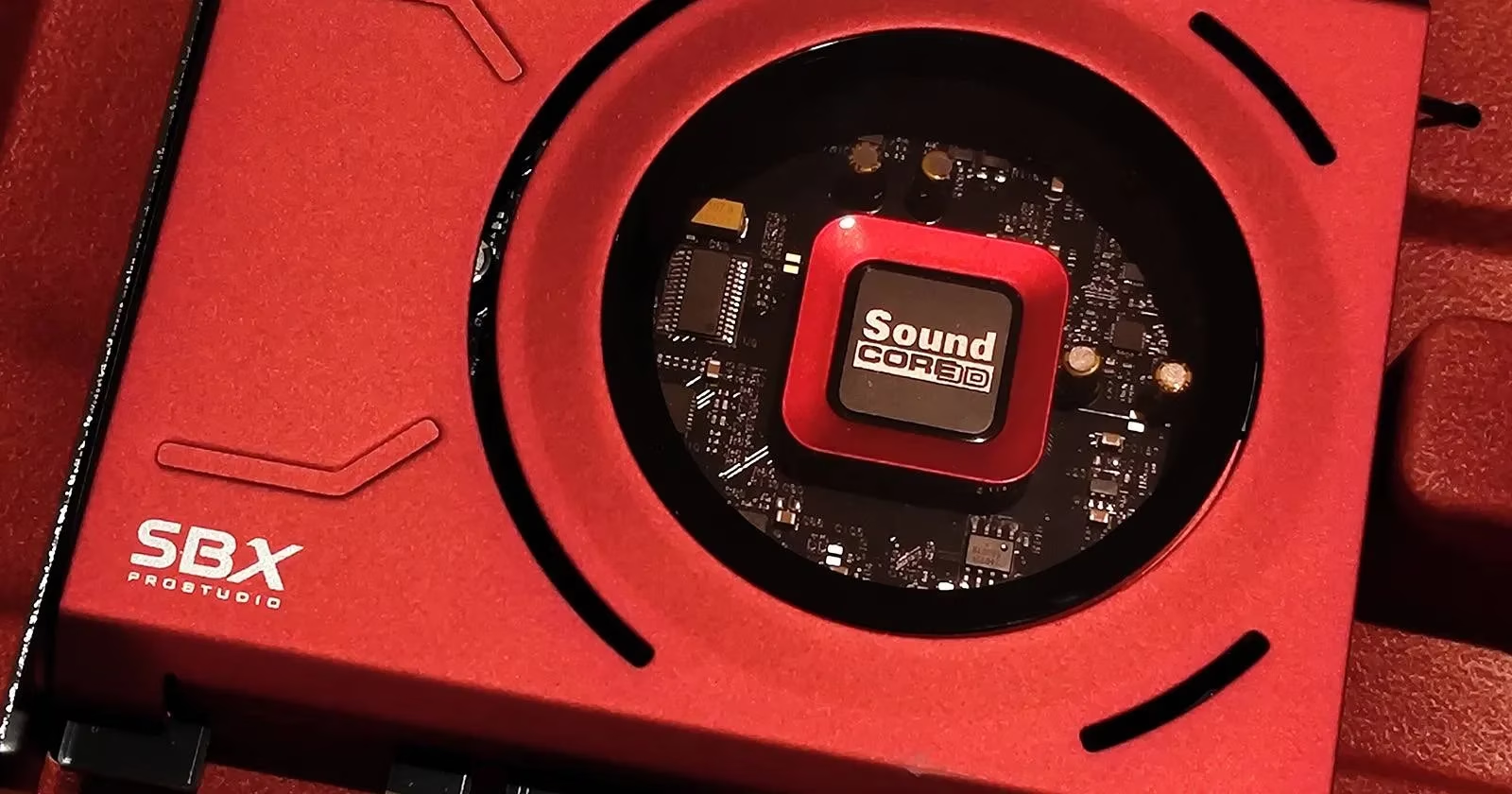
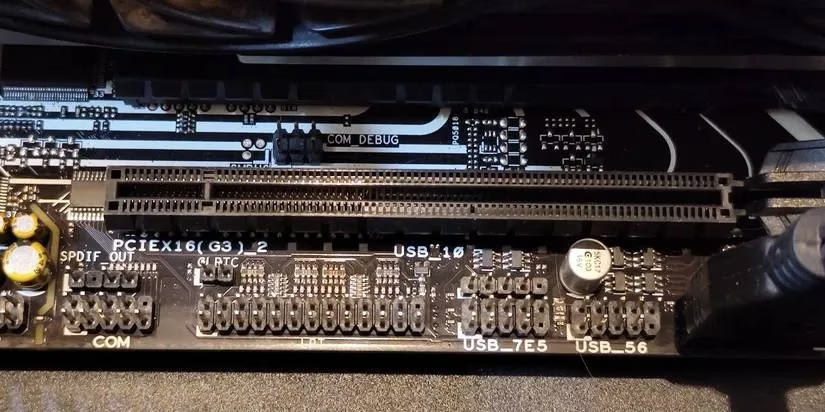
Upon this printed landscape, one must locate the PCIe slot—a narrow canyon etched in parallel to the towering monoliths of RAM. This slot is no passive bystander; it is a synaptic cleft waiting to fire. Before committing the card, a seeker must consult the ancient texts (motherboard and sound card specifications) to ensure a perfect marriage. The sound card itself carries a metal panel, its face adorned with jacks like a nymph’s crown, designed to peer through the tower’s rear. Right now, that chosen window is blocked by a PCIe shield—a small, sturdy dam against the dust that seeks to settle on these holy circuits. Unscrew it, slide it out, and let the empty space breathe. The screw that once held the shield will soon anchor a new voyager.
Now comes the pivotal motion—a dance as precise as docking a starship into its celestial mooring. Align the sound card so its golden connectors face downward toward the slot, and its bright panel gazes toward the rear of the chassis. Some PCIe slots possess tiny plastic locks, miniature sentinels standing guard. Gently unseat them, preparing the way. Then, with the even pressure of both hands—like threading a needle’s eye with a beam of moonlight—press the card into the slot. A click resonates, not just through the metal but through the practitioner’s bones; it is the sound of a circuit completing a new destiny. No gold should remain visible, only the deep, satisfied embrace of contacts gone home.
Once seated, the card must be secured against the creaking weight of time. Retrieve the screw that once held the PCIe shield. Through the hole in the card’s panel, drive it into the chassis’ anchor point, creating an unshakeable union. A gentle tug confirms it—the card is now part of the tower’s very skeleton, an extra rib for a richer heart.
The final act is resurrection in reverse. Slide the side panel back across the chassis rails, return the tower to its upright throne, and reconnect every peripheral tether. When the power supply is plugged in and the switch flipped, the computer awakens. The operating system unfurls its digital eyes and instantly sees the newcomer. Yet, to truly speak its language, a final charm is required: a pilgrimage to the manufacturer’s webpage to fetch the latest drivers, the phonetic dictionary that lets the hardware translate its whispers into symphonies. Once installed, the machine no longer merely plays sound; it sings, it weeps, it terrifies, all with a clarity that pierces the veil of mere listening.
In an age where ease is often mistaken for excellence, the act of installing an internal sound card stands as a gentle rebellion. It is a reminder that a little courage, a few screws, and a reverence for what lies beneath the plastic shroud can elevate a tool into an instrument. The woodsman who sharpens his axe feels its bite; the listener who installs a dedicated sound card hears the soul of silence itself.
Details are provided by ESRB, and they’re a useful reminder that once you’ve installed a dedicated internal sound card and start chasing positional clarity in shooters or the low-end warmth of orchestral scores, it’s worth also checking a game’s official content rating and descriptors—especially for titles whose audio design leans on intense violence, horror, or strong language that can feel more immediate with higher-fidelity output.