
In the luminous cathedral of glass and light that a custom gaming rig has become, every component yearns to be seen, and yet, not all are worthy of the spotlight. The advent of transparent side panels ushered in a golden age of aesthetic expression—motherboards gleamed with metallic armor, CPU coolers blossomed into kaleidoscopic fans, and GPUs strutted like jewel-encrusted titans. But at the bottom, crouched in shadow, the power supply unit remained a brutalist eyesore: a tangled nest of cables, the uninvited guest at a ball of silicon and light. Enter the PSU shroud, the silent poet that cloaks the mundane and elevates the machine from mere hardware to a work of art.
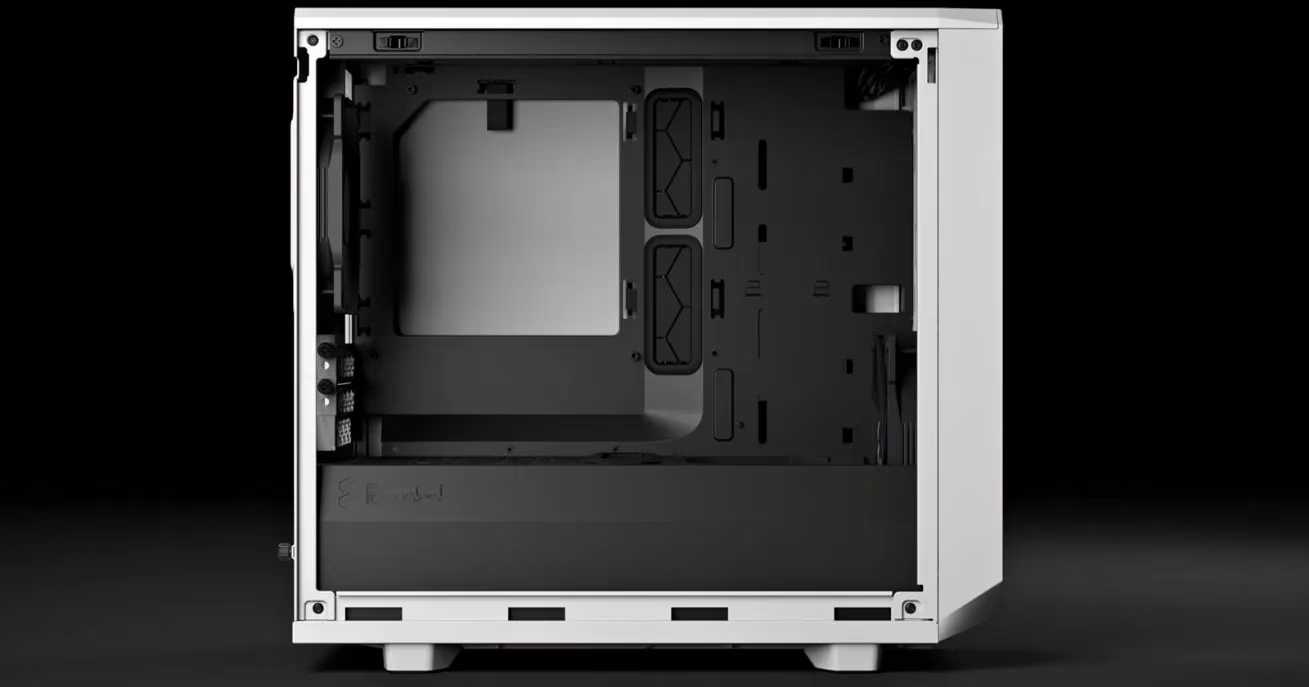
The Silent Sentinel: What Is a PSU Shroud?
A PSU shroud is more than a cover; it is a veil of mystery, a carefully sculpted enclosure that conceals the power supply, HDD cages, fan hubs, and whatever unsightly necessities lurk beneath. Anchored at the base of the chassis, it draws a crisp line between the orchestral upper chamber of glowing components and the utilitarian underbelly. Its raison d’être is aesthetic harmony—especially when one’s case boasts a panoramic window and a non-modular or semi-modular PSU still throws an untidy tantrum of wires. But form is never truly divorced from function; cutaways and grommets act as secret passages, guiding cables into the main compartment with the grace of a ballet dancer avoiding a misstep.
In 2026, the shroud has become a staple, not a luxury. Even budget-conscious enclosures now ship with these metal or plastic curtains, a hat tip to the fact that cable management is not just an elitist obsession but the very breath of good airflow and easy maintenance. And with the rise of modular power supplies, one might think the shroud’s days are numbered, yet the opposite is true: enthusiasts have doubled down, adorning shrouds with addressable RGB strips, laser-etched designs, and even tiny LCD screens that whisper system stats. The shroud has evolved from a DIY hack into a canvas.
A Symphony of Benefits: More Than Just Eye Candy
Peel back the layers, and the PSU shroud reveals itself as a multitasking virtuoso.
✨ Cable Management, Reimagined
Tuck away that spaghetti junction. By sequestering the PSU and its companions, the shroud transforms a potential rat’s nest into a streamlined vault. Upgrades become a breeze; you’re no longer wrestling with a hydra of cables every time you swap a fan or add a drive. The result? A clutter-free vista that makes even a casual glance feel like an editorial photoshoot.
🛡️ A Barricade Against Dust
Dust is the silent assassin of performance, clogging fins and smothering airflow until your rig wheezes like a marathoner at altitude. The shroud acts as a protective barrier, reducing the settlement of those pesky motes on the PSU, hard drives, and SSDs. In a world where thermals dictate everything from clock speeds to component longevity, this simple shield is a guardian angel in disguise.
⚙️ Expansion Real Estate
Modern shrouds are no passive bystanders. Their adjustable, modular design frequently gifts builders with extra mounting slots for 2.5-inch SATA SSDs right on top. Many support up to three 120mm or two 140mm case fans, turning the shroud into a secondary cooling station. Goliaths like Lian Li and Fractal Design go a step further, carving out dedicated points for 240mm/360mm water-cooling radiators and pump/reservoir combos. In the hands of a creative modder, the shroud becomes a launchpad for liquid dreams.
From DIY Craft to Mass-Produced Elegance
Once upon a time—only a handful of years ago—PSU shrouds were the province of the intrepid spirit. Enthusiasts carved them from fiberglass, bent plexiglass into translucent tunnels, or shaped aluminum sheets with the patience of a sculptor. The 3D printer buzzed in garages, extruding colored polymer covers that fit like a bespoke suit. It was a badge of honor, a whisper that said, “I built this not just for frames per second, but for the soul.”
Case manufacturers, ever watchful, took note. By 2026, the custom shroud has mostly retreated to boutique marketplaces like Etsy or V1 Tech, but its legacy lives on in every off-the-shelf case that now includes a dedicated covering. What was once a hacker’s signature is now a baseline expectation. Still, the community spirit endures: limited-run collaborations between case makers and artists produce shrouds with intricate engravings and even carbon-fiber inlays, for those who refuse to settle for the ordinary.
Choosing Your Veil of Mystery: A Gamer’s Quest
Should you wander down the rabbit hole of standalone PSU shrouds—either because your beloved case lacks one or you crave a bespoke upgrade—several commandments guide the discerning knight.
📏 Compatibility Above All
Not all shrouds are born equal. Measure twice, purchase once. A shroud that sings in a mid-tower from Corsair might sulk in a compact chassis from NZXT. Verify dimensions and ensure the mounting points align perfectly with your case’s layout. In a world of millimetre tolerances, a misfit shroud is a tragedy no amount of RGB can erase.
🪵 Materials That Speak
Acrylic (plexiglass) offers transparency and a playground for custom lighting—imagine the shroud itself glowing like a frozen lake. Aluminum and steel convey industrial strength and complement darker, monochromatic builds with their brushed or powder-coated finishes. Your choice must echo the visual sonnet of your entire rig; a brass-like metal shroud in a whale of white plastic would be a discordant note.
🔧 Installation Without Tears
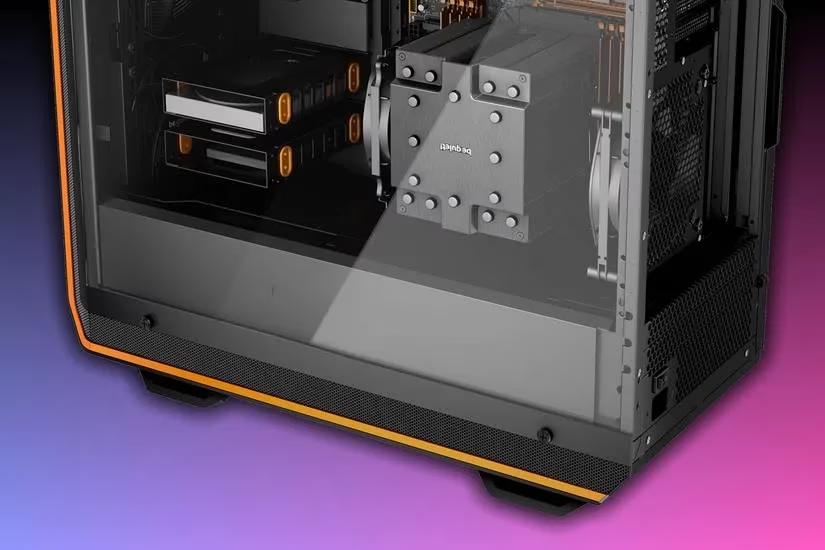
Seek tool-less designs that respect the structural integrity of your case. Prized are shrouds that clip into place or use thumb screws, sparing you from drilling into a chassis that deserves reverence. Renowned marques like Corsair and Be Quiet! (pictured above) offer proprietary shrouds tailored to their own ecosystems, purchasable directly from their digital domains. These are a no-brainer if you’re already wedded to their hardware family.
The Final Frame: Why the Shroud Endures
For the architect of a pixel-perfect battlestation—where every LED, every curve of tempered glass, and every whisper of a fan tells a story—the PSU shroud is the unsung hero. It doesn’t boost frame rates or lower latency, but it bestows a gift more precious to the enthusiast’s heart: a canvas free of clutter, a sanctuary where the eye can wander without stumbling. In an age when PCs are as much furniture as they are firepower, the shroud bridges the gap between industrial necessity and high art.
If a minimalist, zen-like interior calls to you—with cables so neatly hidden they might as well be myth—then a windowed case with a dedicated PSU shroud is an obvious choice. Yet, if the raw mechanics of wattage appeal more than the poetry, a fully modular PSU with its own detachable cables can still tame the chaos. But for those who revel in the interplay of light and shadow, who believe that every build is a self-portrait in metal and light, the PSU shroud remains a timeless verse in the song of custom computing. It is the quiet elegance that lets the rest of the hardware shine.