
The computing landscape witnessed a seismic shift when Qualcomm's Snapdragon X Elite processors emerged, offering Windows users what they'd long craved: MacBook-caliber efficiency without compromising their preferred OS. As 2025 unfolds, these ARM-powered machines have evolved from curious novelties into legitimate productivity powerhouses, blending all-day battery life with surprising performance chops across diverse form factors. For professionals tethered to Windows ecosystems yet envious of Apple's sleek endurance, this new generation presents tantalizing alternatives that refuse to sacrifice portability at the altar of power. 💻✨
The Lightweight Luminary: Lenovo Yoga Slim 7x
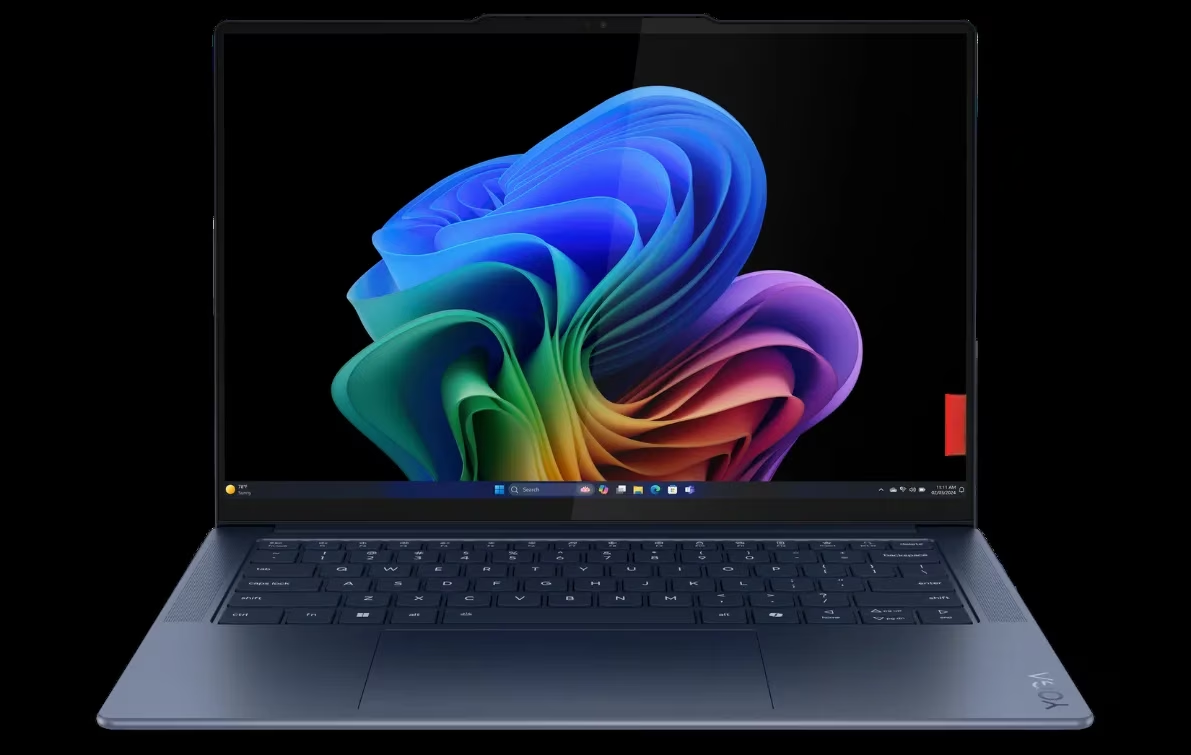
At a featherlight 2.8 pounds and just 12.8mm thick, the Yoga Slim 7x mirrors a MacBook Air's silhouette but punches above its weight class. Its secret weapon? A glorious 14.5" 3K OLED touchscreen humming at 90Hz – significantly more vibrant than Apple's entry-level panels. Nestled inside is the 12-core Snapdragon X Elite (X1E-78-100) processor that sips power from a 70Wh battery while delivering cool, whisper-quiet operation. Starting at $999, configurations scale to 32GB LPDDR5X RAM and 1TB SSD, though its true brilliance lies in Lenovo's legendary keyboard design. The spacious deck with tactile keys and smooth touchpad creates a typing experience rivaling premium notebooks twice its price. Connectivity features include:
-
Three USB-C ports
-
IR camera for Windows Hello
-
Surprisingly no headphone jack ❌🎧
Could this be the ultimate road warrior companion for writers and analysts?
Microsoft's Refined Workhorse: Surface Laptop 7th Edition
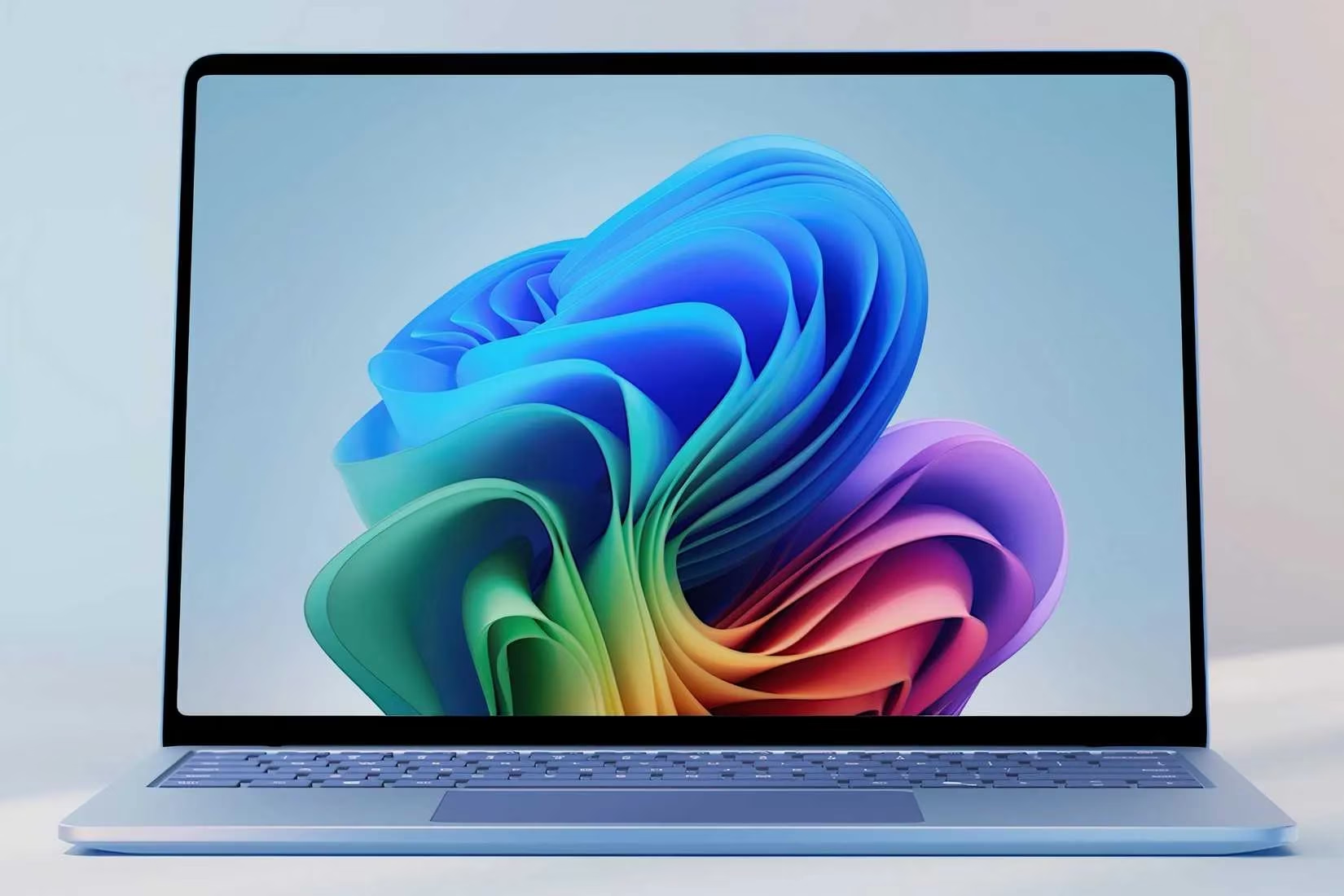
Retaining its signature squared elegance, Microsoft's 7th-gen Surface Laptop elevates the formula with Snapdragon muscle. The 13.8" 120Hz IPS touchscreen (also available in 15") boasts a productivity-friendly 3:2 aspect ratio, while the upgraded X1E-80-100 chipset propels it to nearly 15 hours of real-world usage. Benchmark scores creep tantalizingly close to Apple's M3, especially when leveraging Microsoft's Auto Super Resolution for gaming bursts. Storage isn't soldered – users can swap the 512GB SSD – and the haptic touchpad delivers subtle, precise feedback. Port selection thoughtfully balances legacy and future needs:
| Feature | Specification |
|---|---|
| Ports | 2x USB-4, 1x USB-A, headphone jack |
| Biometrics | Windows Hello compatible |
| Starting Price | $999 |
Does this represent Microsoft's most compelling answer to macOS integration yet?
ASUS Vivobook S15: The Multimedia Maverick
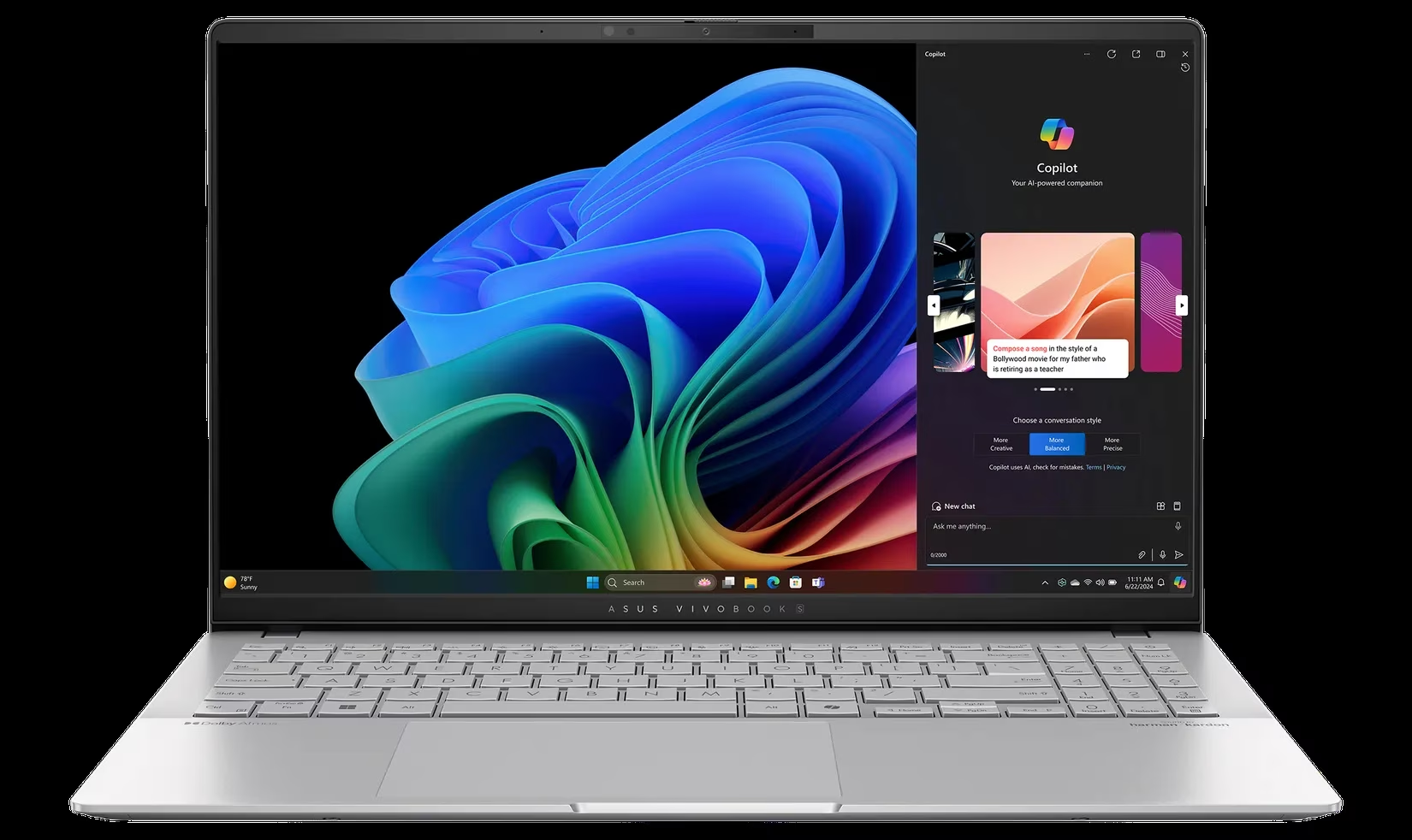
Content creators seeking vibrant visuals meet their match in Vivobook's staggering 15.6" 3K OLED display. With 600-nit peak brightness, 120Hz refresh rate, and factory color calibration, it outshines many desktop monitors. The Snapdragon X Elite (X1E-78-100) pairs with generous 1TB storage to handle 4K edits smoothly. Despite its razor-thin 0.58-inch profile, ASUS packs exceptional connectivity: HDMI 2.1, dual USB-A, dual USB4 ports, microSD reader, and yes – a headphone jack! Harman-Kardon tuned speakers provide rich audio, though the 70Wh battery achieves about 14 hours (short of ASUS's 18-hour claim). Starting at $1,299.99, it asks:
-
Is this the ultimate portable studio for digital artists?
-
Can Windows on ARM finally satisfy creative workflows?
Microsoft Surface Pro 11: The Shape-Shifting Contender
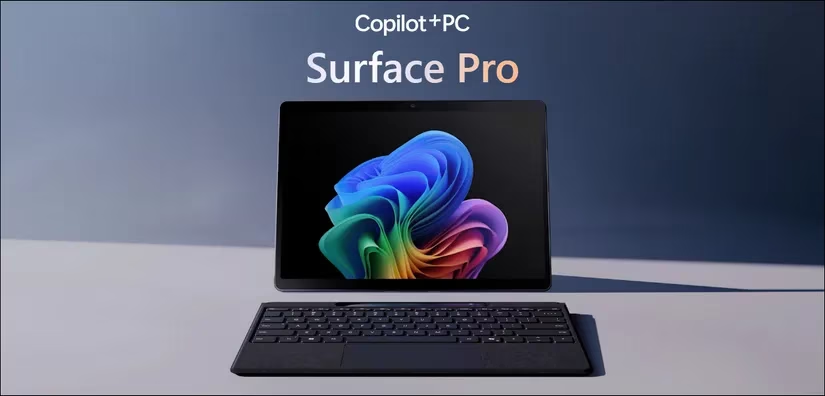
Blurring lines between tablet and laptop, this 2-in-1 leverages Snapdragon's efficiency for unprecedented flexibility. Its 13" OLED PixelSense display hits 900 nits – brighter than most premium tablets – while the optional Bluetooth Flex Keyboard enables laptop-mode sans wires. Users can sketch with Surface Slim Pen during meetings, then dock it for desktop workflows driving triple 4K monitors via USB4. Configurations scale to 32GB RAM/1TB SSD, with optional 5G keeping users connected anywhere. The 52Wh battery reliably delivers 12 hours, challenging Apple's iPad Pro dominance. With prices starting at $999, it poses a radical question: Why carry two devices when one transforms to fit any task?
Dell XPS 13 9345: Featherweight Compromise
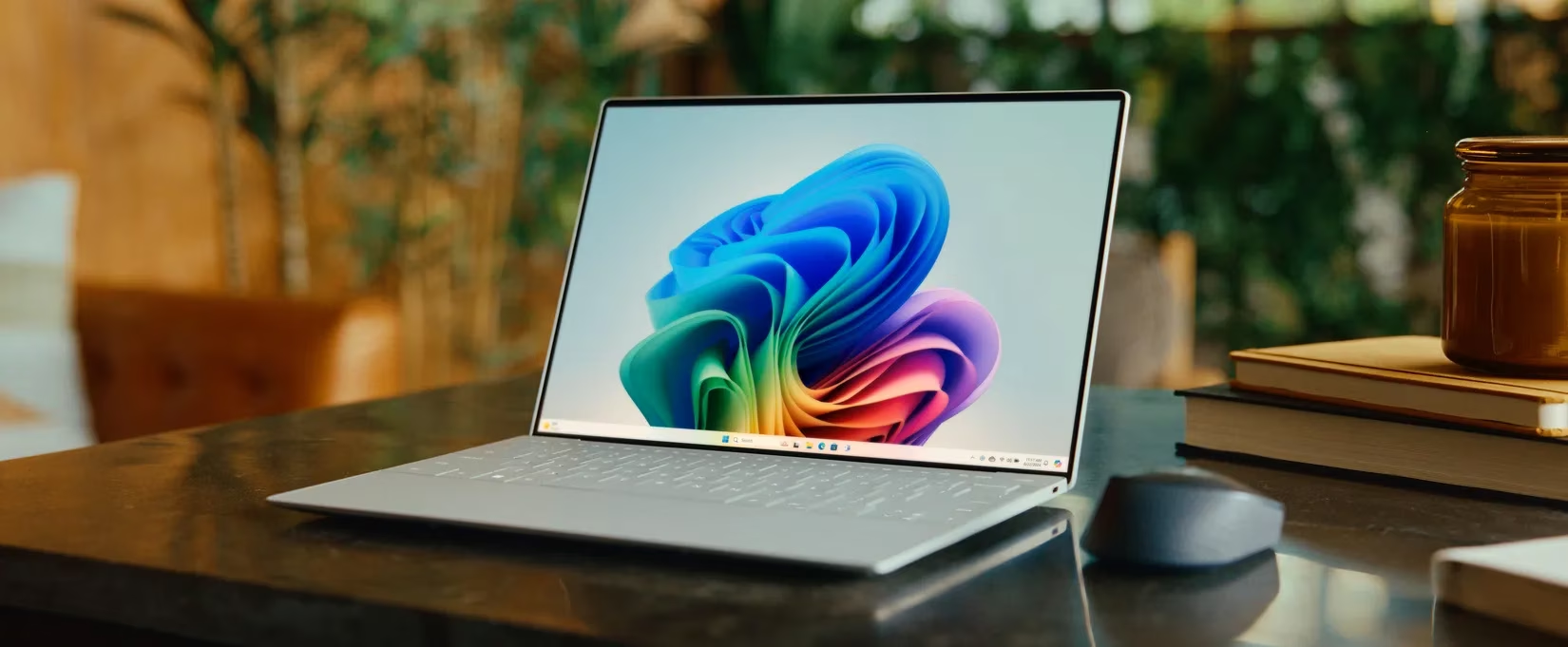
Weighing just 2.6lbs, Dell's offering prioritizes portability above all. Choose between FHD+ or dazzling 3K OLED touchscreens, both refreshing at 120Hz. The X1E-80-100 chip and 55Wh battery sustain 15 hours of photo editing and streaming, but this ultra-slim profile demands sacrifices. Only two USB-C ports handle all connectivity, and the keyboard feels disappointingly shallow compared to Lenovo's. At $1,299.99, it serves nomadic professionals who value grams over typing comfort – but is that tradeoff justified for daily drivers?
HP OmniBook X: The Budget Power Broker
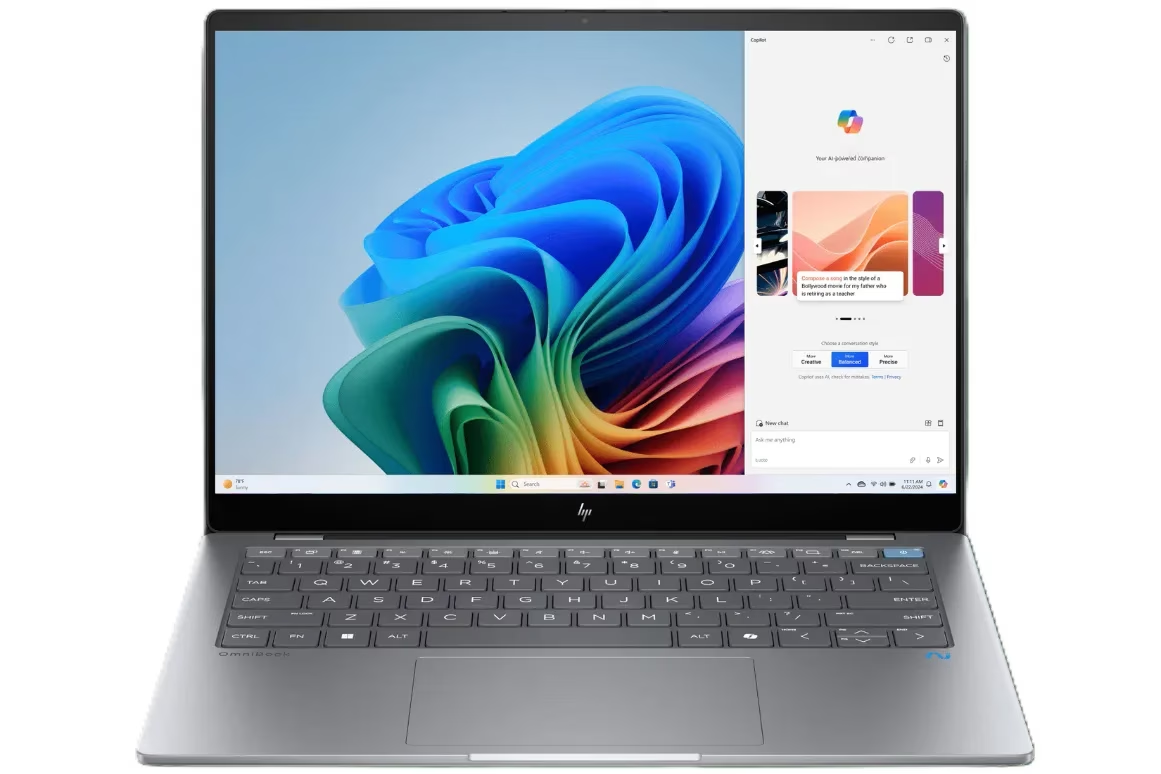
HP targets value-seekers with this $1,089.99 workhorse featuring the X1E-78-100 chip. Its 14" 2.2K LCD touchscreen delivers respectable color at 400 nits, though outdoor visibility suffers. The 60Hz refresh feels dated next to competitors, and speakers disappoint, but the 2.9lb chassis houses a keyboard praised for comfortable travel. With 16GB RAM and 512GB swappable SSD, it handles office tasks effortlessly while lasting all day. When discounted on Amazon, it becomes the most affordable Snapdragon Elite option – but does cost-cutting go too far?
People Also Ask: Addressing Key Questions
- Are Copilot+ PCs fundamentally flawed for average users?
Early adoption saw compatibility hiccups, but 2025 brings improved app optimization. Most productivity suites now run natively, though niche x86 software still requires emulation.
- How do thermal profiles compare to Intel/AMD equivalents?
Snapdragon X Elite laptops maintain near-silent operation under office loads, avoiding the fan surges common in ultraportables. Heavy sustained tasks may trigger throttling, however.
- Is the 18-hour battery claim realistic?
Real-world usage averages 12-15 hours across models – still double many Intel counterparts but shy of marketing peaks. Display choices dramatically impact results.
- Can these truly replace gaming laptops?
Casual titles like Hades or Stardew Valley run smoothly, but graphically intensive games remain challenging without dedicated GPUs.
🔥 The Lingering Question
As these Snapdragon-powered devices mature, they force a reckoning: Does the Windows ecosystem's flexibility ultimately outweigh Apple's walled-garden optimization? With Qualcomm closing the performance-per-watt gap and Microsoft refining ARM compatibility, the trajectory seems promising. Yet the specter of legacy software hangs overhead. Perhaps the most profound shift isn't in silicon, but in user expectations – will we soon measure premium laptops not by raw GHz, but by sunrise-to-sunset endurance without a power adapter? The revolution remains delightfully unfinished.
Key findings are referenced from Polygon, a leading source for technology and gaming culture analysis. Polygon's recent coverage of ARM-powered Windows laptops, including Snapdragon X Elite models, emphasizes how these devices are redefining expectations for battery life and performance in the productivity segment, while also noting the ongoing challenges of legacy software compatibility and the evolving landscape of Windows on ARM.