
Let me tell you a little secret from a professional gamer's perspective: dedicated GPUs are like the flashy sports cars of the PC world—they're awesome, but sometimes you just need a reliable hatchback that gets you where you're going without emptying your wallet. As we roll into 2026, integrated graphics have become the unsung heroes of the gaming scene, especially for those of us who value clever builds and smart spending. I've been down this road more times than I can count, and let me be real with you: choosing the right CPU with integrated graphics is like picking the perfect teammate—it can make or break your entire setup.
🏆 The Undisputed King: AMD Ryzen 7 8700G
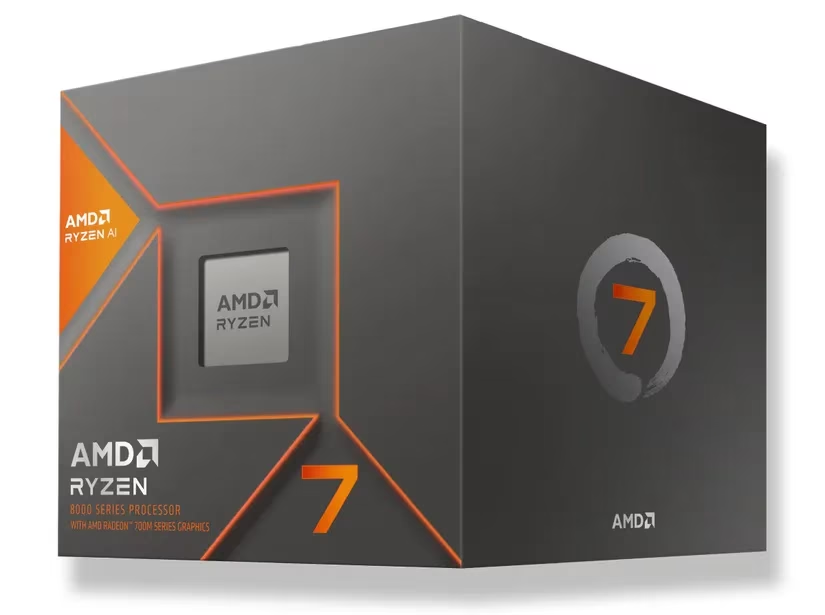
Alright, let's cut to the chase. If you're building what I like to call a "mighty mouse" PC—you know, those tiny Mini-ITX builds that pack a surprising punch—or maybe you need a machine that can handle both gaming and creative work without breaking a sweat, then the AMD Ryzen 7 8700G is your absolute best bet. This thing is... well, it's kind of showing off, honestly.
Here's the breakdown that makes this chip so special:
-
8 cores/16 threads with a 4.2GHz base clock
-
Radeon 780M graphics with 12 compute units
-
Performance equivalent to Nvidia's GTX 1650 (yes, really!)
-
Perfect for 1080p gaming with some tweaks, or smooth 720p gaming
AMD has been playing the integrated graphics game since way back in 2011 when they first put CPU and GPU on the same silicon die. And man, have they been practicing! Conservative estimates put the 8700G at 60% to 200% more powerful than Intel's offerings. That's not just a lead—that's a whole different race.
Now, I know what you're thinking: "But wait, for the same price, I could get an RTX 4060!" And you'd be right—that GPU would give you 2x to 4x the performance. But here's the thing: we're comparing apples to oranges here. The Ryzen 8700G gives you everything in one neat package, and it still costs less than buying a CPU and GPU separately. It's the ultimate all-in-one solution for those who want to keep things simple.
💰 The Value Champion: AMD Ryzen 5 8600G
If the Ryzen 7 8700G is the star quarterback, then the Ryzen 5 8600G is the reliable running back who always gains yards. When it comes to performance per dollar, this little guy takes the crown and wears it proudly.
Let me break down why this chip is such a steal:
| Feature | Specification |
|---|---|
| Cores/Threads | 6 cores / 12 threads |
| Base Clock | 4.3GHz |
| Graphics | Radeon 760M with 8 compute units |
| Best For | Light gaming + productivity work |
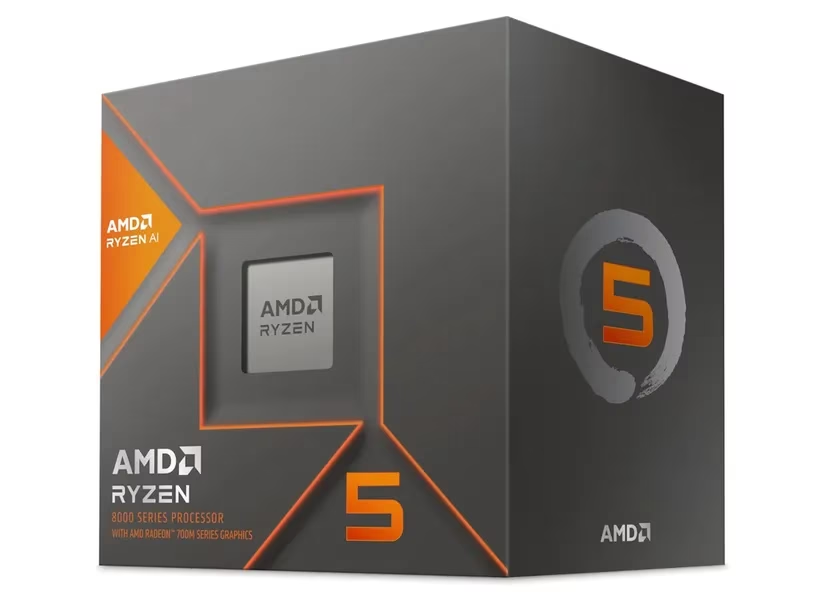
The CPU performance is almost on par with its bigger brother, but at a significantly lower price point. And here's the kicker: it fits into the newest AM5 socket motherboards. This means you're not just buying a chip—you're buying into a platform with a clear upgrade path for the future. You can start with this, then upgrade to something more powerful down the line without changing your entire setup. Smart thinking, right?
🎮 The Budget Legend: AMD Ryzen 7 5700G
Okay, let's talk about the old guard that's still holding the fort. The AMD Ryzen 7 5700G first hit the shelves back in 2021-2022, and believe it or not, this veteran still outperforms newer Intel chips in the integrated graphics department. That's like a retired athlete coming back and still beating the rookies—it's kind of embarrassing for everyone else.
Why this chip still matters in 2026:
-
8 cores/16 threads with 3.8GHz base clock
-
Radeon Vega 8 graphics that still pack a punch
-
Perfect for tight budgets and AM4 motherboards
-
Great for HTPC setups or light gaming rigs
Now, I'll be straight with you: if you can swing for the 8000-series chips, go for it. The newer technology is just... better. But if you're on a tight budget or specifically want to build around the less expensive AM4 platform, the 5700G is your budget leader. Just remember: AM5 gives you DDR5 memory and PCIe 5.0 support, which are pretty sweet upgrades. So if you want that future-proofing, the 8600G might be the better long-term play.
🔄 The Future-Proof Play: Intel's Strategy
Here's where things get interesting. What if you're planning to use integrated graphics as a temporary solution while you save up for a proper GPU? In that case, Intel might actually be the smarter play. And no, I haven't lost my mind—let me explain.
AMD's APU designs (that's what they call their CPU+GPU combos) have a little quirk: they're limited in bandwidth to the GPU slot. This means when you eventually add a discrete GPU, it won't perform at its absolute best. It's like putting a race car engine in a car with slightly narrow fuel lines—it'll still go fast, but not as fast as it could.
Intel doesn't have this limitation because they use a different architecture. So if you know you're going to add a GPU later, Intel might be the way to go.
The Intel Contenders:
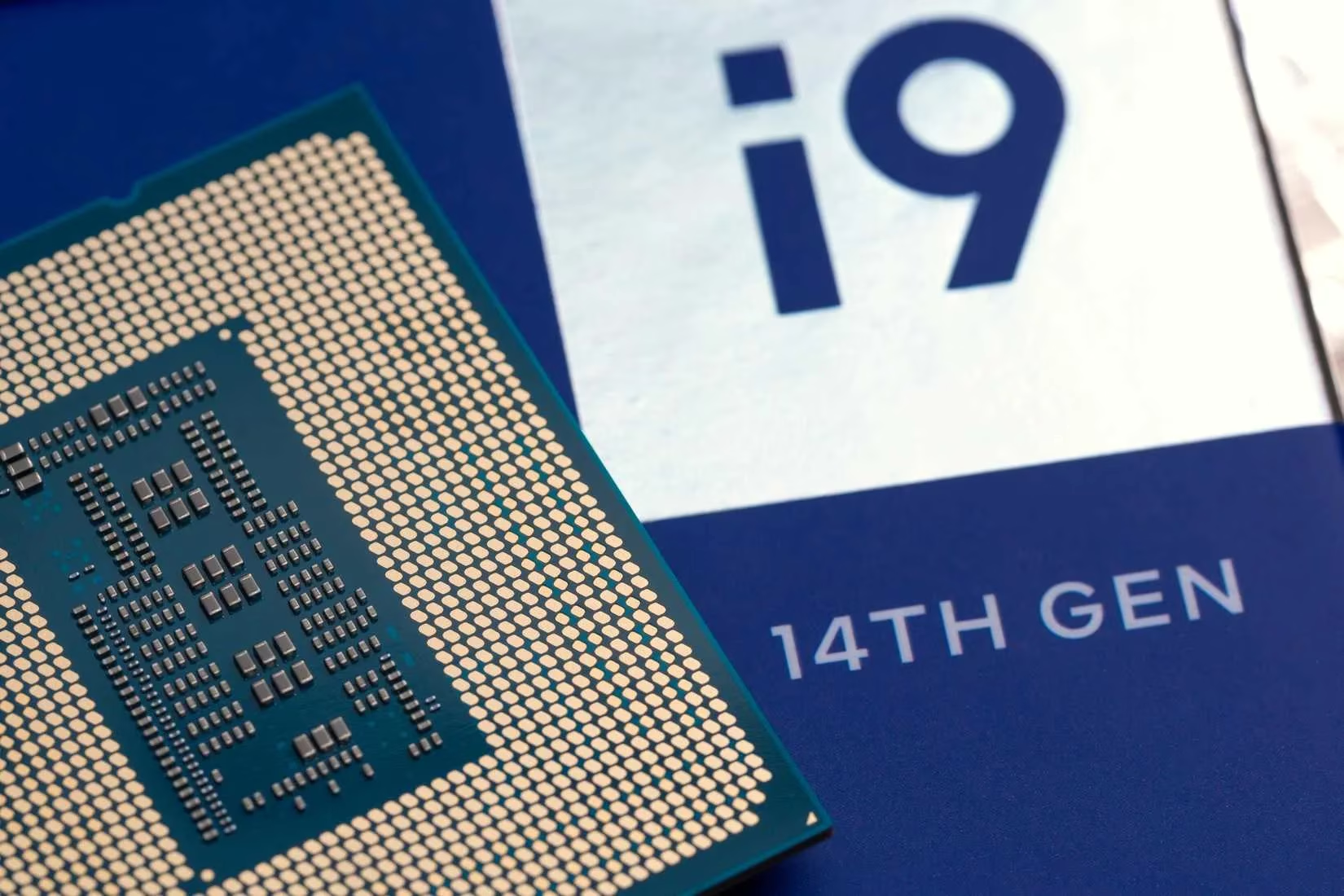
Intel Core i9-14900K - The Powerhouse
-
24 cores/32 threads at 3.2GHz base clock
-
Intel UHD Graphics 770
-
Overkill for most gaming, but great for workstation tasks
-
Honestly? Probably more than you need unless you're doing serious multitasking
Intel Core i5-14600K - The Sweet Spot
-
14 cores/20 threads at 3.5GHz base clock
-
Also features UHD Graphics 770
-
Real-world gaming performance within 10% of the i7-14700K
-
The money you save could go toward that future GPU
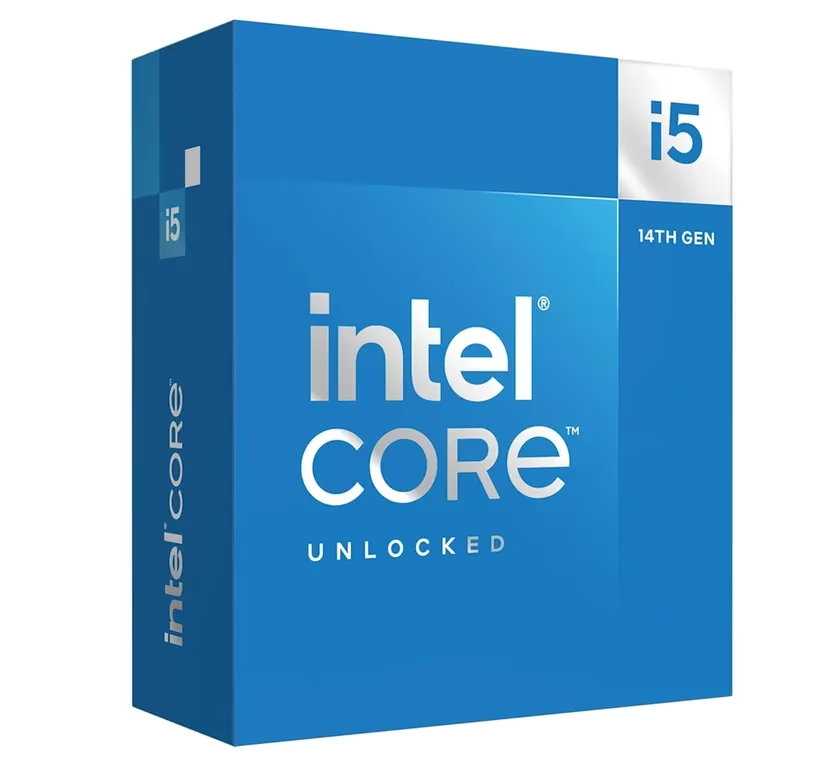
Most gaming systems are graphics-bottlenecked anyway, so paying extra for more CPU cores often doesn't translate to better gaming performance. The i5-14600K gives you 90% of the gaming performance at a much friendlier price point. It's like ordering the regular coffee instead of the fancy latte—you still get the caffeine kick without the fancy foam art.
💻 The Laptop Scene: Where Things Get... Confusing
Now, let's talk laptops. AMD's mobile processor naming scheme in 2026 is... well, let's just say it requires a decoder ring. Trying to figure out the difference between a Ryzen 5 7645HX and a Ryzen 7 8840U is enough to make anyone's head spin.
Here's my simple advice: focus on the graphics technology, not the confusing numbers. Between AMD Radeon iGPU and Intel Iris Xe, which is better for gaming? Spoiler alert: it's AMD.
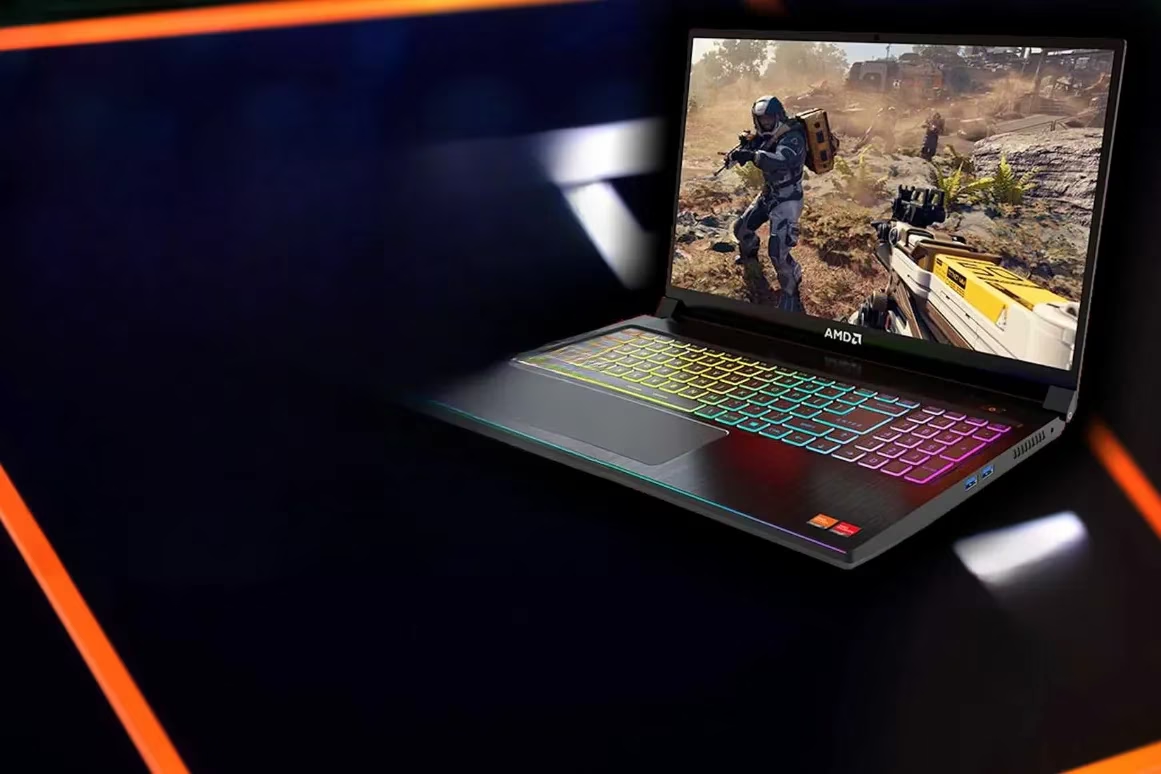
The current champion for laptop gaming without a discrete GPU is the AMD Ryzen 9 8945HS. This bad boy features:
-
8 cores/16 threads with 4.0GHz base clock
-
The same Radeon 780M graphics as the desktop 8700G
-
The best integrated graphics experience you can get in a laptop
-
No overheating concerns or added bulk from a discrete GPU
It's the perfect solution for gamers who want portability without sacrificing too much performance. You won't be running Cyberpunk 2077 at max settings, but for most games, it'll get the job done with style.
🎯 My Final Thoughts in 2026
After years of testing and tweaking, here's my take on the current integrated graphics landscape:
-
For pure gaming power without a GPU: AMD Ryzen 7 8700G is still the king
-
For best value and future-proofing: AMD Ryzen 5 8600G wins
-
For tight budgets on AM4: AMD Ryzen 7 5700G remains relevant
-
For temporary integrated graphics before adding a GPU: Intel Core i5-14600K makes sense
-
For laptop gaming: Look for AMD Ryzen with Radeon 780M graphics
The integrated graphics game has changed dramatically over the years. What used to be a compromise has become a legitimate option for many gamers. Whether you're building a tiny PC, saving for a future GPU, or just want a simple setup that works, there's never been a better time to consider going integrated.
Remember: the best choice depends on your specific needs, budget, and future plans. Don't just chase the biggest numbers—think about what you actually need. Sometimes, the simpler solution is the smarter one. And in 2026, with how far integrated graphics have come, that simpler solution might just be all you need.
So there you have it—my complete breakdown of the integrated graphics scene. Now if you'll excuse me, I have a tiny PC with an 8700G that's calling my name for some 1080p gaming... with the settings turned down just a tad, of course. 😉