
PC gamers love a good drama, and the graphics card market supplies it in industrial quantities. Flagship GPUs arrive like opera singers in sequined capes, belting out frame rates and demanding a standing ovation plus a new power supply. Entry-level cards shuffle in with a shrug and a coupon. In the middle stands the mid-range GPU: the gaming world's designated driver—sensible, quicker than it looks, and the only one at the party who remembers where the parking lot is. In 2026, that middle seat is still the smartest place to sit.
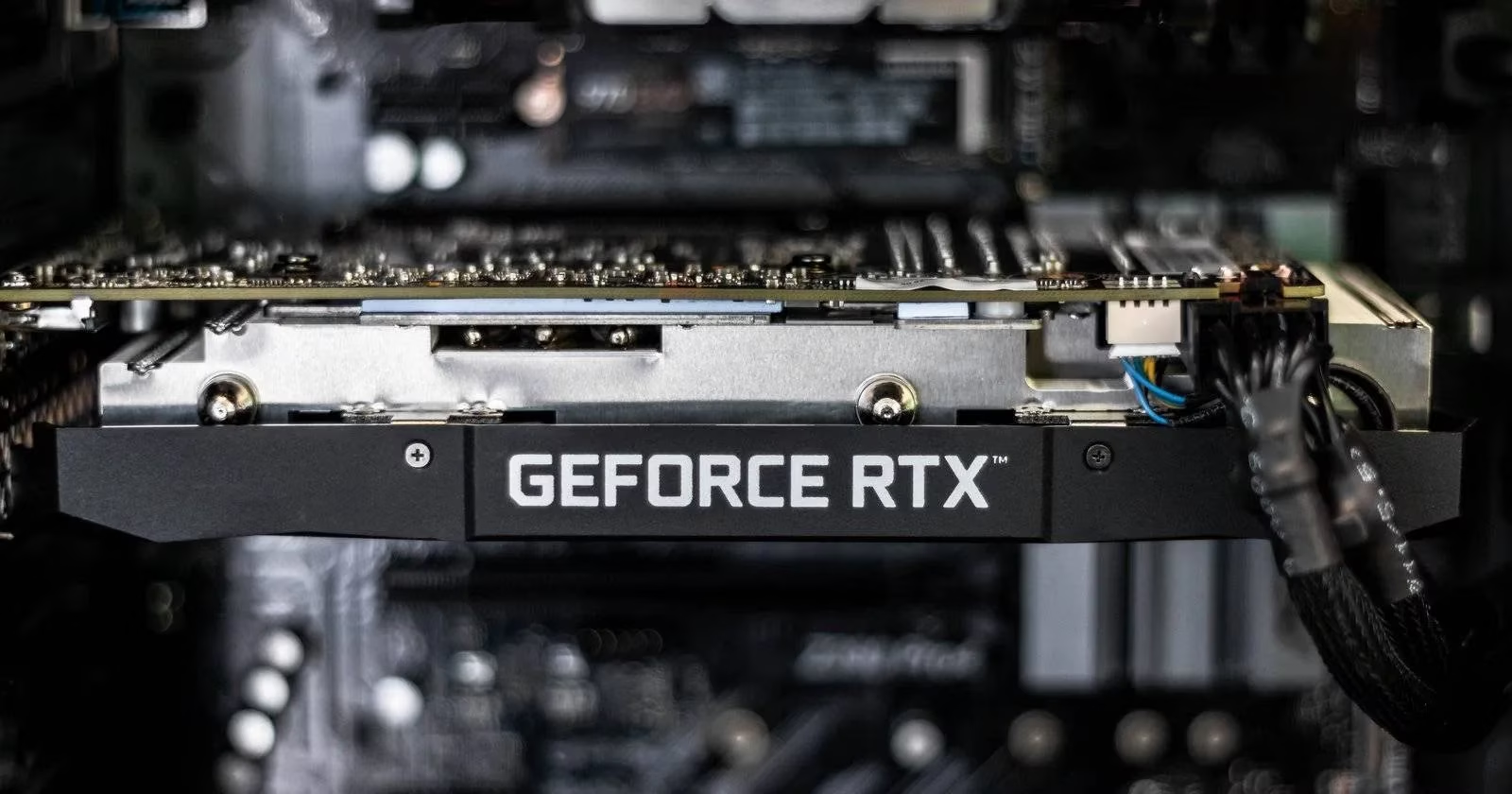
The Sweet Spot Has Not Moved, Even if the Names Have
Mid-range graphics cards occupy roughly the $250-$500 bracket, which remains the Goldilocks zone for budget-conscious gamers. They are not trying to render a cyberpunk cityscape at 8K while also making toast. They aim for the far more civilized target of High or Ultra settings at 1080p and 1440p, with ray tracing and upscaling tricks such as DLSS, FSR, and XeSS available when the scene deserves a little extra polish.
In 2026, the familiar names include Nvidia's GeForce RTX 5060-class cards, AMD's Radeon RX 9060 XT-class options, and Intel's Arc B580/B570-class challengers. Street prices do the cha-cha, and regional availability behaves like a cat at bath time, but the category's mission is unchanged: deliver a genuinely good gaming experience without asking the buyer to pawn a kidney.
Enthusiasts still compare CUDA cores and compute units the way sports fans compare midfielders. A mid-range chip has fewer of them. The RTX 3060 carried 3,584 CUDA cores while the RTX 3090 carried 10,496; the RX 6600 had 28 compute units while the RX 6900 XT had 80. Those numbers are useful clues, not prophecy. A mid-range GPU is a middleweight boxer who keeps beating heavyweight show-offs on points, because the judges care about price, efficiency, and whether the arena's lights stay on.
Why the Middle Makes Sense
Mid-range cards offer a better price-to-performance ratio than most enthusiast-grade GPUs over the long run. They also tend to match or slightly beat previous-generation flagships in raw performance. A few years ago, the RTX 3060 Ti outperformed the RTX 2080 Super by roughly 6-7% on average while costing $399 instead of $699. That is not a magic trick; it is generational progress wearing a sensible sweater.
| Benefit | Why it matters |
|---|---|
| 💰 Price-to-performance | The card spends less time mugging the wallet and more time playing games. |
| 🏁 Previous-flagship punch | Mid-range models often trade blows with older top-tier cards. |
| 🔌 Power efficiency | Typical mid-range TDP lands around 200W-220W, friendly to mid-tier PSUs. |
| ❄️ Lower heat | Less heat means less need for a cooling tower that doubles as furniture. |
| 📦 Compact designs | Many models fit standard ATX builds and even some mini-ITX cases. |
A mid-range graphics card is a commuter car with a turbocharger and a suspiciously sensible insurance premium. It will not win the quarter-mile against a flagship, but it gets to the gaming destination with money left for snacks.
The 2026 Buyer's Checklist
Choosing a mid-range GPU is less intimidating once the shopper stops treating every spec sheet like a sacred scroll. The practical checklist matters more than the marketing poetry.
-
🎯 Budget allocation: In a from-scratch gaming PC, the GPU deserves roughly 30-40% of the budget. For a $1,000 build, a $300-$400 card is a reasonable target.
-
🧰 Reference vs. AIB models: Reference or Founders Edition cards are compact and often cheaper. Third-party AIB models bring beefier cooling, stronger power delivery, and more overclocking headroom.
-
📏 Form factor: The case must have room for the card. A single-fan or dual-fan compact model can save a small-form-factor build from becoming a jigsaw puzzle with regret.
-
⚡ PSU requirements: A 550W-650W power supply is the usual comfort zone for mid-range cards. Check the exact model's recommendation rather than guessing.
-
🔌 Power connectors: Ensure the PSU has the necessary 6-pin and 8-pin PCIe cables. Adapter spaghetti is not a decorating style.
-
🧠 Memory capacity: 8GB is increasingly the bare minimum; 12GB or more is the safer 2026 target for texture-heavy games. The cut-down 8GB RTX 3060 was historically 15-20% slower than the 12GB version due to reduced bus width and bandwidth.
-
🚀 Memory bandwidth: Capacity is not the whole story. Bandwidth affects computational performance, especially when textures and resolutions grow ambitious.
-
✨ Ray tracing and upscaling: Raster-first buyers and RT-first buyers need different shopping lists. In 2026, upscaling is a normal tool, not a shameful secret.
The Fine Print: Where Mid-Range Cards Ask for Manners
Mid-range GPUs are not magic. They will not make a 4K ultra-ray-traced showcase run like a spreadsheet. They prefer sensible settings, clever upscaling, and a case with actual airflow. Older sub-$300 favorites such as the RX 6700 XT, Arc A770, and RTX 3060 proved that this segment can deliver excellent value; their 2026 successors carry the torch with newer architectures and better efficiency.
The buyer who expects flagship performance for mid-range money will be disappointed. The buyer who expects a polished 1440p experience, modest power draw, and enough savings for a decent monitor will feel like a genius. That is the bargain.
Verdict
For most budget-minded gamers, a mid-range graphics card is not a compromise; it is a negotiated peace treaty between desire and rent. It offers the best of both worlds: the performance of a former flagship at a fraction of the cost, plus the manners to fit inside a normal case and run on a normal power supply. In 2026, the Goldilocks GPU remains the sensible hero of the build—less opera, more actual gaming. 🎮