
As I gaze at the sleek, impossibly thin chassis of my laptop in 2026, I feel a quiet revolution humming within. It’s not just a machine; it’s a testament to a design philosophy where every micron is contested, and performance is woven directly into the fabric of the motherboard. This is the era of embedded memory, a future we were gently, then firmly, nudged toward. The sacrifice of upgradability is palpable, a concession to the altar of form and function. Yet, in its place, I have found a symphony of speed and efficiency that has redefined my relationship with portable power. The race for the perfect thin-and-light performance machine has culminated here, in the silent, soldered embrace of LPDDR5X.
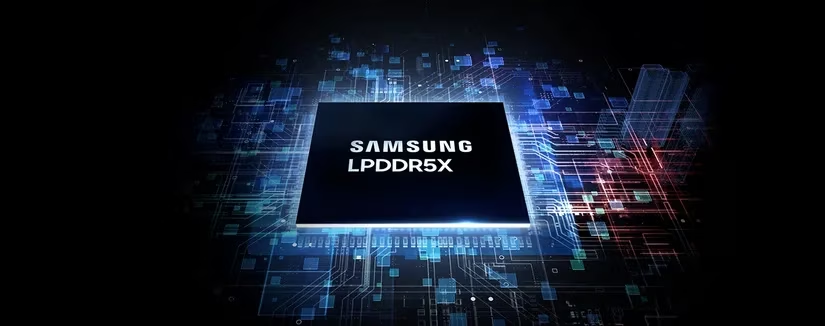
My memory, you see, is no longer a module I can hold. It is the laptop's nervous system, etched permanently onto its spine. Born from a standard crafted for mobile phones and featherweight laptops, LPDDR5X was designed for a world that demands velocity without bulk. When I first encountered it, the trade-off seemed stark: permanence for performance. I had to choose my memory capacity at the moment of purchase, a final, binding decision. There would be no future tinkering, no easy upgrade path. Yet, this embedded nature is precisely what unlocks its magic. It is faster than the RAM of old, a leap that allows me to do more with less, all while whispering to my battery to last just a little longer.
The numbers, while technical, sing a song of progress. Compared to its predecessor, LPDDR5X brought a profound shift:
-
A surge in speed, from 6.5Gbps to a potential 10.4Gbps, all on the same frugal core voltage.
-
A 20% improvement in battery efficiency—a figure that transforms from a statistic into hours of untethered freedom.
-
Greater reliability and signal integrity, the unsung heroes of a stable, responsive system.
This 20% efficiency is the silent partner in my daily dance. The RAM is the busiest thoroughfare in my computer, every data transfer a tiny expenditure of energy. Multiply that by thousands upon thousands of transactions, and the savings compound into something tangible. I don't just get a faster laptop; I get a laptop that sustains its snap and vigor even when disconnected from the wall, its spirit unbroken by a lower-wattage charger.
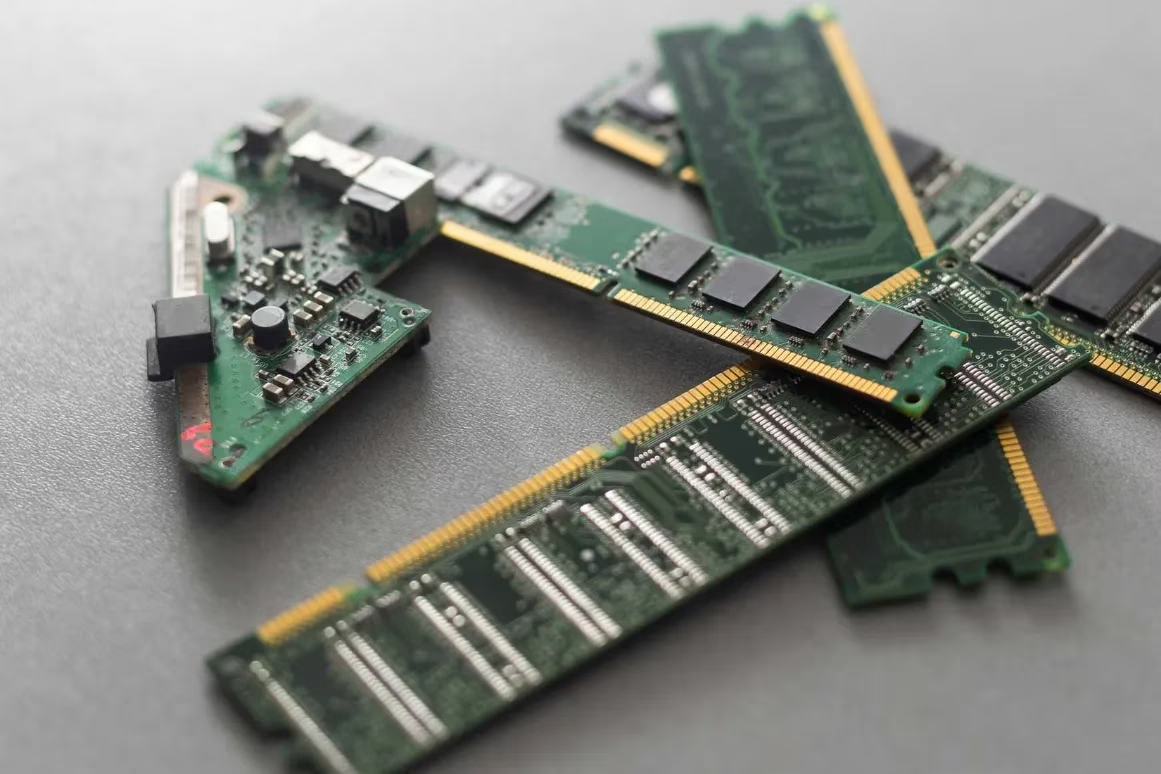
I remember the days of socketed memory, of piles of RAM sticks waiting for a home. There was a comfort in that modularity, a sense of control. Now, that control has been sublimated into raw, integrated performance. If you're coming from LPDDR5 or even DDR5, the difference might not scream at you during mundane tasks. But when I push the system—when video timelines render, complex simulations run, or a dozen browser tabs live alongside design software—that's when the LPDDR5X asserts itself. The snappiness isn't a luxury; it's the foundation of a fluid workflow. The cost, admittedly, was a premium. LPDDR5X laptops commanded a higher price, a barrier to entry. But I've come to see it not as a simple expense, but as a long-term investment in speed, efficiency, and device longevity.
My preference is now firmly cemented, and for two pillars that support my mobile existence:
-
Uncompromising Speed: For multitasking, for creative suites like the Adobe ecosystem, for the chaotic beauty of a modern digital workspace, that additional bandwidth is a lifeline. It makes the complex feel simple.
-
Elegant Efficiency: This is the true gift. Power-efficient components are the alchemists of modern design. They grant extended battery life without demanding a larger, heavier battery pack. This physics-defying trick is what allows our devices to become ever thinner, ever lighter, without sacrificing the soul of performance.
So here I am in 2026, my laptop a silent slate of potential. The memory is soldered, yes. It is a one-time choice. But in that finality, I found a different kind of freedom—freedom from throttling, from constant battery anxiety, from the bulk of yesterday's compromises. LPDDR5X and embedded memory are not just components; they are the enablers of a form factor we once dreamed of. The future arrived not with a bang, but with the precise, permanent touch of a soldering iron, and I, for one, am not looking back.