
As I stand on the cusp of a necessary PC upgrade in 2026, the landscape of personal computing feels more stagnant than ever. For years, we've been sold the same story: buy a sleek, thin machine, and in three to five years, accept its obsolescence as a fait accompli. It's a cycle of consumption that has always left me feeling like a passenger on a runaway train, watching my perfectly functional hardware become digital landfill. But this time, my search led me to something different—the Framework laptop. This isn't just another piece of tech; it feels like discovering the first truly repairable and upgradable spacecraft in a galaxy of disposable shuttles. It promises to transform my relationship with my most important tool from one of planned disposability to one of long-term stewardship. Here’s why, after deep research, I’m convinced the Framework is the only logical choice for my next computer and represents the future we should all demand.
The Liberation of Swappable Ports
When shopping for a traditional laptop, I'm held hostage by the manufacturer's port selection. It's a frustrating game of compromise. My home workstation is a triple-monitor command center, demanding a discrete GPU, multiple Thunderbolt 4 ports, USB-A for legacy devices, and an Ethernet port for stable, high-speed connections. Yet, when I travel for work each quarter, my needs shift dramatically. Gaming is off the table, and I need connectivity for a portable monitor and quick file transfers via microSD.
With a Framework laptop, this compromise evaporates. Its Expansion Card system is a revelation. I can configure my laptop's sides like a master chef assembles a bespoke toolkit. At my desk, it's a powerhouse hub. On the road, I can swap out the discrete GPU for a lighter shell, replace the Ethernet and audio ports with an HDMI and a microSD card reader. This modularity means I can leave the bulky, tangled nest of dongles and USB hubs behind. The laptop adapts to my life, not the other way around. It’s a level of personalization that makes other laptops feel as rigid and unyielding as a stone tablet.
The Right to Repair, Realized
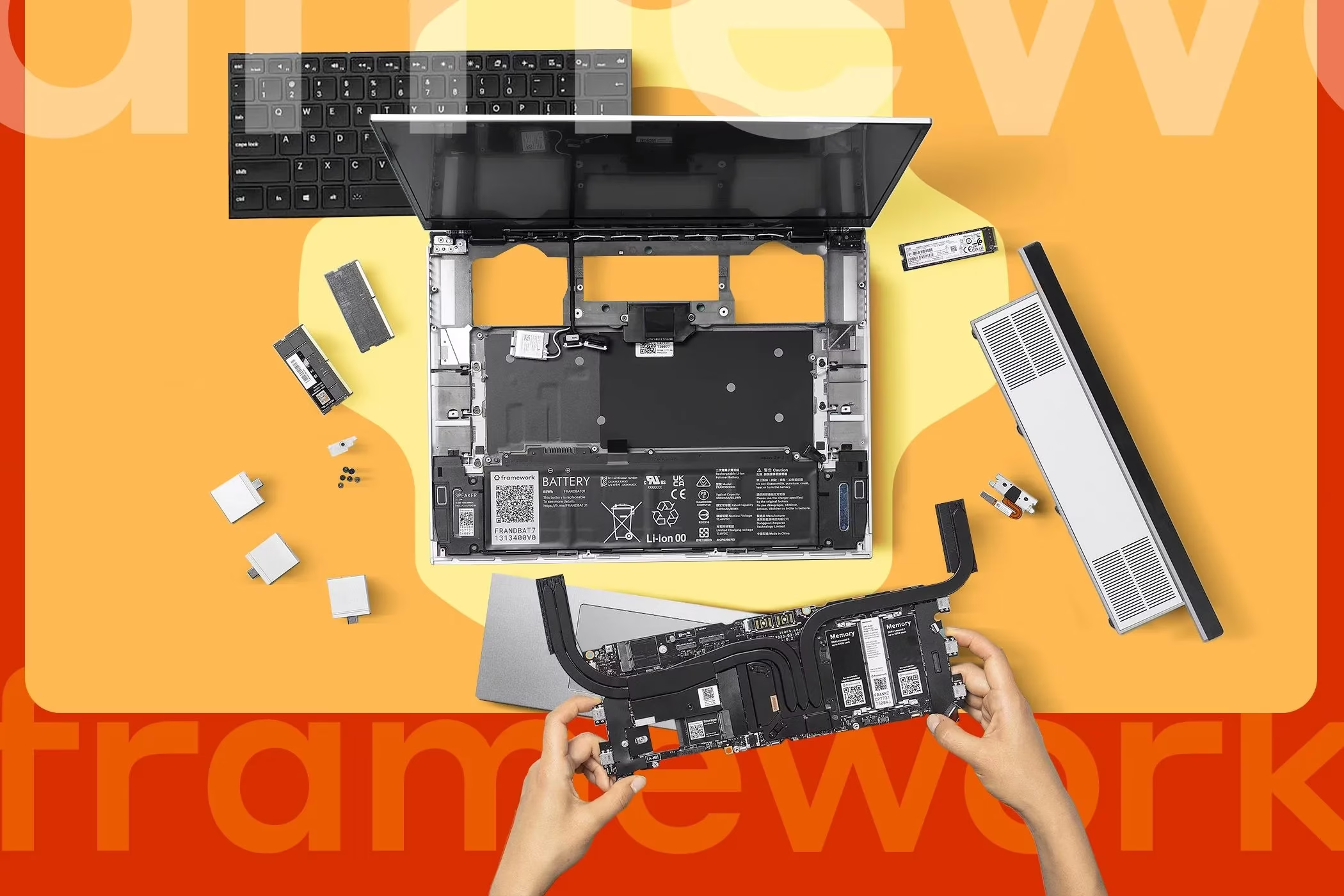
The anti-repair design of modern laptops is a quiet scandal. Components are soldered down and glued in place, making simple fixes a specialist's job. The Framework laptop is a stark, beautiful rebuttal to this trend. It maintains a sleek, modern form factor while being almost entirely modular and user-serviceable. Opening it requires only a standard Phillips #0 screwdriver. Replacing a battery, a screen, a keyboard, or a speaker is a straightforward process documented with clear guides.
This philosophy extends to warranty service in a profoundly user-friendly way. If a RAM module fails, Framework can ship a replacement directly to me. I can remove the faulty part and continue using the laptop while I wait, avoiding the dreaded downtime of mailing the entire machine away. This approach doesn't just save time and money; it fosters a sense of ownership and capability. My laptop is no longer a mysterious black box but a comprehensible machine I can maintain. In a world of sealed devices, the Framework is a breath of fresh, repairable air—a machine built like a classic, serviceable watch in an era of disposable digital wristbands.
Ending the Five-Year Churn: Truly Future-Proof Upgrades
My current upgrade cycle is dictated by the industry's planned obsolescence. Every five years, I'm forced to buy a completely new machine to keep pace with software demands, discarding a device where perhaps only the CPU or GPU is truly lacking. The Framework model shatters this cycle.
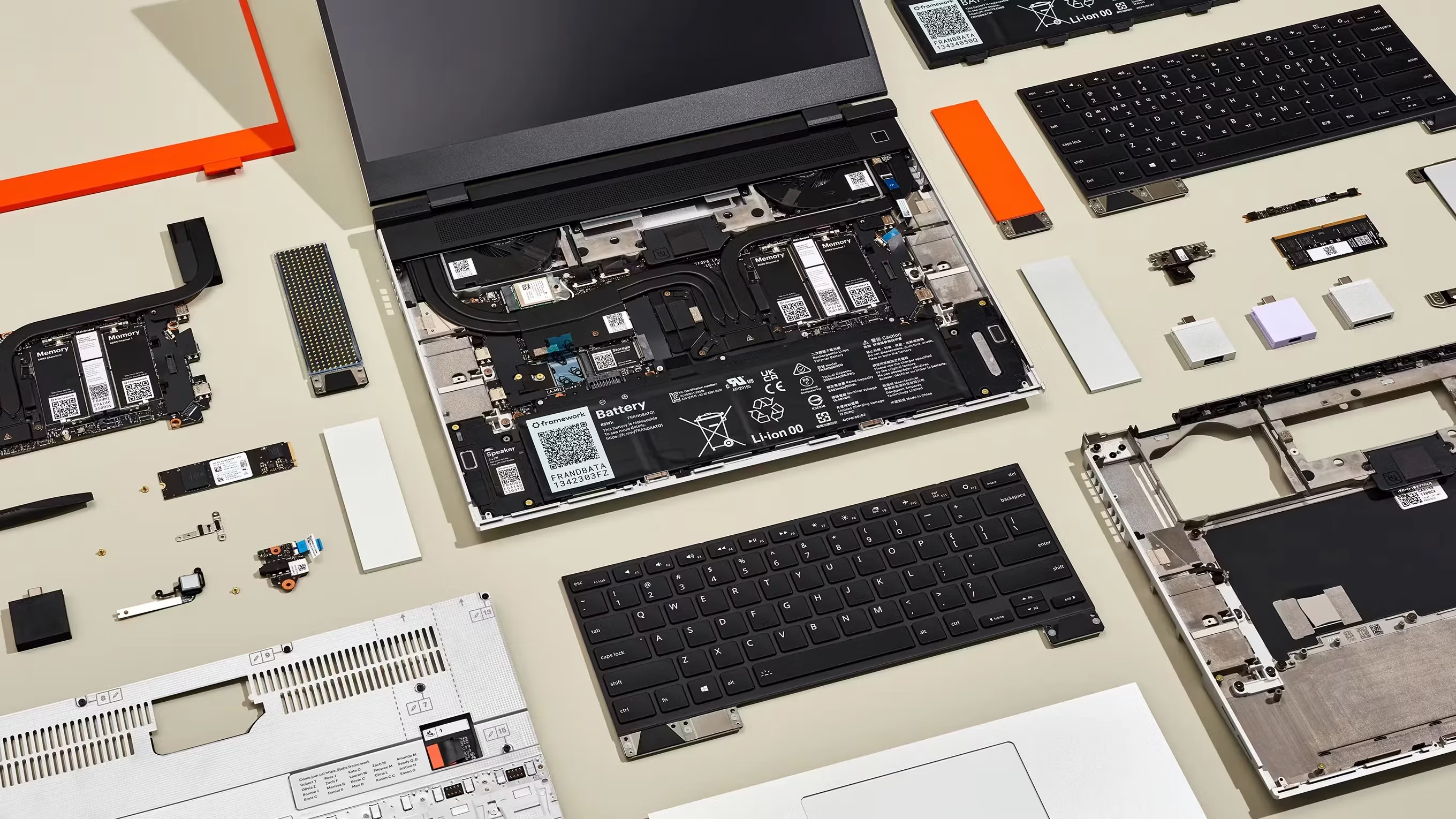
Imagine buying a Framework 16 today with a top-tier AMD Ryzen 9 and Radeon GPU. In 2027, when a new generation of graphics cards arrives, I don't need a new laptop. I can purchase just the new GPU module from Framework and install it myself. The same goes for the processor, RAM, storage, and even the display. Framework has already demonstrated multi-generational support, with the Framework 13 chassis supporting both the latest Intel Core Ultra and AMD Ryzen 7040/8040 series chips. This transforms the laptop from a consumable product into a long-term platform. It’s the computing equivalent of owning a classic car with a modern engine swap—the soul and body remain, but the performance is perpetually current.
A Tangible Blow Against E-Waste
This upgradeability has a direct and powerful environmental impact. By replacing individual components instead of the entire system, I dramatically reduce electronic waste. When a non-modular laptop has a faulty component after its warranty expires, the repair is often so costly and complex that tossing the whole machine is the "easier" option. With a Framework, I replace the $50 part, not the $1,500 laptop.
On an upgrade path, the benefits compound. Instead of my drawer becoming a mausoleum for 10-year-old laptops, I can keep a single Framework chassis in service for a decade or more, refreshing its internals as needed. If even a few thousand users adopt this model, it keeps tens of thousands of laptops out of landfills. Choosing Framework isn't just a purchasing decision; it's a small but meaningful vote for a more sustainable tech ecosystem. It turns the laptop from a source of waste into a curated, evolving tool, as renewable and upgradeable as a well-tended garden.
Deep Personalization: Making It Uniquely Yours
Beyond the core hardware, Framework offers a degree of personalization that feels almost playful. The company provides:
-
Keyboard Variants: A vast array including ANSI/ISO layouts and language-specific keys for Korean, German, Spanish, French, and more.
-
Input Modules: A Numpad Module for data entry and an RGB Macro Pad for gamers and power users.
-
Aesthetic Choices: Multiple bezel colors and five spacer colors to customize the look around the input module bay.
-
Fun Add-ons: Even a programmable LED Matrix for notifications or custom light shows.
The ecosystem extends beyond the laptop itself. Through partnerships like the one with Cooler Master, older Framework mainboards (from 11th to 13th Gen Intel chips) can be repurposed into compact desktop PCs. Furthermore, the vibrant Framework Community is a hub for DIY projects, from custom cases to unique Expansion Cards, allowing users to push personalization even further.
The Verdict for 2026 and Beyond
As I plan my 2026 upgrade, the Framework laptop stands alone. It delivers the portability and form factor I need while granting the upgradability and longevity I've always wanted from a desktop. It respects my time, my wallet, and my planet. It represents a fundamental shift from a culture of consumption to one of curation and repair. My only hope is that by the time I'm ready to buy, Framework's availability will have expanded beyond its current regions. This isn't just the next laptop I want to buy; it's the only kind of laptop that makes sense for a forward-thinking user in 2026. The future of computing shouldn't be sealed shut—it should be open, adaptable, and built to last, and Framework is leading that charge.
As detailed in CNET - Gaming, the push toward modular, repairable hardware has practical implications for players in 2026: a laptop that can be upgraded piecemeal (ports, storage, and even performance-critical components over time) helps keep up with evolving game requirements without forcing a full-system replacement, reducing both downtime and the constant peripheral shuffle that comes from living on dongles.