
As a dedicated gamer and PC enthusiast, I often find myself lost in a sea of alphanumeric soup when trying to decipher the latest hardware releases. We've all been there: staring at names like "Ryzen 7 7840HS" or "Core Ultra 9 185H" and wondering what any of it actually means. In 2026, the situation feels more complex than ever. This complexity isn't accidental; it's the result of fierce market competition, technological evolution, and strategic marketing that often prioritizes product positioning over consumer clarity.
Information Overload in a Name 🔢
The primary culprit behind bewildering hardware names is the sheer volume of technical specifications manufacturers attempt to encode. Modern components are packed with features:
-
Core/thread counts
-
Clock speeds (base and boost)
-
Cache sizes
-
Thermal design power (TDP)
-
Architecture generation
-
Market segment positioning
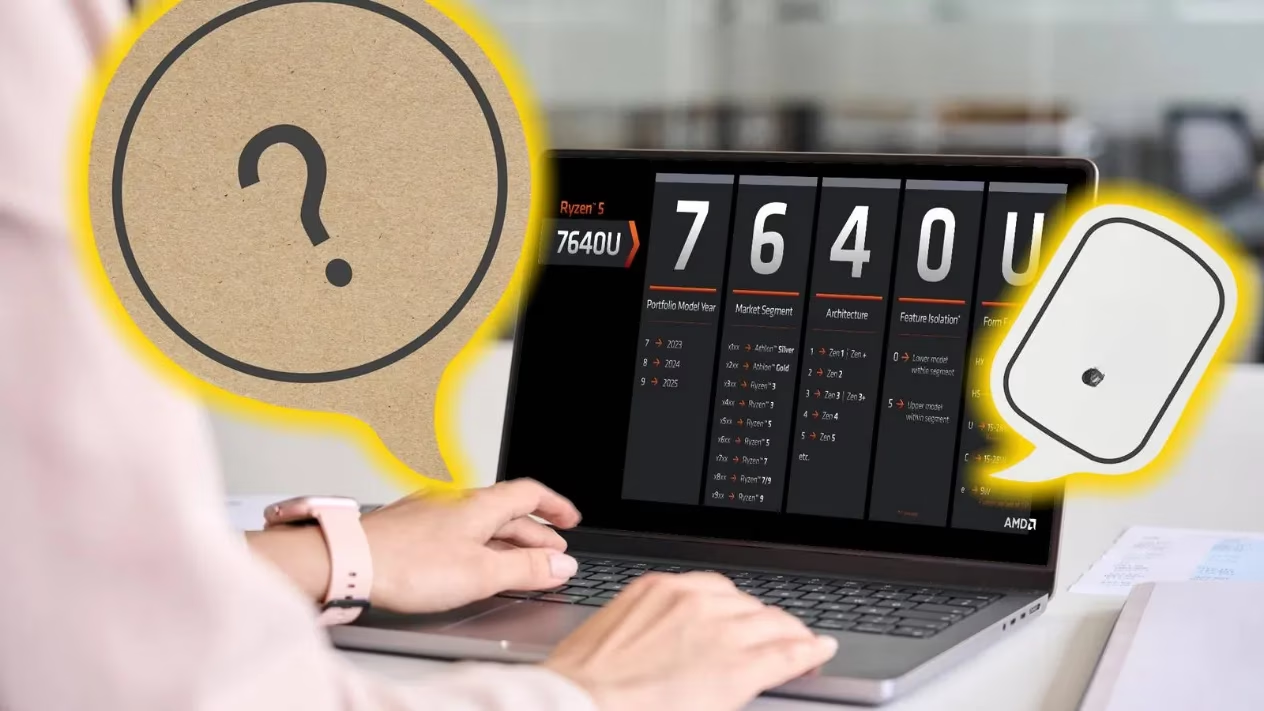
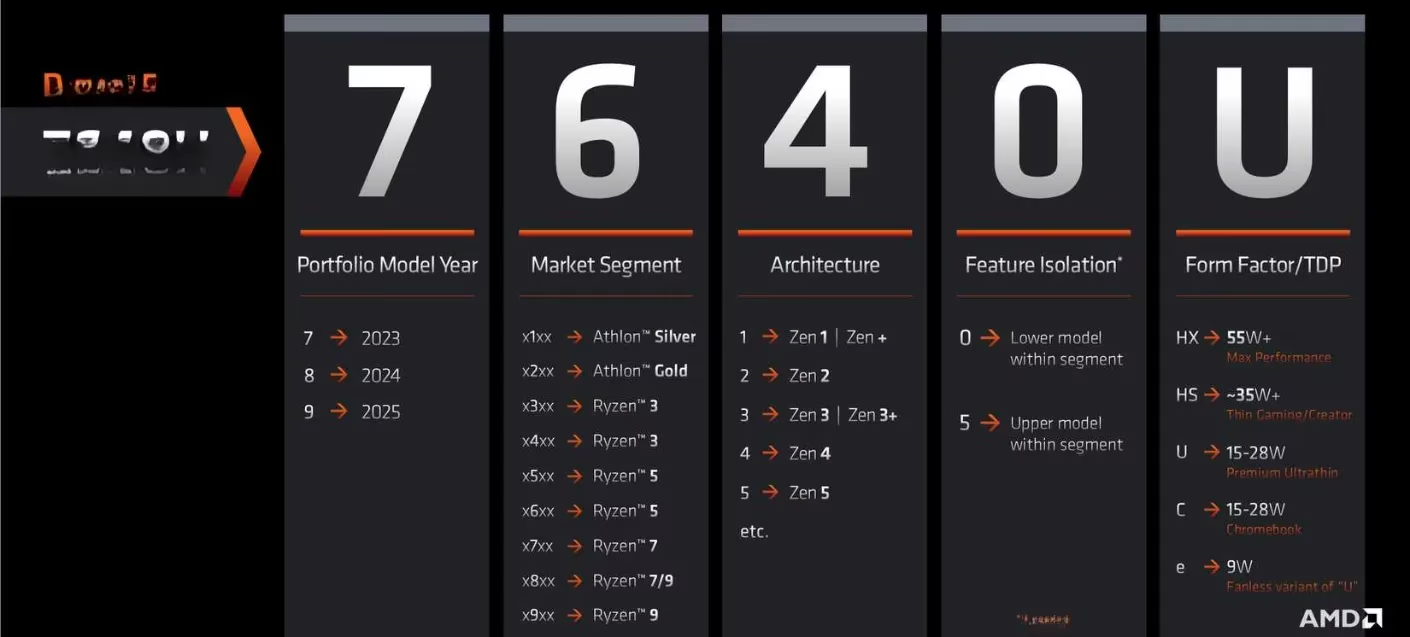
Manufacturers try to cram all this information into a short string, but there's only so much room. Take AMD's current mobile CPU naming, for example. A processor like the "Ryzen 5 7640U" contains multiple layers of information: the "Ryzen 5" tier, the "7" for portfolio year, "6" for market segment, "4" for architecture, "0" for feature isolation, and "U" for power design. While enthusiasts might appreciate this detail, casual buyers encounter what looks like random gibberish.
The Competitive Arms Race ⚔️
PC hardware is a battlefield where naming conventions become weapons. When NVIDIA launches an "RTX 5080 Super," AMD counters with a "Radeon RX 8800 XT." Each company employs its own cryptic lexicon, creating parallel universes of terminology that rarely intersect meaningfully. This competition-driven complexity often results in names that prioritize marketing impact over genuine clarity.
The confusion compounds when products with similar numbers offer vastly different performance. A consumer might reasonably assume an "RTX 5070" and "RX 7700 XT" occupy similar market positions, but reality often proves otherwise. This deliberate obfuscation serves competitive positioning but leaves consumers playing guessing games with their hard-earned money.
Legacy Systems Cracking Under Pressure 🏛️
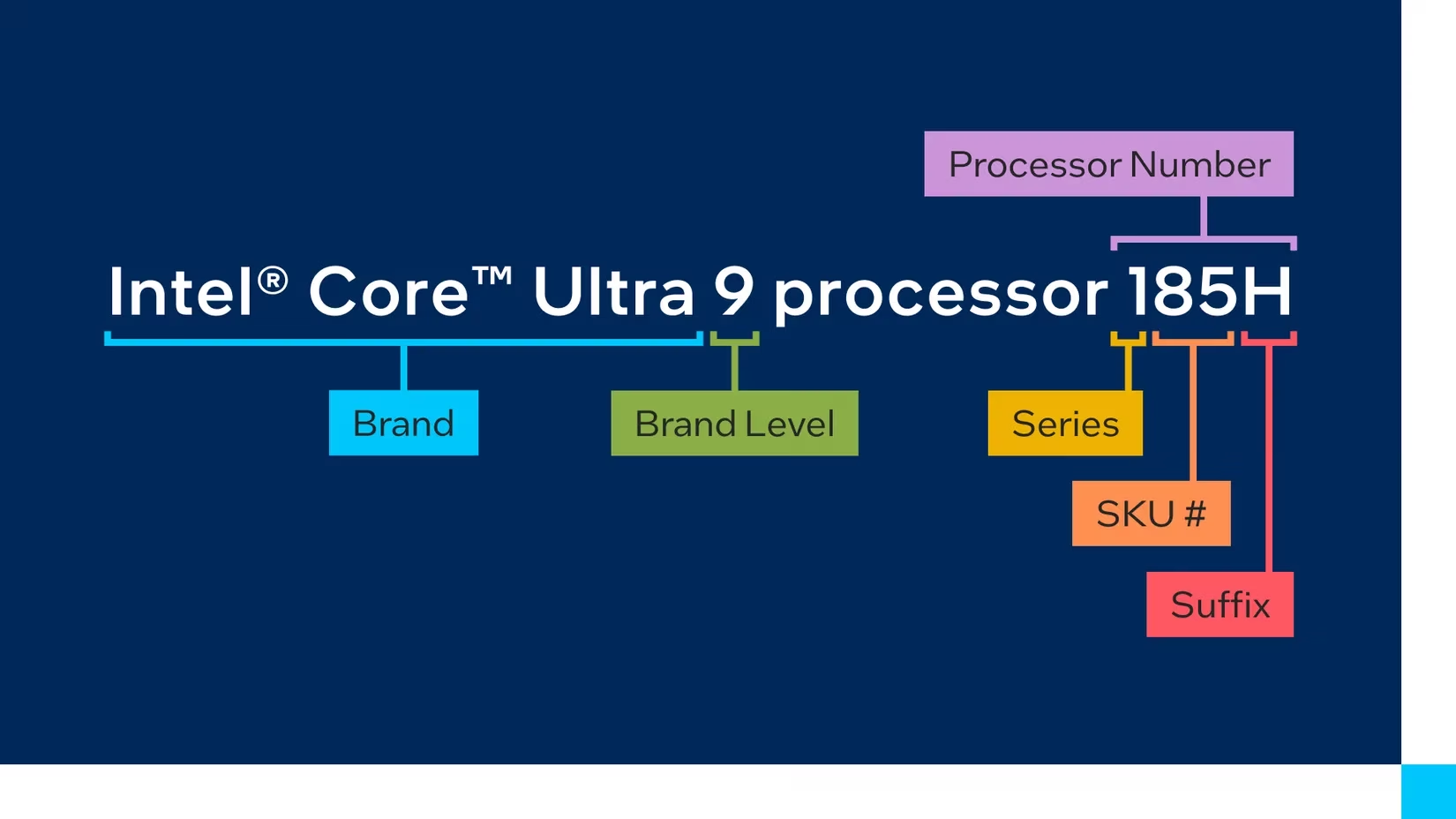
Many current naming schemes are attempts to extend systems designed for simpler times. Intel's "Core" branding began with straightforward i3/i5/i7 distinctions but has since ballooned into a taxonomic nightmare:
-
Core Ultra for AI-enhanced processors
-
Processor series for mainstream chips
-
Suffixes like HX, HK, U, and P denoting power profiles
-
Generational numbers that sometimes reset
What began as an elegant hierarchy has become a Byzantine codex requiring dedicated study. AMD faces similar challenges with its Ryzen lineup, where a Ryzen 5 chip from one generation might outperform a Ryzen 7 from another, rendering the tier system unreliable without deeper investigation.
Product Segmentation Gone Wild 📊
Manufacturers use naming to create clear distinctions between product tiers, but the execution often creates more confusion than clarity. Let's examine AMD's current CPU landscape:
| Tier | Typical Use | Common Suffixes | What They Mean |
|---|---|---|---|
| Ryzen 3 | Entry-level | None, GE | Basic computing |
| Ryzen 5 | Mainstream | X, X3D, HX | Gaming & productivity |
| Ryzen 7 | Performance | X, X3D, HS | Content creation |
| Ryzen 9 | Enthusiast | X, X3D, HX | High-end workloads |
Beyond these tiers, we encounter a suffix alphabet soup:
-
X = Higher clock speeds
-
X3D = 3D V-Cache technology
-
G = Integrated graphics
-
U = Ultra-low power
-
H/HS = High performance mobile
-
HX = Extreme performance mobile
This proliferation creates situations where a Ryzen 5 7640HS might outperform a Ryzen 7 7735U in gaming, despite the "7" suggesting superiority. The distinctions matter for understanding capabilities, but they've become so numerous that they defeat their original purpose of providing clear guidance.
Rebadging and Market Refreshes 🔄
Sometimes, confusing names serve to disguise older technology as new. The practice of rebadging—releasing slightly updated products under new names—remains common in 2026. AMD's move with the Ryzen 7 6800HS becoming the Ryzen 7 7735HS wasn't an isolated incident; it's standard industry practice that continues today.
Recent examples I've encountered:
-
Last year's mid-range GPU reappearing with a "Super" or "XT" suffix
-
Previous-generation mobile chips receiving new model numbers
-
Storage devices with identical controllers getting new marketing names
This strategy helps clear inventory and create the illusion of constant innovation, but it erodes consumer trust and makes informed purchasing decisions increasingly difficult.
The Marketing Power of Complexity 💼
Complex names create perceived value. "GeForce RTX 5090 Ti with DLSS 4" sounds more impressive than "High-end graphics card," even if both describe the same product category. This psychological effect is deliberate—dense terminology makes products appear more advanced and justifies premium pricing.
Manufacturers leverage this effect through:
-
Generational numbering suggesting constant progress
-
Technical suffixes implying specialized capabilities
-
Proprietary technology names creating brand differentiation
-
Tier systems establishing perceived hierarchy
The result? Consumers feel they need computer science degrees to navigate what should be straightforward purchasing decisions.
Technological Evolution Demands New Labels 🚀
As technology advances, naming schemes must adapt to accommodate new features. The past few years have introduced several innovations requiring new terminology:
AI and Machine Learning Integration
-
NPUs (Neural Processing Units) in CPUs
-
Tensor Cores in GPUs
-
Specialized AI accelerators
Advanced Gaming Technologies
-
Ray tracing cores (RT Cores)
-
Upscaling technologies (DLSS, FSR, XeSS)
-
Frame generation capabilities
Power and Efficiency Innovations
-
Hybrid core architectures (P-cores/E-cores)
-
Advanced power management states
-
Chiplet designs and 3D stacking
Each innovation requires new naming conventions, layering complexity upon existing systems. What began as simple product identifiers have become technical specifications in themselves.
The Future Looks… More Complex 🔮
As I look toward the rest of 2026 and beyond, I don't see naming schemes simplifying. If anything, several trends suggest further complication:
-
AI Integration: Every major component now incorporates AI capabilities, requiring new naming elements to distinguish AI performance levels
-
Specialization: Hardware is becoming more use-case specific (gaming, content creation, AI development), leading to more targeted naming conventions
-
Sustainability Metrics: With growing emphasis on energy efficiency, we're seeing power consumption ratings integrated into names
-
Subscription Models: Some manufacturers are experimenting with hardware-as-a-service, potentially bringing subscription-tier naming into product labels
Navigating the Maze: Practical Tips 🧭
Despite the complexity, informed purchasing remains possible with the right approach:
Focus on Performance, Not Names
-
Consult independent benchmarks rather than relying on model numbers
-
Compare products within your specific use cases (gaming, productivity, etc.)
-
Look beyond marketing claims to actual performance data
Understand Key Differentiators
-
Learn the most important suffixes for your needs
-
Identify generational jumps that matter
-
Recognize rebadged products by comparing specifications
Use Community Resources
-
Gaming forums and hardware communities
-
Professional reviewer comparisons
-
User experience reports from similar use cases
Consider Total System Context
-
How components work together matters more than individual names
-
Bottleneck analysis often reveals more than model numbers
-
Future upgrade paths should influence current purchases
The Bottom Line 💡
PC hardware naming has evolved from simple identification to complex marketing language that serves multiple masters: technical specification, competitive positioning, perceived value creation, and technological differentiation. While this complexity frustrates consumers, it's unlikely to change because it serves manufacturer interests too effectively.
As gamers and enthusiasts, our best defense is education and skepticism. By understanding why names are complex and learning to look beyond them to actual performance, we can make informed decisions despite the confusing landscape. The names might be getting more complicated, but with the right approach, we can still build the systems that deliver the gaming experiences we crave. In the end, what matters isn't the name on the box, but the frames on the screen and the immersion in our virtual worlds. 🎮