
The GeForce RTX 4070 arrived on April 13, 2023, as Nvidia’s $599 answer for 1440p gaming, yet in 2026 the card remains locked in an unavoidable comparison with the GeForce RTX 3080. Both GPUs can drive high-refresh 1440p play and both can stretch into 4K, but they approach those targets from different generations. The RTX 3080 relies on Nvidia’s Ampere architecture and a wide memory bus, while the RTX 4070 uses the newer Ada Lovelace design, a smaller bus, and a much stronger feature set. For buyers weighing remaining stock, used cards, or an upgrade from older hardware, the question is no longer which card is newer. It is which card makes more sense at 1440p in 2026.
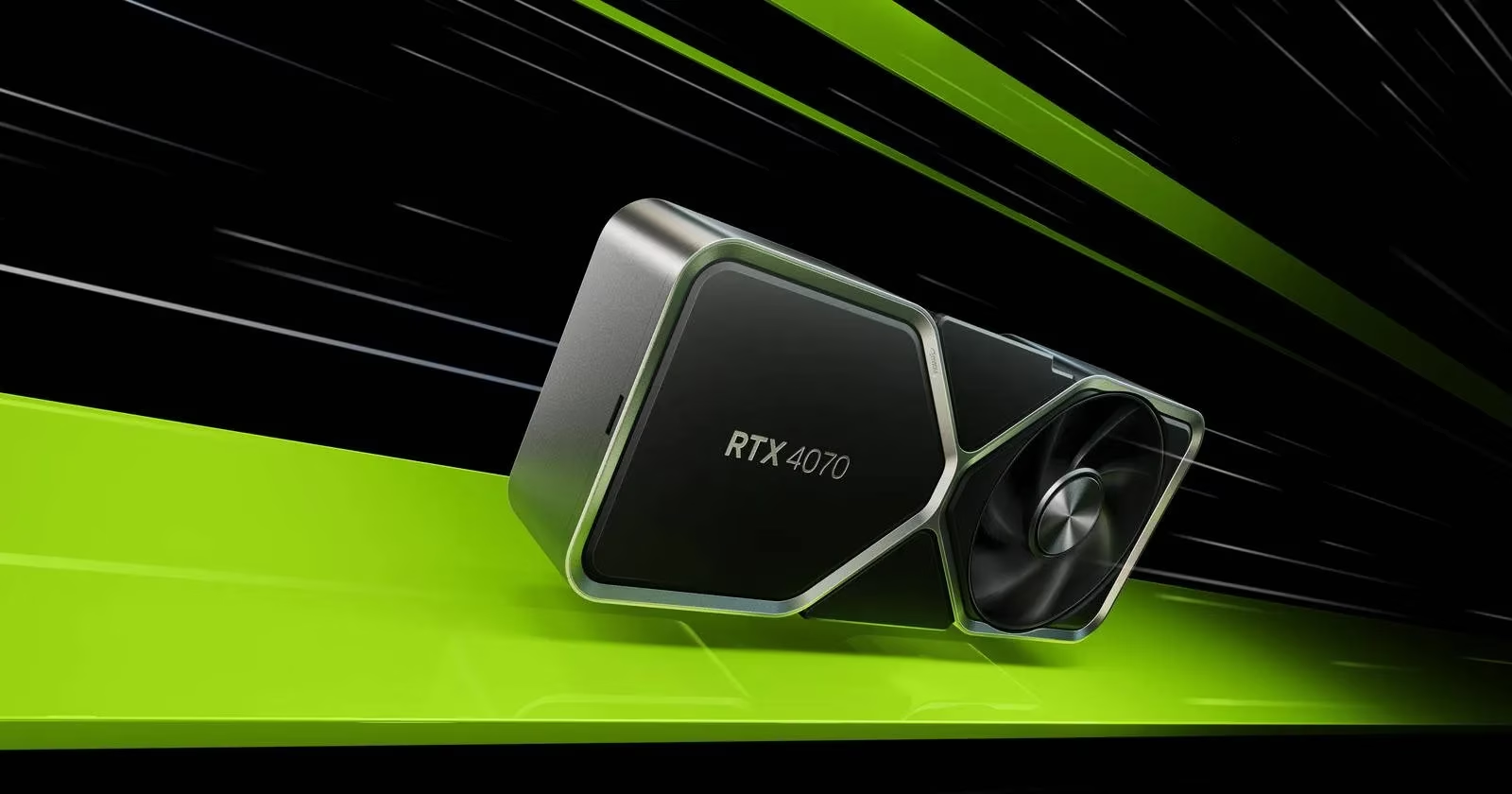
Specifications: Two Generations, Similar Goals
The RTX 3080 was sold in 10GB and 12GB GDDR6X versions. The 10GB model uses a 320-bit memory bus, while the 12GB model moves to a 384-bit bus and gains a performance edge. Nvidia positioned both versions as 4K-capable cards, and the reference comparison notes that they can push 4K games at an average of around 60 fps. The RTX 4070, by contrast, ships with 12GB of GDDR6X on a 192-bit bus. On paper, that narrower bus looks like a step down, but the Ada Lovelace architecture and a more efficient manufacturing process allow the RTX 4070 to deliver similar performance while drawing less power.
| Specification | RTX 3080 (10GB / 12GB) | RTX 4070 |
|---|---|---|
| Architecture | Ampere | Ada Lovelace |
| VRAM | 10GB or 12GB GDDR6X | 12GB GDDR6X |
| Memory bus | 320-bit / 384-bit | 192-bit |
| Nvidia positioning | 4K-capable | 1440p-focused, 4K-capable |
| Key advantage | Strong raw raster performance | DLSS 3, better ray tracing, lower power |
| Launch price context | About $100 more than the RTX 4070 in the reference comparison | $599 |
1440p Performance: Close Enough to Ignore
At 1440p, the RTX 3080 and RTX 4070 are remarkably close. Benchmark results cited in the reference comparison give the RTX 3080 a slight overall edge, but the margin is small enough that most players would not notice it without frame-rate counters. Game selection matters more than the spec sheet. The RTX 4070 pulls ahead in titles such as Forza Horizon 5 and Cyberpunk 2077 at 1440p, while the RTX 3080 tends to build a larger lead at 4K. That pattern fits the cards’ designs: the RTX 3080 has more memory bandwidth for raw high-resolution rendering, and the RTX 4070 leans on newer features and efficiency.
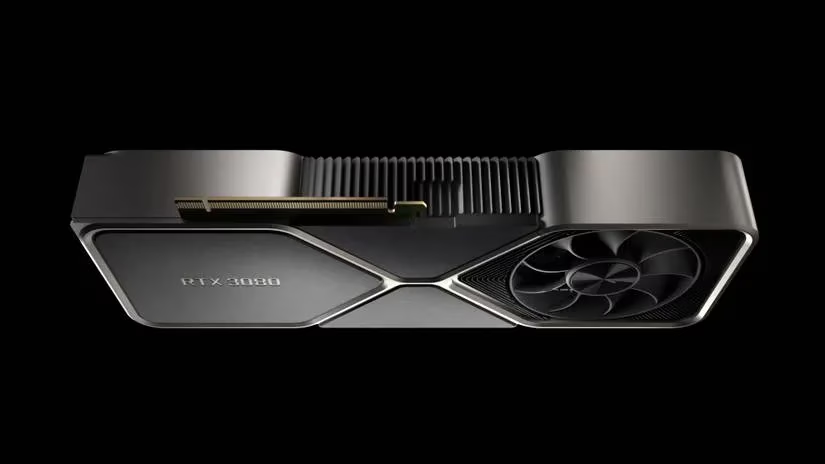
Nvidia’s own claim adds another layer. The company says the RTX 4070 is 1.4 times faster than the RTX 3080 when DLSS 3 is in use. That advantage is not raw rasterization. It comes from DLSS 3 frame generation, which is exclusive to the RTX 40-Series and can raise smoothness in supported games. The RTX 4070 also offers improved ray-tracing technology. For 1440p players who use upscaling and ray tracing, those features can matter more than a few frames of native-resolution difference.
Power, Size, and Value in 2026
The RTX 4070’s most practical advantage is efficiency. The reference comparison notes that it delivers almost similar performance to the RTX 3080 while consuming about 120 watts less power. It is also smaller, which helps in compact cases and makes it easier to pair with a modest power supply. In 2026, that efficiency is more than a technical footnote. Older high-wattage cards can be harder to cool, louder under load, and more expensive to run over time. The RTX 4070’s lower power draw gives it a clear long-term usability edge.
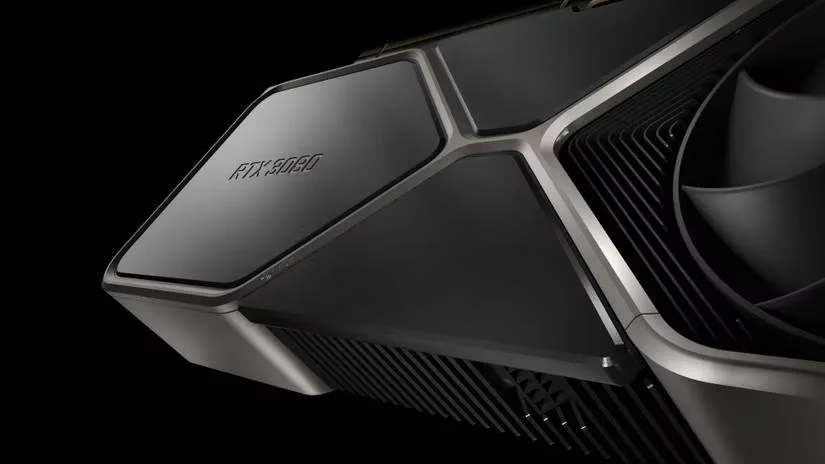
Launch pricing framed the original debate. At $599, the RTX 4070 was $100 cheaper than the RTX 3080 in the reference comparison, and it was the cheapest card in Nvidia’s RTX 40-Series lineup at the time. The RTX 3080, meanwhile, sat below the much more expensive RTX 3080 Ti and RTX 3090. In 2026, launch prices no longer tell the full story. Buyers are more likely to compare remaining new stock, used listings, and bundle deals. The RTX 4070 remains attractive when its feature set and efficiency are valued. The RTX 3080 becomes more appealing only when it is priced low enough to offset its higher power draw and older feature set.
Upgrade Advice: Who Should Buy Which?
For someone already using an RTX 3080, moving to an RTX 4070 is not a meaningful upgrade. The two cards trade blows at 1440p, and the RTX 3080 can be stronger at 4K. The RTX 4070’s DLSS 3 and ray-tracing advantages are real, but they are not enough to justify a sidegrade for most existing RTX 3080 owners. Players who already have a 3080 should look further up the stack or wait for a larger generational jump.
The calculus changes for players coming from older hardware. The reference comparison points out that the RTX 4070 is a significant improvement over the RTX 3070 for 1440p gaming. It also offers a more modern feature set, lower power consumption, and a smaller physical footprint. For a new 1440p build in 2026, the RTX 4070 is the easier card to recommend when DLSS 3, ray tracing, and efficiency are priorities. The RTX 3080 remains a capable raw-performance option, especially the 12GB version, but it makes sense mainly when the price is clearly lower and the buyer accepts higher power use.
The Bottom Line
The RTX 4070 and RTX 3080 are close enough at 1440p that the decision comes down to features, power, and price rather than raw frame rates alone. The RTX 3080 still has a slight benchmark edge in some native-resolution tests and a wider memory bus. The RTX 4070 counters with DLSS 3, better ray tracing, lower power draw, and a smaller design. In 2026, that makes the RTX 4070 the more balanced 1440p choice for most new buyers, while the RTX 3080 remains a strong value only at the right used or discounted price. Upgrading from one to the other, however, is a move most gamers can safely skip. 🎮
Data referenced from Digital Foundry helps frame the RTX 4070 versus RTX 3080 debate in more practical terms, especially where image quality settings, ray tracing behavior, and upscaling technologies can matter as much as average fps. In the context of 1440p gaming, that kind of hardware-focused analysis supports the view that the RTX 3080 still holds up well in native rendering, while the RTX 4070 gains relevance through newer feature support, better efficiency, and stronger performance-per-watt for long-term use.