
It’s 2026, and I’ve been down this road more times than I care to admit. You’re scrolling through listings for a new GPU, and the sheer number of options hits you like a train. There’s the Nvidia Founders Edition, a bunch of cards from Asus, MSI, Gigabyte, and others that all claim to be the best. I mean, seriously, who hasn’t felt lost in this jungle? Well, after years of tinkering and occasionally regretting my purchases, I’ve learned that it all boils down to one core distinction: reference design versus custom graphics cards. Let me walk you through it.
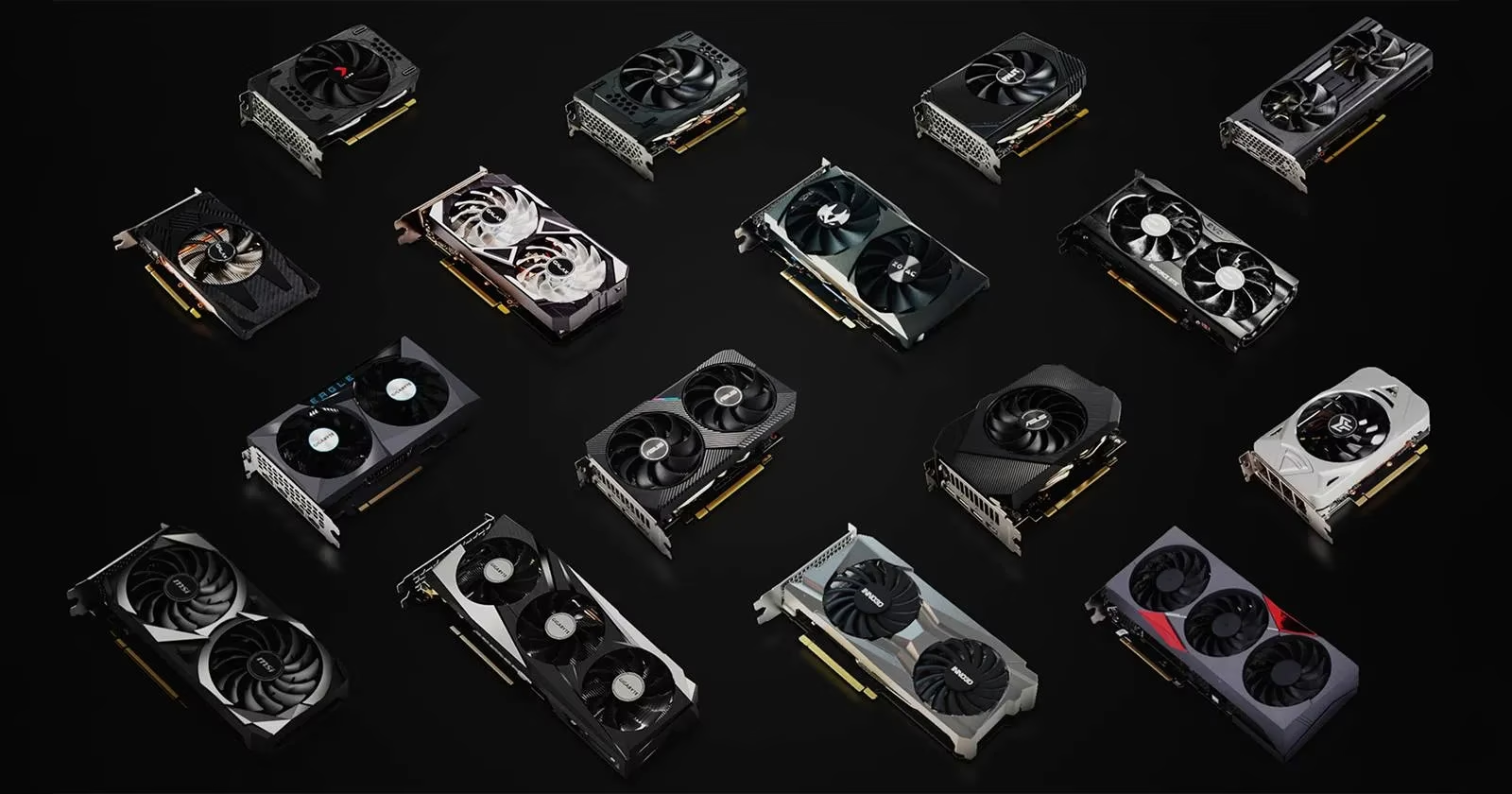
Reference cards are basically the blueprint. When Nvidia, AMD, or Intel dream up a new GPU, they also design a “reference” model that sets the baseline for clock speeds, cooling, and PCB layout. Think of it as the original recipe. These cards are often the first to hit the shelves—remember when the RTX 40-series FE cards dropped? Yeah, they were everywhere... for about five minutes. Meanwhile, custom cards from add-in-board partners like ASUS, MSI, and Sapphire take that reference recipe and spice it up. They might slap on a massive triple-fan cooler, upgrade the power delivery, or even factory-overclock the chip right out of the box.
But here’s the thing: the naming gets wild. Nvidia’s been rockin’ the “Founders Edition” tag since the GTX 10-series, making it feel exclusive. Intel, the new kid on the block, went with “Limited Edition” for its Arc GPUs—though by 2026 we’ve seen a new generation or two. AMD keeps it low-key, no fancy name, just a solid cooler and the AMD logo. On the custom side, every partner has its own flavor. MSI has the premium SUPRIM line, the gaming-focused GAMING X, and the budget-friendly VENTUS. It’s like ordering a coffee: same base, different foam art.
Now, quality and form factor. Reference cards are built to strict specs, which means they’re generally reliable and fit into most cases—usually dual-slot designs. But custom boards? They can range from tiny single-slot ITX wonders to triple-slot beasts that barely squeeze into a full-tower. I’ve seen RTX 4090 Aorus Master cards that look like they could double as a brick. AIBs often use thicker backplates and reinforced materials, which gives them a sturdier feel. But don’t kid yourself, a reference card isn’t flimsy—they just prioritize compatibility over flash.
Then there’s cooling. Oh boy, this is where custom cards flex their muscles. A reference cooler, even with dual fans, can only do so much. A custom triple-fan card with a chunky heatsink will run cooler and quieter. That means higher sustained boost clocks and less noise leaking through your headphones. If you’re into liquid cooling, though, reference cards have an edge: water block manufacturers usually support them first. I remember trying to find a block for a weirdly-shaped custom card, and it was a nightmare. So if you’re planning a custom loop, the reference model might save you some headaches.
Overclocking? Custom cards are built for it. They come with beefier VRMs, extra power connectors, and sometimes a dual-BIOS switch that lets you flip from “quiet” to “max performance.” If you accidentally push things too far, you can just flip the switch and recover. Reference cards can overclock too, but they’re more like a reliable sedan compared to the AIB sports car. That’s not to say everyone needs that extra headroom—but if you’re a tinkerer, it’s a big deal.
Price is where things get tricky. A Founders Edition card from Nvidia usually sells at MSRP—or at least it’s supposed to. In reality, you might still find a $1599 RTX 4090 FE (or its equivalent in 2026) if you’re lucky. Custom cards start at similar prices for base models, but the high-end variants with “OC” or “elite” branding can cost 20-30% more. That extra cash buys you better temps, quieter fans, and maybe a bit of RGB bling. Availability is another factor: reference cards can be scarce, produced mainly by the chip maker, while AIB partners flood the market with multiple tiers.
So, which one’s for you? If you need a card right when a new architecture launches, or if you’re building a compact PC, or you’re dead set on a custom water loop, go reference. But if you’re like me—someone who values silence, loves to tinker with overclocks, and enjoys a bit of visual flair—a custom AIB card is the way to go. In 2026, the landscape hasn’t changed that much; it’s still a trade-off between straightforwardness and enhanced performance.