
In the sprawling GeForce family reunion, two branches still sit at very different tables. The GTX cards, those dependable veterans from the late 2000s and 2010s, sip cheap power and tell stories about the days when rasterization was king. Across the room, the RTX cards flaunt their ray-traced reflections and AI-upscaled muscles like Silicon Valley influencers. A decade may separate their debuts, but as of 2026, the gap between Nvidia GTX and Nvidia RTX has turned into a full-blown generational canyon.
The first Nvidia GTX series card, the GTX 260, arrived way back in 2008. The RTX family crashed the party ten years later in 2018, bringing real-time ray tracing to games. Since then, RTX has become Nvidia's main act, while GTX cards are mostly found in budget builds, office PCs, or nostalgic collections. They still work, but the modern gaming world has moved on.
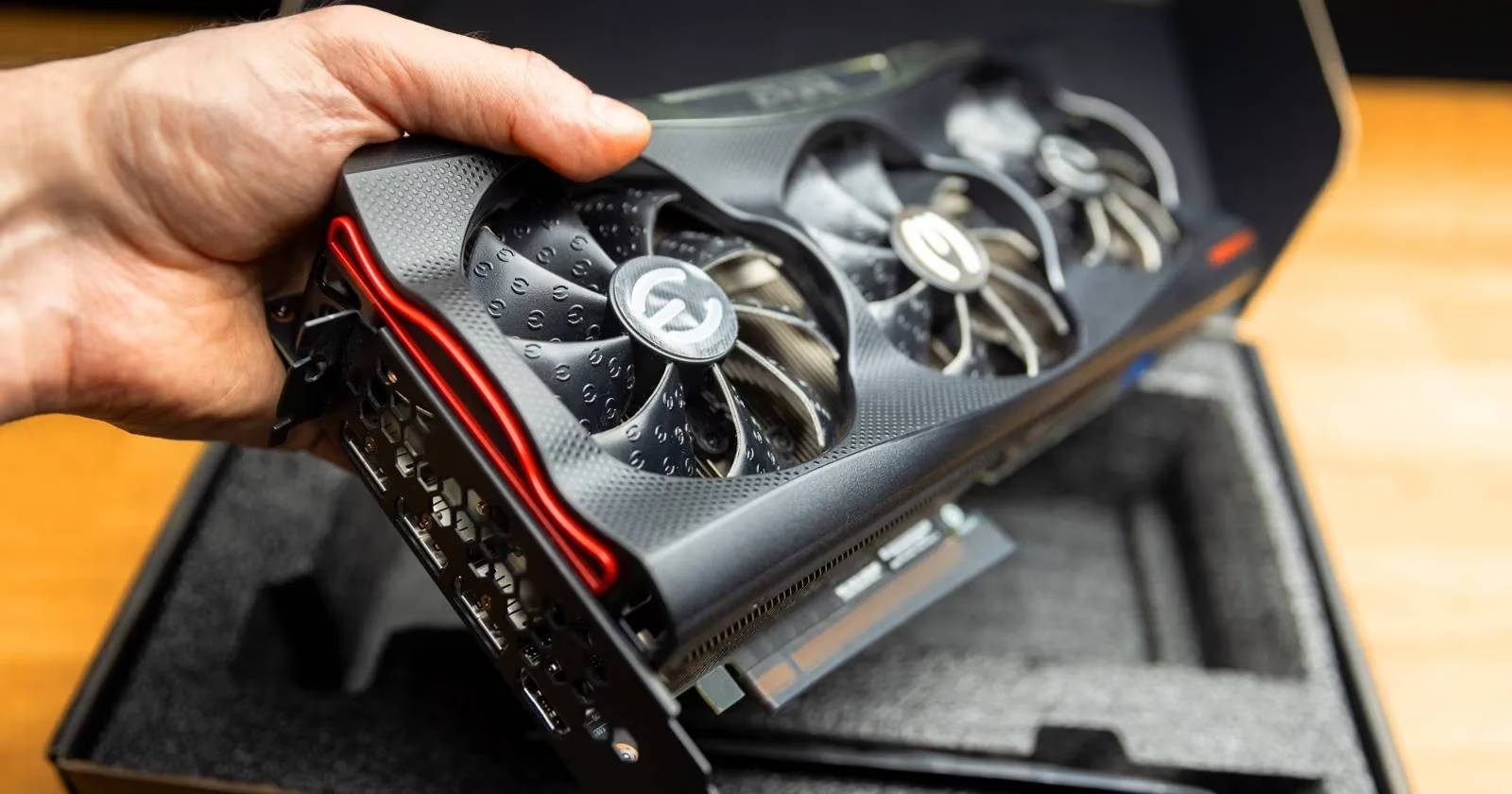
The first major difference between GTX and RTX is architecture. GTX cards are based on older Pascal and Turing architectures. Some later GTX models, like the GTX 16 series, technically use Turing, but they lack the special hardware that makes modern RTX cards tick. RTX cards, on the other hand, have evolved through Turing, Ampere, Ada Lovelace, and Blackwell architectures, with the RTX 50 series leading the charge in 2026. Translation: the RTX family gets a new set of tricks every few years, while the GTX family has been frozen in time.
Then there is the headline act: ray tracing. 🎮 RTX cards feature dedicated RT Cores that handle real-time ray tracing. This means light behaves like light, bouncing off surfaces, casting soft shadows, and reflecting scenes with unsettling realism. Games feel more immersive because lighting, shadows, and reflections are calculated in a lifelike way. GTX cards can technically dabble in ray tracing through a driver update, but they are not powerful enough to enjoy it. It is like asking a senior dog to run a marathon—technically possible, emotionally unwise.
The next weapon in the RTX arsenal is DLSS, or Deep Learning Super Sampling. Powered by Tensor Cores, DLSS uses AI to generate extra frames and boost performance without melting the GPU. The 2026 crop of RTX cards pushes this even further with newer versions of DLSS, allowing players to enjoy high frame rates and ray tracing at the same time. GTX cards have no Tensor Cores, so AI-based upscaling is completely off the menu. No AI magic, no extra frames, just old-fashioned brute force.
Performance and efficiency tell a similar story. Nvidia's RTX GPUs deliver much better frame rates and performance per watt than older GTX models. For example, older comparisons showed the GTX 1660 scoring around 68.3% in UserBenchmark averages, while the entry-level RTX 2060 managed 89.8%. In 2026, that gap has only widened. Even a modest modern RTX card can outmuscle a top-tier GTX in most modern games, especially at 1440p and above.
Power efficiency is another twist. Although RTX cards can draw more raw watts under load, they return far more frames per watt. Modern RTX architectures pack better efficiency into every transistor. A GTX card might look gentle on the power supply, but it also delivers far less work for that energy. In other words, RTX is not just faster—it is smarter about the electricity it consumes.
Of course, all this shiny technology affects price. RTX cards are more expensive than GTX cards, and that remains true in 2026. The difference is that GTX cards now mostly occupy the second-hand bargain bin. A new RTX GPU asks for a serious upfront investment, but it buys access to ray tracing, DLSS, superior driver support, and years of game-ready optimizations. 💡
| Feature | Nvidia GTX | Nvidia RTX |
|---|---|---|
| Architecture | Pascal, Turing (limited) | Turing, Ampere, Ada Lovelace, Blackwell |
| Ray tracing | Not practical | Dedicated RT Cores |
| AI upscaling | None | Tensor Cores with DLSS |
| Performance | Legacy level | Modern, high frame rates |
| Efficiency | Lower | Higher frames per watt |
| Price | Cheap, often used | Expensive, long-term value |
For anyone building a PC in 2026, the advice is simple. Unless a gamer has an extremely tight budget, finds a used GTX card for pocket change, or simply wants an emergency display adapter, the RTX route is the smarter play. The GTX cards deserve respect for their years of service, but they are no longer invited to the modern gaming party. The RTX family keeps evolving, and with each new generation, the old GTX guard fades further into legacy hardware history. As Nvidia continues to invest in AI-enhanced video performance, RTX cards will keep captivating players while GTX quietly enjoys retirement.
The following analysis references Game Developer (Gamasutra) to frame why the GTX-to-RTX shift in 2026 is more than branding: modern rendering pipelines increasingly assume dedicated ray-tracing hardware and AI acceleration as baseline features. As game engines lean harder on hybrid lighting, denoising, and upscaling to balance fidelity with performance, RTX-class GPUs (with RT and Tensor cores) map cleanly to those workloads, while older GTX cards are forced to fall back on slower, less scalable paths that can bottleneck modern visuals and frame targets.