
I remember the hum. It was a constant companion, a digital choir of fans and pumps that sang the song of my processing power. But in the quiet hours, when the virtual worlds I explored were supposed to be my escape, that mechanical whir became a cage. It was in 2026 that I finally decided to build my sanctuary of silence—a high-performance PC that spoke in a whisper. It didn't require a king's ransom or a sacrifice of frames per second; it just needed intention, a careful selection of components that understood the value of peace.
The Foundation: Choosing the Right Case
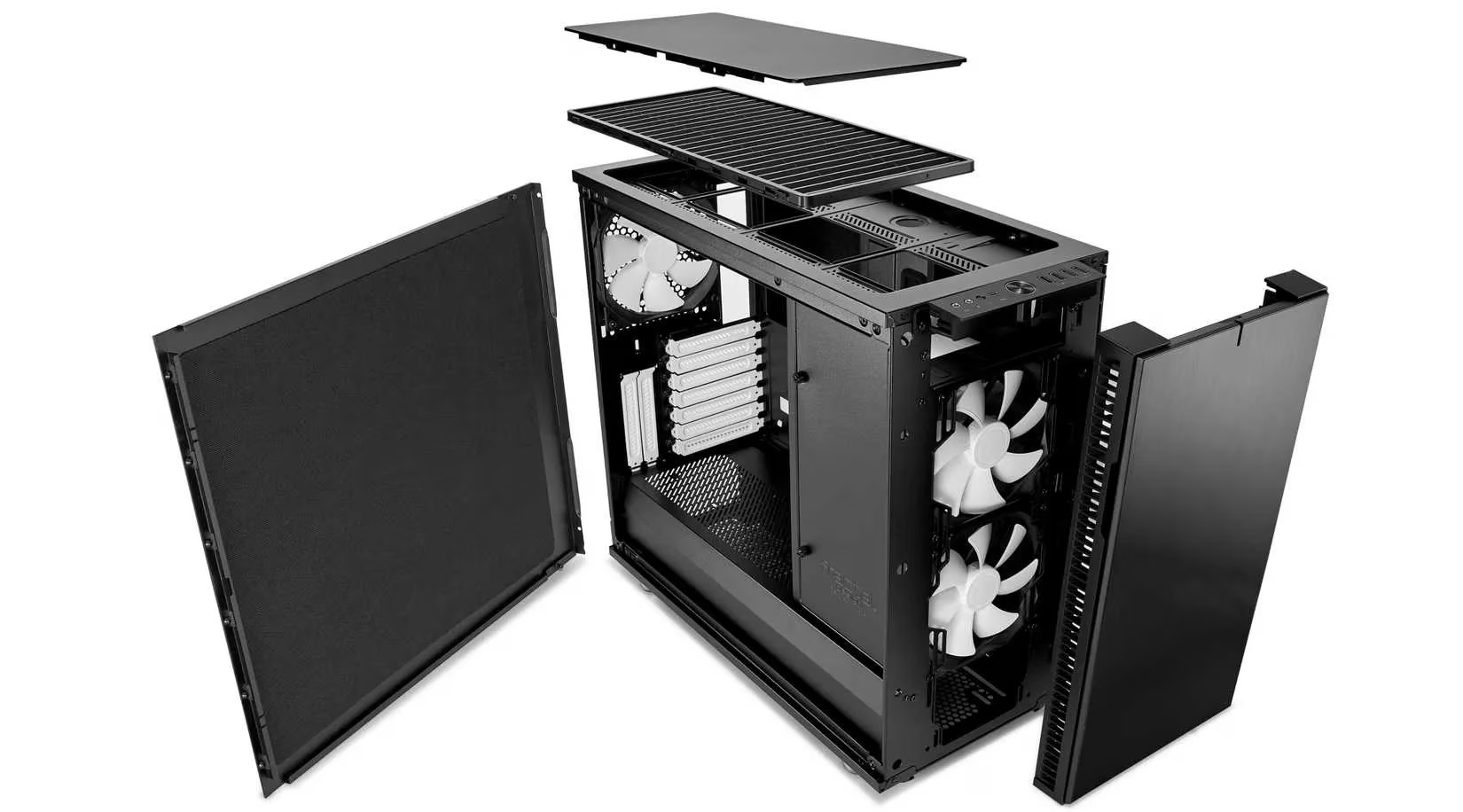
My journey began with the home for all my components. The case, you see, isn't just a box; it's the lungs of the machine. I learned that cramped spaces suffocate components, forcing tiny, frantic fans to scream for air. So, I went big. I chose a spacious, airy sanctuary—a full-tower case with a mesh front that welcomed cool breezes. It came lined with soft, sound-dampening foam on the inside panels, like acoustic wallpaper, soaking up the internal chatter before it could escape. Models like the Fractal Design Define 7 XL became my blueprint for quiet quality. It taught me that silence starts with giving your components room to breathe.
The Heartbeat: Fans and the Art of Slowness
Fans are the most vocal citizens of the PC world. Their motto used to be 'spin fast, cool fast.' I had to change that. I embraced larger fans—140mm and even 200mm behemoths. Their secret? They're the gentle giants. They can move vast amounts of air while spinning slowly and gracefully, like a ceiling fan on a summer afternoon. Paired with advanced magnetic levitation bearings, they glide more than grind. I set them on a gentle curve through the motherboard's software, letting them idle until truly needed. Brands like Noctua with their NF-A14 and be quiet! with their Silent Wings became my champions of hushed circulation. It's a simple truth: bigger, slower fans are just... chiller.
The Mind: Cooling the CPU Without the Drama
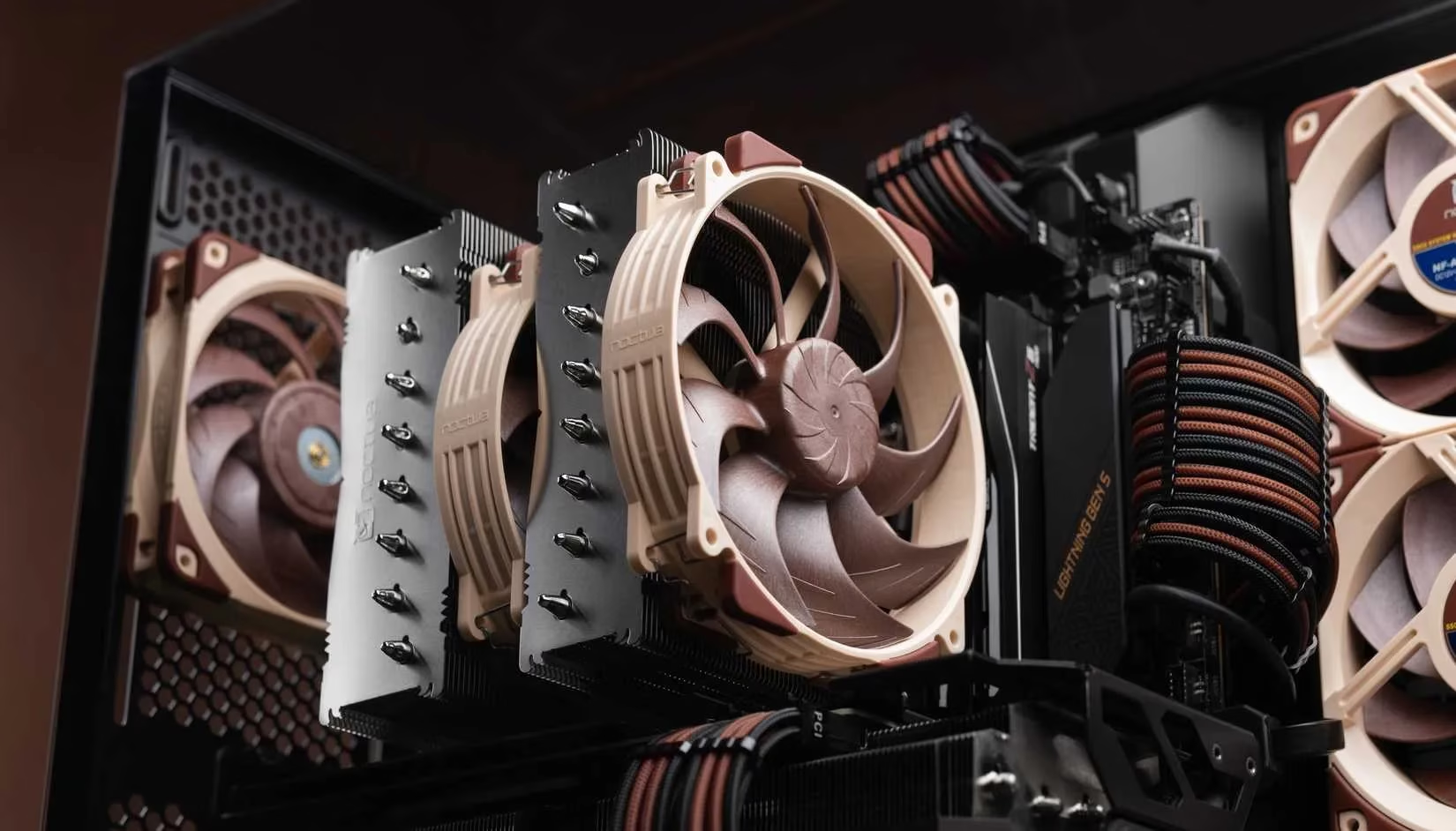
Ah, the CPU cooler. The battlefield where many lose the war on noise. Liquid cooling with its distinct pump gurgle was off the table for my quiet quest. Instead, I turned to a massive air cooler—a tower of silent power. Think of the Noctua NH-D15, a dual-tower heatsink so large it feels like a miniature cityscape of aluminum fins. Its size gives it a huge surface area to dissipate heat passively, so its fans rarely need to break a sweat. It’s mounted with a vibration-free system, so there’s no annoying buzz. Honestly, going for a giant air cooler over a liquid AIO was one of the best 'quiet' decisions I made. It just sits there, doing its job without a peep.
The Soul: Power Supply and Graphics Card
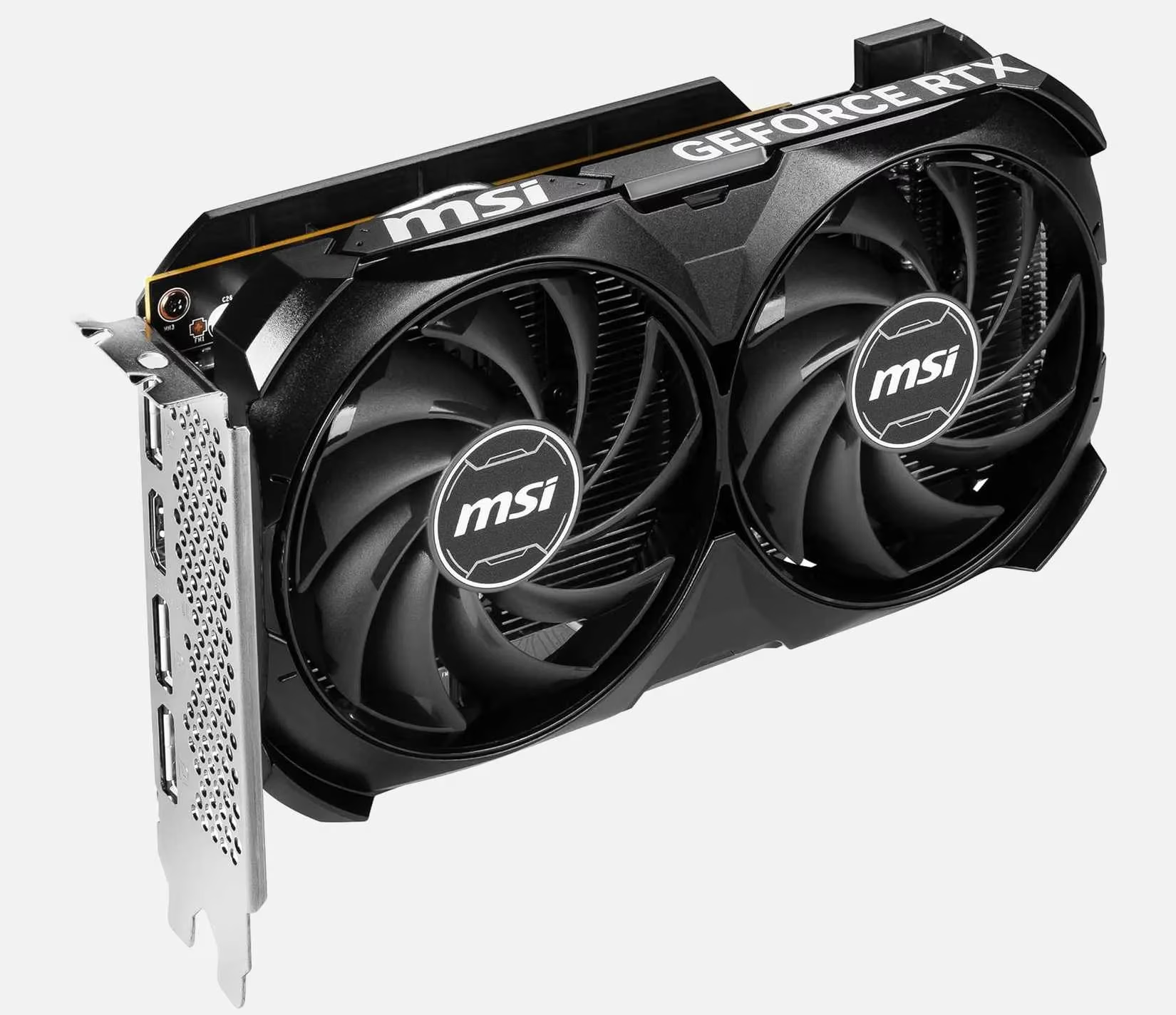
Two components often whisper secrets of noise when you least expect it. First, the power supply (PSU). I chose a semi-fanless model with a Gold efficiency rating. For most of my daily tasks—browsing, writing, even light gaming—its fan doesn't spin at all. It's a ghost. Only during intense loads does it gently awake. Then, the graphics card. Modern GPUs are clever; many have a 'zero RPM' mode where the fans are completely off until the chip gets warm. I looked for models with hefty heatsinks and multiple fans, like certain ASUS ROG Strix or MSI Ventus cards, which can keep cool at low speeds. Creating a custom, relaxed fan curve through software was the final touch, telling the GPU, "No need to shout, we're all friends here."
The Nervous System: Motherboard and Final Touches
Control is key to silence. A motherboard with advanced fan headers and software is the conductor of this quiet orchestra. My board let me create detailed fan curves, tying each fan's speed to specific temperature sensors. This meant no component was ever overcooled with unnecessary noise. Finally, I addressed the subtle vibrations—the last echoes of activity. I used a simple sound-dampening kit:
-
Anti-vibration pads under the PSU and any storage drives.
-
Foam sheets on side panels to absorb acoustic reflections.
-
Rubber grommets for fan mounts to prevent hum transfer.
You can buy these kits or, get this, make your own from materials at a hardware store. It's the final layer of insulation that turns a quiet PC into a silent one.
The Philosophy: Integrated Graphics and Future Thoughts
For a non-gaming build, the ultimate quiet move is to skip the dedicated graphics card altogether. Modern CPUs from both AMD and Intel have surprisingly capable integrated graphics. An AMD Ryzen 5 5600G or an Intel Core i7-13700K with Iris Xe can handle everyday tasks and even light esports gaming silently, as they generate less heat and need less cooling. As of 2026, with new generations like AMD's Ryzen 8000 series and Intel's 15th Gen on the horizon, the efficiency and quiet potential are only getting better.
In the end, my silent PC isn't just a machine; it's a statement. It proves that power doesn't have to be loud. By choosing components that prioritize efficient, low-RPM cooling and intelligent control, I built a haven. Now, the only sound is the immersive soundtrack of my games and the quiet satisfaction of a plan perfectly executed. The hum is gone, replaced by the pure, uninterrupted experience of the digital worlds I love. And that, fellow gamers, is a victory worth more than any high score.