
Let me tell you, jumping into water-cooling my PC was like signing up for a relationship with a beautiful, high-maintenance robot. I was seduced by the promise of silent power and that sleek, futuristic look. But oh boy, the reality hit me like a frozen CPU block dropped on my toe! I dove headfirst into a custom loop, and let's just say... I learned the hard way. If I could go back and whisper in my own ear, I'd have a novel's worth of warnings and a few solid slaps of reality.
The First Fork in the Road: AIO vs. Custom Loop – A Tale of Two Philosophies
Right out of the gate, you face the ultimate choice: the sensible, pre-packaged AIO (All-in-One) or the wild, custom loop. It’s the difference between buying a pre-built gourmet meal and deciding to become a Michelin-star chef overnight. I, in my infinite wisdom, chose the latter. Let me break it down for you:
-
AIO Coolers: These are the cool, collected friends of the PC world. They come in one neat box, you install them in an afternoon, and they just... work. Perfect for beginners who want better cooling without the drama. It’s basically plug-and-play glory.
-
Custom Loops: This is the deep end. You're not just cooling the CPU; you're crafting a liquid highway for your GPU and more. The control is god-like, the aesthetics are unmatched, but the commitment? Whew. It's a part-time job in setup and a permanent side-gig in upkeep.
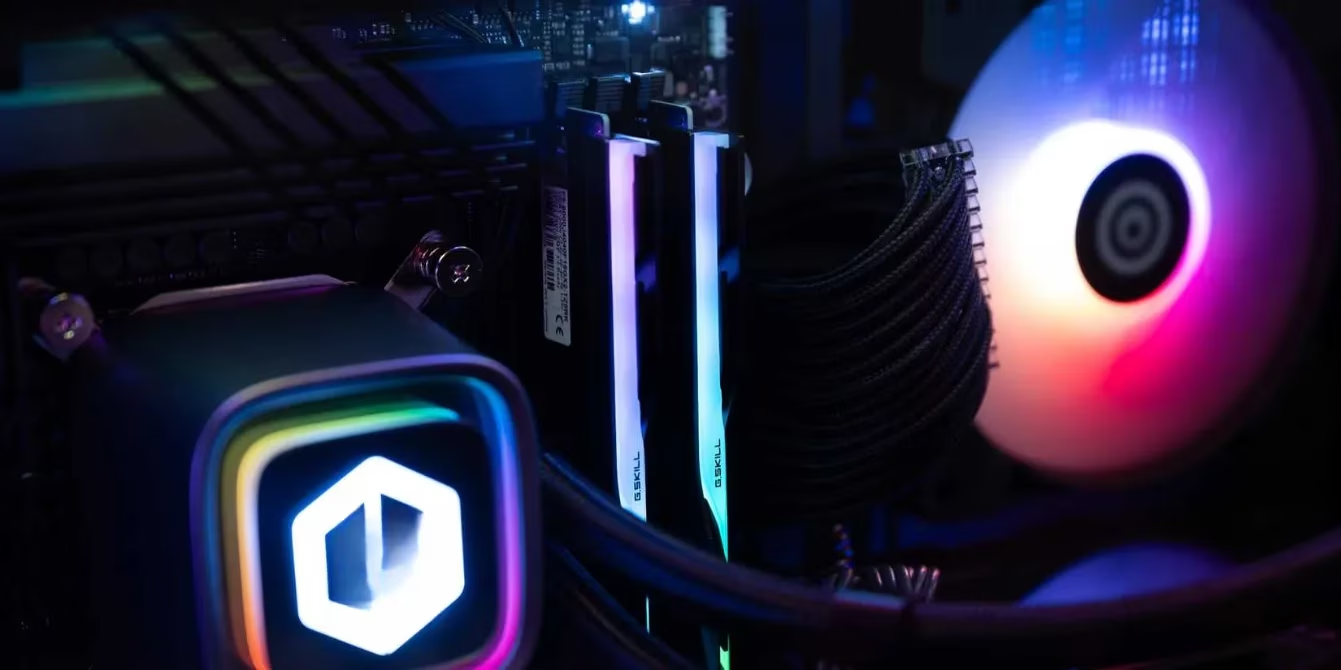
If I had a time machine, I’d smack the custom loop parts out of my past self's hands and shove a nice 360mm AIO at him. The learning curve for a custom loop isn't a curve; it's a sheer cliff face. For advanced users, it's a playground. For enthusiastic noobs like me? It was a minefield.
The Budget Black Hole: When "Just the Cooler" is a Lie
Here’s the kicker I wish someone had screamed at me: The water block or AIO unit is just the cover charge. For a custom loop, the real party (and the real bill) starts after you walk in. My wallet still weeps when I think about it.
| What You Think You're Buying | The Sneaky Extras That Pile On |
|---|---|
| A CPU Water Block | Tubing (hardline or soft), a dozen+ fittings, coolant, a pump, a reservoir, radiators (plural!), extra high-static pressure fans... |
| A Cool Looking PC | A much bigger case to house this liquid labyrinth. My old mid-tower laughed at my ambitions. |
| A One-Time Purchase | The constant, looming cost of maintenance and future upgrades. |
These extras don't just add up; they multiply. You go in thinking you're spending a few hundred, and next thing you know, you're justifying a second mortgage for nickel-plated compression fittings. Plan for at least double your initial cooler budget. Trust me on this one.
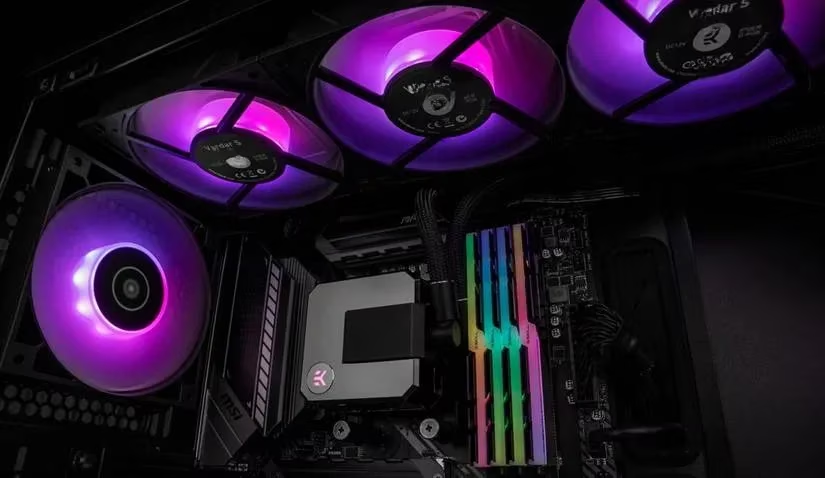
Maintenance: It's a Lifestyle, Not a Chore
This was my biggest wake-up call. Water-cooling, especially the custom kind, is NOT a "set it and forget it" deal. That's a fairy tale for air coolers. My loop became my pet—a very expensive, slightly terrifying pet that needed constant attention.
-
Custom Loop Life: You're on a schedule, pal. Coolant changes every 6-12 months (depending on type), checking for microscopic leaks religiously, flushing the system, cleaning dust out of radiator fins... it's a whole thing.
-
AIO Life: Breathe a little easier. Your main duties are keeping the radiator dust-free and listening like a hawk for any weird gurgles or pump whines that sound like trouble brewing.
The peace of mind of an AIO is seriously underrated. My custom loop? Let's just say I developed a nervous twitch every time I heard a new drip from the kitchen. Spoiler: It was never the kitchen.
The Art and Science of Placement: Where Cool Air Goes to Party
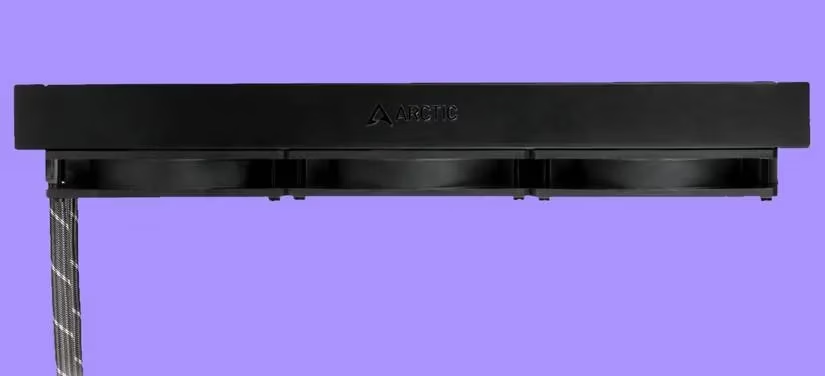
I made the classic rookie mistake. I got my gorgeous radiator and thought, "I'll just stuff this beauty wherever it fits." Wrong. Radiator placement is everything. It's not just about fitting; it's about physics!
You need that radiator where fresh, cool air can flow through it like a breeze through an open window—typically the front or top of your case as an intake. And for the love of all that is silicon, ensure your case has good overall airflow. If you're just recycling hot air from your GPU back through the radiator, you might as well be cooling your CPU with a hair dryer. The water-cooling system is only half the equation; the airflow is the silent partner doing the heavy lifting.
The Elephant in the Room: Leaks & The Great Component Fry-Off
The fear is real. Water and electronics are natural enemies, like cats and water, or me and sensible financial decisions. The nightmare of a leak killing your precious GPU is what keeps potential water-coolers up at night. But, you can build a fortress against it.
-
Quality is King: Don't skimp on fittings. Buy the good stuff. Tighten everything securely, but don't go Hulk-smash on acrylic parts (they crack, and your heart will crack with them).
-
The Sacred Test: ALWAYS perform a pressure test on a custom loop before you ever plug in a single power cable. It's the baptism by air that saves your components from a watery grave.
-
The Safety Net: Consider non-conductive coolant. It's not a magic "get-out-of-jail-free" card—if it gets gunky or mixes with dust, it can become conductive—but it's a fantastic safety blanket that gives you precious seconds to react if disaster strikes.
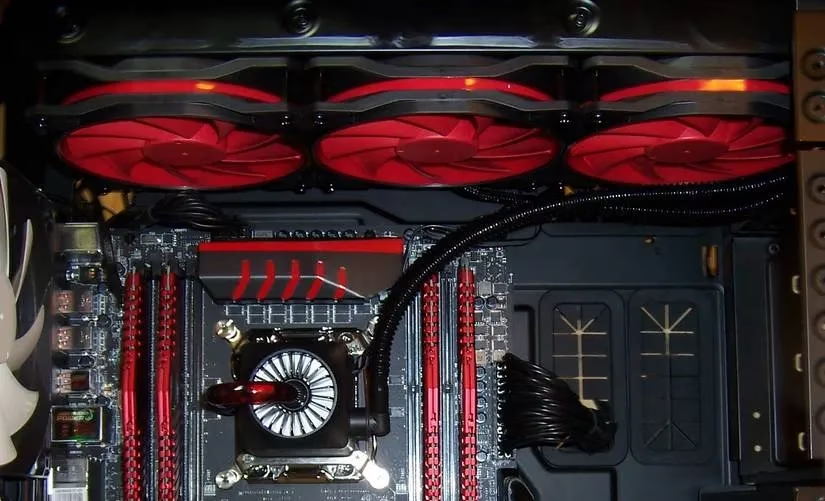
The Devil's in the Details: Blocks, Metals, and Aesthetics
I waltzed into water-cooling thinking a water block was a water block. Oh, my sweet summer child. The choices are overwhelming:
-
Acrylic vs. Metal Blocks: Acrylic looks stunning—you can see the coolant flow! But it's fragile. Metal (like copper) is durable but less flashy. Choose your fighter.
-
Internal Design: The jet plate layout inside the block matters for performance. Do your homework!
-
The Metal Compatibility Tango: This is critical. Mixing metals (like aluminum and copper) in your loop is inviting corrosion to a banquet, and your loop is the main course. Stick to one family, like copper and nickel-plated copper, to sleep soundly.
And let's talk about the real reason half of us do this: the looks. We want that clean, organized, cyberpunk masterpiece. But achieving that? It's an exercise in patience, cable management, and creative swearing. Routing tubes elegantly is a puzzle. Hiding pump cables is an art form. You'll spend hours just making it look good, not just work. It's worth it when you're done, but in the moment... let's just leave some blank space here for your frustration ____.
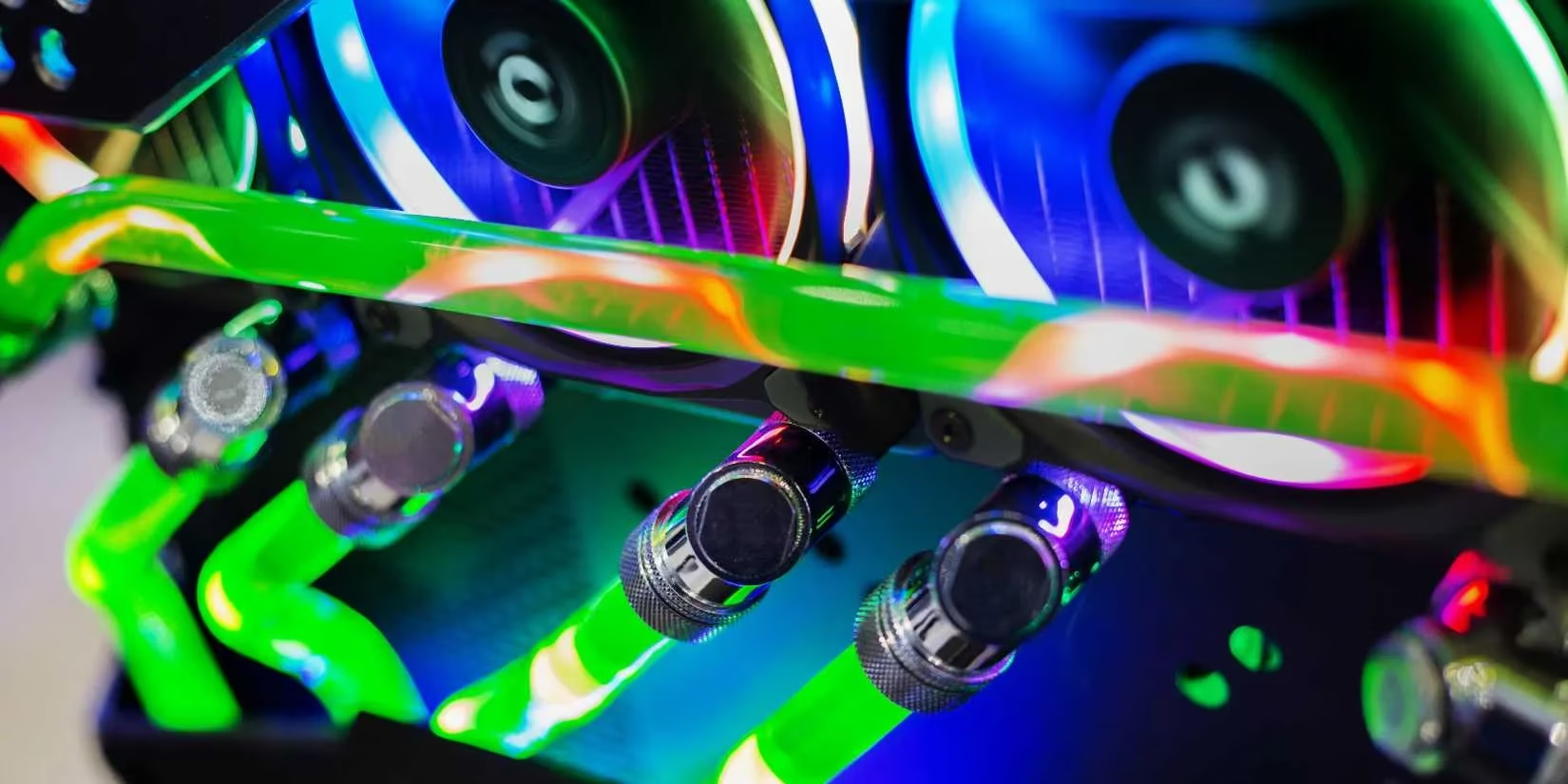
Look, in 2026, water-cooling is more accessible than ever, with amazing AIOs and better custom parts. But the core truths remain. It transformed my PC into a silent, cool, jaw-dropping showpiece. The sense of accomplishment is unreal. But it demanded my time, my money, and a little piece of my sanity. If you go in with your eyes wide open, budget for the hidden costs, and respect the maintenance, you'll build something incredible. Just maybe start with an AIO and thank me later. My journey was a wild ride, but hey, at least my PC looks ice cold.