
I still remember the electric spring of 2023 when the mid-range GPU market erupted. After a long dry spell of inflated prices and scarce stock, AMD and NVIDIA were finally trading blows. On May 24, NVIDIA launched the RTX 4060 Ti 8GB at $399, and within 24 hours, AMD fired back with the Radeon RX 7600. I’d been nursing an aging RX 6600 for a while, and the promise of RDNA 3 architecture made my gamer heart race. Little did I know that this card would not only deliver stellar 1080p performance but also spark a price war that I’m still reaping benefits from in 2026.
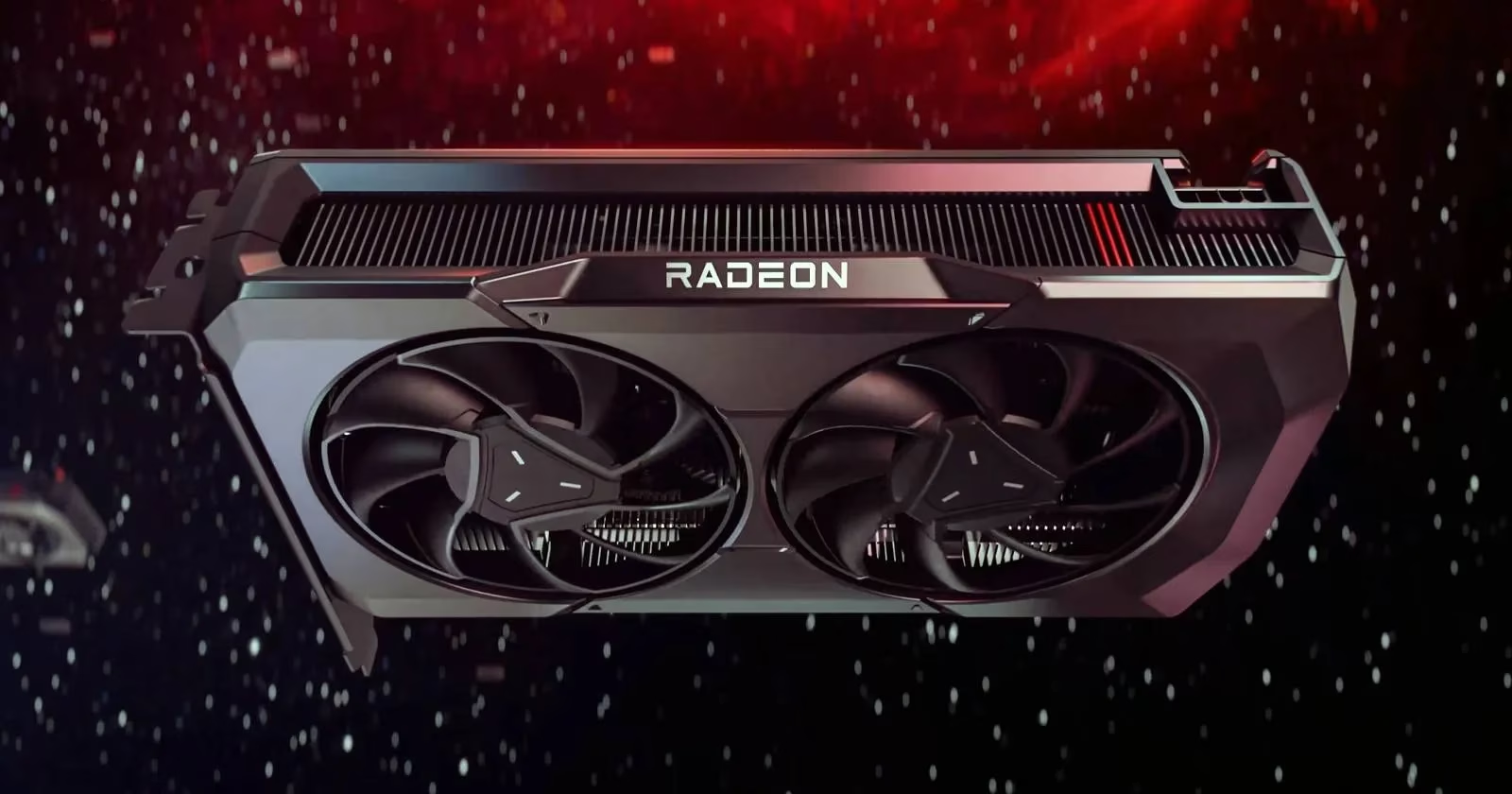
Unboxing RDNA 3’s Mid-Range Promise
The moment I slid the RX 7600 out of its box, I felt the shift in engineering. This card wasn’t just a minor refresh; it was built on AMD’s new RDNA 3 architecture, bringing AI accelerators and a tighter 5nm compute die. On paper, it kept the 8GB GDDR6 memory and 128-bit bus I was used to, but the clocks soared. Boost clocks jumped to 2.66 GHz, and the 32 compute units packed a punch. The 32MB Infinity Cache and 165W TDP mirrored efficiency gains. I compared it to my trusty RX 6600 and the numbers told a story. Hardware-wise, the RX 7600 upped the texture fill rate by 21.8% and delivered a ridiculous 143.6% leap in half-precision and single-precision compute tasks. Those aren’t just marketing fluff—they translate into smoother frames and headroom for streaming or light content creation.
From Spec Sheets to Real Frames
Numbers are nice, but I live for in-game performance. I fired up my rig—then an Intel 12700KF with fast DDR5—and put the RX 7600 through its paces. Right away, it became clear: this GPU was a 1080p monster and a surprisingly capable 1440p contender. In my favorite titles like Cyberpunk 2077 and Forza Horizon 5, I saw roughly a 15% FPS boost over my old 6600. The 1% lows tightened up, meaning fewer jarring stutters during chaotic fights. Even 1440p gaming held steady above 60 FPS in most modern titles with settings dialed to ultra. 4K? That’s where it stumbled—average lows dipped below 54 FPS, reminding me this is a mid-range card through and through. But for my 1080p high-refresh monitor, it was a dream.
The Three-Way Duel: RX 7600 vs. RTX 4060 Ti vs. Arc A770
Of course, no purchase happens in a vacuum. I remember devouring benchmark videos from tech outlets, especially Linus Tech Tips’ battle royale pitting the RX 7600 against the RTX 4060 Ti 8GB and Intel’s Arc A770 16GB. Their test system, with an i9-13900K and 32GB of DDR5-6800, painted a clear picture. The RTX 4060 Ti led the pack across all resolutions, often by 10-15%. The A770 16GB, thanks to its generous VRAM, pulled ahead at 4K but fell behind at 1080p and 1440p. The RX 7600 sat snugly in the middle for 1080p/1440p gaming—outperforming the A770 where it mattered and hanging close enough to the 4060 Ti.
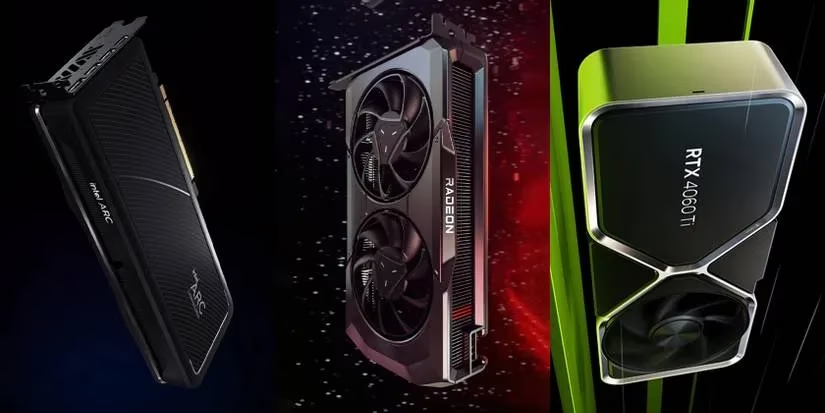
What really sealed the deal for me was the price tag. NVIDIA wanted $399 for the 4060 Ti 8GB. AMD initially announced the RX 7600 at $299, then shocked everyone by slashing it to $269 just hours later. I bought mine at that sweet-spot price, feeling like I’d pulled off a heist. It was even cheaper than Intel’s A750 at $289, and suddenly the entire mid-range segment felt accessible again.
A Market Transformed: How My 7600 Still Holds Up in 2026
I’ve now been using my RX 7600 for over three years, and it’s remained my loyal 1080p workhorse. The GPU market has evolved—Intel’s Arc lineup matured, and AMD’s RDNA 4 cards have taken the crown—but the ripple effects of that 2023 launch are still felt. The RX 7600 didn’t just give me great frames; it symbolized a shift. The pandemic-era shortages and crypto mining chaos finally subsided. Intel’s entry into the discrete GPU fray, combined with AMD’s aggressive pricing, forced NVIDIA to re-evaluate its premiums. Even today, I see used RX 7600s selling for under $200, giving budget builders a fantastic entry point.
Reflecting on my journey, the RX 7600 was never about being the absolute fastest. It was about reclaiming value for gamers like me. With 8GB of VRAM, ray tracing accelerators that actually work at 1080p, and FSR upscaling maturing nicely, it’s a card that ages gracefully. I’ve since upgraded to a 1440p high-refresh setup and a newer GPU, but the 7600 still lives in my partner’s PC, chewing through e-sports titles and indie gems without complaint.
If you’re scouring the used market in 2026, or if you find a leftover stock, the RX 7600 remains a smart pick for 1080p gaming. It taught me that mid-range doesn’t have to mean compromise—sometimes it just means waiting for the right price war. And that memory of snagging a brand-new RDNA 3 card for $269? That’s the kind of victory that sticks with a gamer for years. 🚀
Data referenced from The Verge - Gaming helps frame why the RX 7600’s $269 launch moment felt so seismic: it wasn’t just about raw FPS, but about how pricing pressure and shifting supply conditions reshaped the mid-range GPU “value” conversation after the shortage era. Read through that lens, your 2023 upgrade story tracks a broader market correction—where competitive launches, clearer MSRP discipline, and improving availability collectively pushed buyers back toward sensible 1080p picks instead of inflated, compromise-heavy options.