
Maintaining stable temperatures inside a desktop PC is a critical part of keeping modern components running smoothly. Case fans are often overlooked, yet they move air across heatsinks and radiators, preventing thermal throttling and unexpected shutdowns. Traditional fans usually rely on ball, sleeve, or fluid bearings to spin their rotors with minimal friction. However, magnetic levitation, commonly called MagLev, introduces a different approach that has steadily gained attention among builders. As of 2026, MagLev case fans are no longer rare experimental hardware but practical options available at competitive prices. This article examines how these fans work, their benefits, and whether the premium is justified.
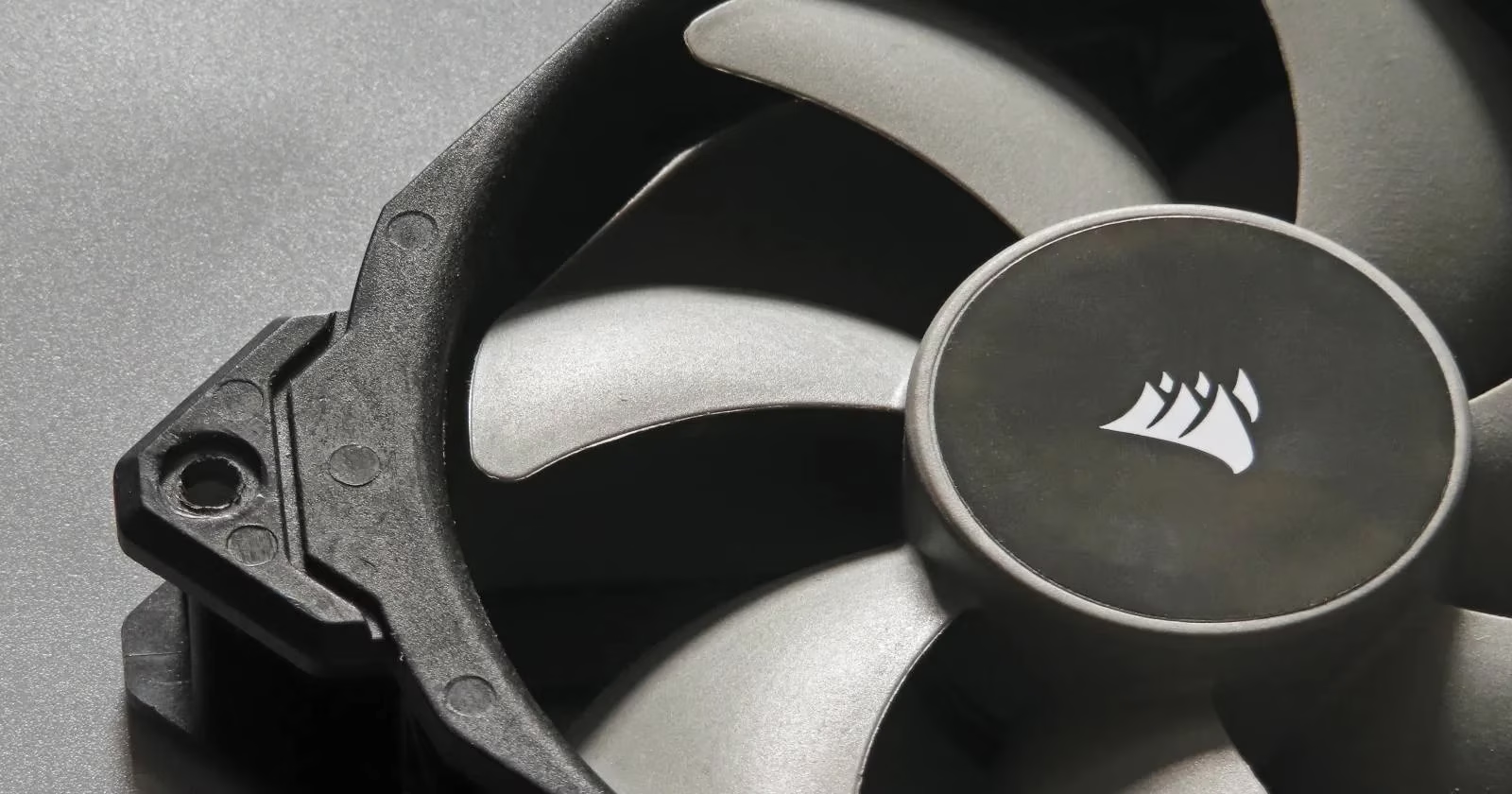
What Are MagLev Fans?
MagLev fans are computer fans that use magnetic levitation to spin their blades. Unlike conventional case fans that transfer power between a stator and rotor through steel bearings, MagLev fans use magnetic flux generated by attracting and opposing magnets. This magnetic interaction not only drives the rotor but also suspends the fan blade assembly in the air. The result is a rotating part that floats instead of grinding against a physical bearing.
How Magnetic Levitation Works
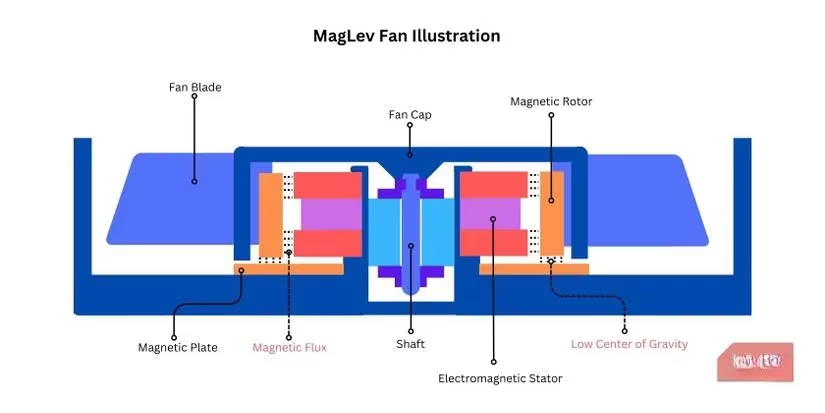
Like motors in ventilation systems, kitchen appliances, power tools, and electric vehicles, PC fans contain a stator and a rotor. The rotor is the moving part; the stator stays fixed. MagLev fans use permanent magnets for the rotor and an electromagnet for the stator. These magnets produce a magnetic flux strong enough to spin the magnetic rotor and its attached fan blades.
To achieve actual levitation, a magnetic plate sits at the base of the fan frame. This plate creates another magnetic field that helps suspend the rotor, greatly reducing friction. It also lowers the center of gravity for the spinning rotor. A lower center of gravity improves stability, which allows the blades to rotate smoothly even at high speeds. A clamping or locking mechanism in the fan cap keeps the rotor from popping out, while PWM control adjusts magnetic flux to hold the blades in position.
Key Advantages
MagLev fans provide several benefits over traditional case fans that use steel and fluid bearings.
-
Silent operation: Bearings are one of the main sources of fan noise. By removing the need for physical bearings, MagLev fans can operate at lower noise levels, making them ideal for quiet environments.
-
Longer lifespan: Fewer moving parts and reduced mechanical friction mean MagLev fans experience less wear and tear over time.
-
Energy efficient: The magnetic field rotates the fan blades while consuming less energy, allowing higher speeds with lower power draw.
-
Sustained performance: MagLev fans can push more air at higher speeds while remaining quieter than many regular case fans. Reduced friction also supports consistent cooling performance.

A Real-World Comparison
To assess performance fairly, two similarly priced case fans from the same manufacturer can be compared: the Corsair ML140 ELITE and the Corsair AF140 ELITE. The main physical difference is bearing type; the MagLev version includes LED lighting while the airflow version does not. Manufacturer data shows the two fans have very similar airflow, sound level, and fan speed. However, MagLev provides better power draw and static pressure.
| Metric | Corsair ML140 ELITE (MagLev) | Corsair AF140 ELITE (Airflow) |
|---|---|---|
| Bearing type | Magnetic levitation | Fluid or standard bearing |
| Airflow | Similar | Similar |
| Fan speed | Similar | Similar |
| Noise | Under 30 dBA | Under 30 dBA |
| Power draw | Lower | Higher |
| Static pressure | Higher | Lower |
Both fans at maximum RPM remain quieter than a library, which typically has a noise level of around 30 dBA. They also use PWM over DC control, improving energy efficiency.
Are They Worth the Premium?
With MagLev fans readily available for several years, prices in 2026 have become competitive. The performance edge may be small, but the benefits are real: better static pressure, lower energy use, longer lifespan, and stable operation. If choosing between a MagLev fan and a traditional fan at similar cost, the MagLev can be a sensible purchase.
However, users specifically targeting silence should compare alternatives. Noctua's NF-A14 generates only 24.6 dBA. Arctic's BioniX F140 offers airflow of 140 CFM and static pressure of 2.35 mm-H2O using regular bearings. Such options can deliver excellent performance while saving money. MagLev is not the only route to quiet, high-airflow cooling.
Final Thoughts
MagLev case fans represent a clever engineering solution. They reduce friction, lower noise, and extend operating life by eliminating traditional bearings. For builders who value efficiency and long-term stability, the technology is a solid choice. Yet the real-world difference against high-quality standard fans is often modest. The decision should depend on price, availability, and specific build requirements rather than marketing hype alone.