
I still get asked whether Intel’s first real discrete GPUs are worth buying in 2026, and my answer is always: it depends on the price and the games you play. The Arc A750 and Arc A770 were Intel’s opening move into the mid-range GPU market, and they didn’t try to fight the RTX 4090 or the Radeon RX 7900 XTX. Instead, Intel aimed at people who wanted solid 1080p and 1440p gaming without paying crazy scalper prices. That strategy still makes sense today, even if newer Arc Battlemage cards and refreshed rivals have changed the picture. If I were building an all-Intel system and had to choose between these two older Alchemist cards, I’d compare the A770’s extra VRAM against the A750’s value price and then decide.
The spec sheet is close, but not identical
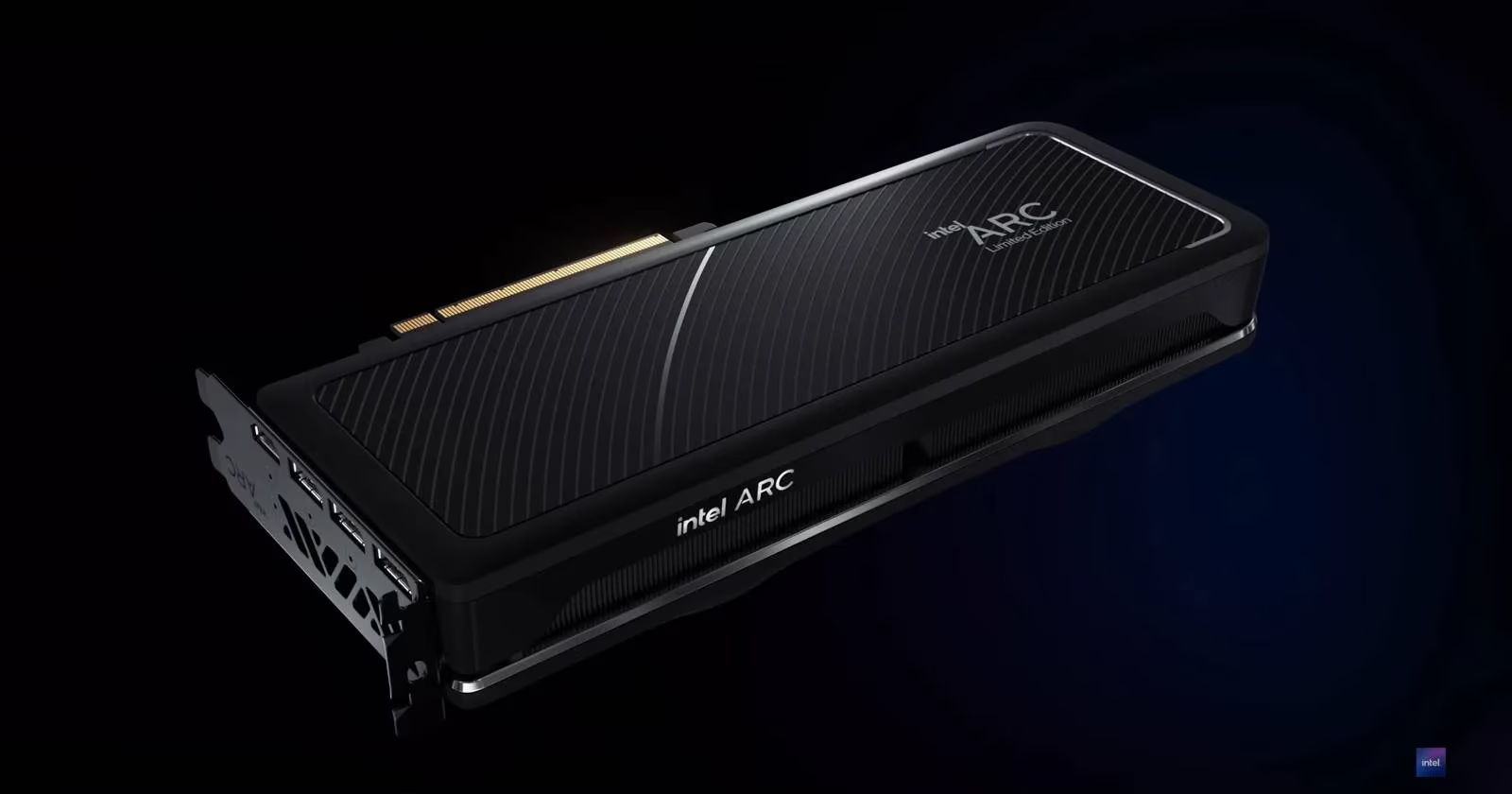
On paper, the Arc A770 is the clear step up. It has slightly higher clock speeds, more shaders, more tensor cores, and more ray tracing cores than the A750. The headline difference, though, is memory: the A770 comes with 16GB of GDDR6, while the A750 has 8GB. That matters. More graphics memory helps with high-resolution textures, ray tracing, and modern games that stream a lot of assets. It doesn’t magically double performance, but it gives the A770 more breathing room at 1440p and beyond.
| Spec | Arc A750 | Arc A770 |
|---|---|---|
| Memory | 8GB GDDR6 | 16GB GDDR6 |
| Core hardware | Fewer shaders, RT cores, tensor cores | More shaders, RT cores, tensor cores |
| Board power | 225W | 225W |
| Recommended system PSU | 550W | 550W |
| Ports | HDMI 2.1 + 3x DisplayPort 2.0 | HDMI 2.1 + 3x DisplayPort 2.0 |
| Theoretical advantage | Baseline | About 14% |
| Real gaming advantage | Baseline | About 6% |
Both cards use a dual-slot design and the same 225W TDP, so I wouldn’t expect either one to force a case or power supply upgrade. As long as I have a decent 550W PSU, I’m within Intel’s recommended minimum for a full system. The port selection is also identical: one HDMI 2.1 and three DisplayPort 2.0 outputs. That’s fine for most people, though it’s worth noting that neither card gives you the newest DisplayPort 2.1 standard.
How they actually game
The A770’s hardware advantage translates into a modest real-world lead. In the test averages I’ve seen, the A770 hits about 106.5 FPS at 1080p and 84.17 FPS at 1440p, while the A750 lands around 100.75 FPS at 1080p and 79.33 FPS at 1440p. That’s roughly a 6% gaming difference, even though the theoretical gap is closer to 14%. In other words, the A770 is faster, but it isn’t a different tier of card. If I’m already happy with A750-level performance, the A770 won’t feel like a massive upgrade.
Where the A770 does pull ahead is in memory-heavy situations. At 1440p with high textures, or in games that use ray tracing, the 16GB buffer is a real advantage. I’d pick the A770 if I plan to keep the card for several years and play modern DirectX 12 titles. I’d pick the A750 if I mainly game at 1080p and care more about saving money.
Price and value are the whole story
At launch, the Arc A770 started at $329 and the A750 at $289. Street prices have moved around a lot since then, and in 2026 these are older cards, so I wouldn’t quote one fixed price and pretend it applies everywhere. My rule is simple: if the A770 costs close to the A750, buy the A770. If it carries a big premium, the A750 is the better value. I wouldn’t pay a huge markup for a 6% gaming difference.
The competition matters too. The A750 and A770 originally went up against cards like the Nvidia RTX 3060 and AMD Radeon RX 6600, and those cards are still worth comparing on the used or clearance market. The RTX 3050 was often a poor deal because prices stayed high, which made cards like the RTX 2060 look smarter. In 2026, I’d also check newer budget options before committing, because Intel’s own newer Arc cards and refreshed competitors can change the math quickly.
Driver maturity is better, but not perfect
This is the part I’d tell a friend before they buy. At launch, Intel’s Arc drivers were rough around the edges, especially in older DirectX 9 games. Titles like Counter-Strike: Global Offensive could stutter or behave inconsistently. By 2026, Intel’s driver stack is far more mature, and most modern DX12 and Vulkan games run well. Still, if my library is full of old DX9 or obscure legacy titles, I’d temper my expectations. Arc is at its best when the game is modern and the drivers have had time to optimize it.
I’d also make sure Resizable BAR is enabled. Arc cards rely on it more than most, and leaving it off can cost performance. If I’m building an all-Intel system, I’d check motherboard support and BIOS settings before I blame the GPU.
My verdict
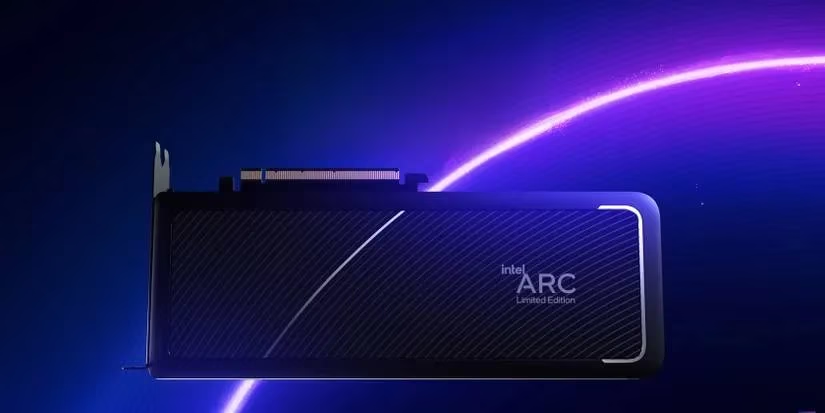
If I want the more powerful Intel Arc card and I can find the A770 at a fair price, I’d buy it. The 16GB of VRAM gives it more room to grow, and the extra performance is a nice bonus. But I wouldn’t overpay for it. The A750 is the smarter value pick for 1080p gaming, especially if the price gap is wide. Neither card is a ray tracing monster, and neither is a 4K ultra card, but both can deliver a good mid-range experience in the right system. If I’m playing mostly modern games, I’d give Intel a chance. If I need flawless legacy support or CUDA acceleration, I’d look elsewhere. ✅🎮