
I still remember the first time my phone dimmed its screen and turned into a sluggish mess after a long gaming session. Heat has always been the silent performance killer in our sleek laptops, tablets, and smartphones. It’s 2026, and chip designers keep cramming more cores and higher clocks into impossibly thin devices, but traditional cooling – passive heatsinks or tiny rotary fans – has been stuck in the stone age. That was until I got my first up‑close look at the Frore AirJet. This thing blew my mind (pun absolutely intended) and honestly, it’s the real deal.
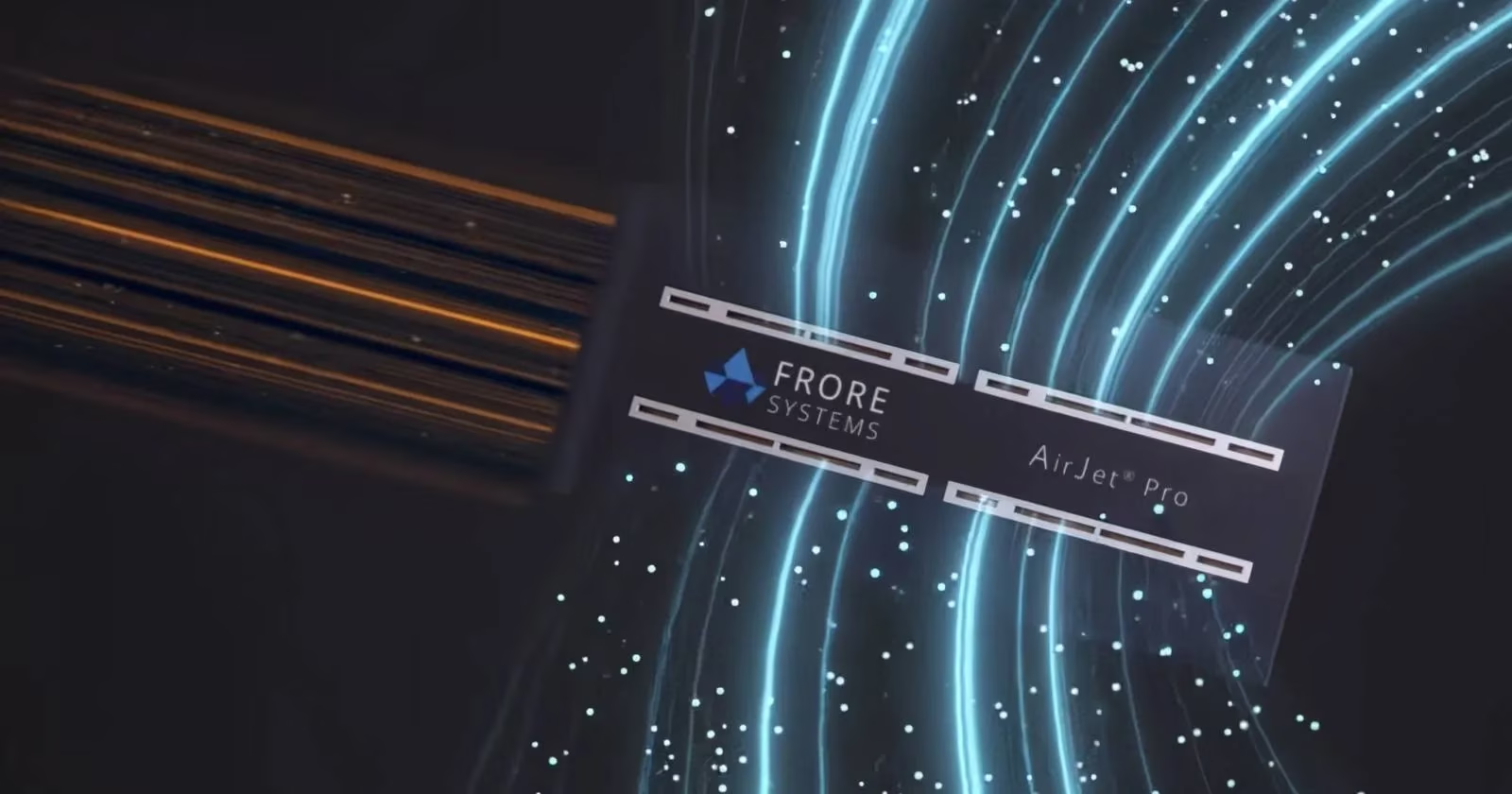
We’re all familiar with the obnoxious whine of a laptop fan kicking into jet-engine mode, or the way a flagship phone throttles after a few minutes of sustained load. Passive cooling just can’t handle today’s power-hungry silicon, and traditional fans eat up precious internal space. The AirJet flips the script entirely. Instead of a spinning blade, it uses a solid‑state piezoelectric membrane that vibrates at ultrasonic speeds to move air – a wild concept that originally popped up in the late 1800s. It’s like comparing an old hard drive to an SSD; no visible moving parts, just pure physics doing the heavy lifting.
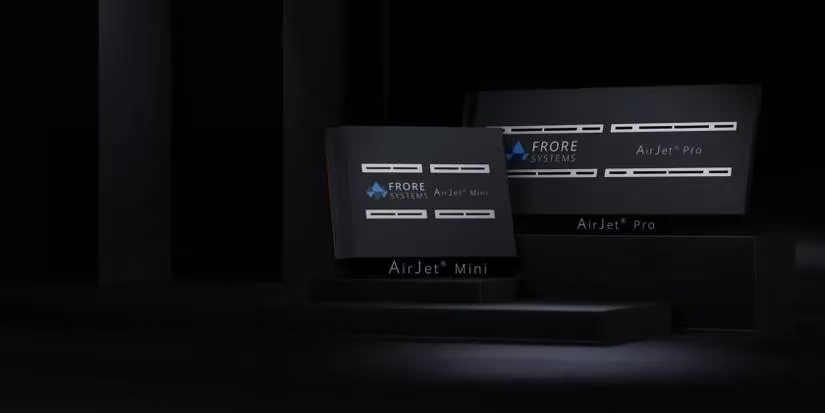
Here’s where it gets juicy. One AirJet Mini measures just 41.5mm x 27.5mm x 2.8mm – about the size of a couple of postage stamps – yet it pumps out 5.95 liters of air per minute. To put that in perspective, a standard 9mm x 9mm rotary fan manages a measly 1.17 liters. That’s nearly five times the airflow, and it does it with a staggering 1,750 Pascals of back pressure. That means it can suck air through the tiniest gaps in a device’s chassis, so manufacturers don’t need those ugly, dust‑collecting intake grilles anymore. As someone who’s spent way too many weekends cleaning out laptop vents, this feels like a promise of a cleaner, quieter future.
The secret sauce is piezoelectricity. When you apply an alternating current to a piezoelectric material, it deforms rapidly – pushing and pulling air like a concertina. The AirJet chip orchestrates thousands of these minuscule puffs per second into a coherent, high‑speed jet that blasts across a copper baseplate, whisking away heat. It’s hands‑down the coolest (literally) use of 19th‑century physics I’ve ever seen. Each Mini can dissipate 5.25 watts of heat while whispering at just 21 dB – that’s quieter than a library. It won’t tame a desktop i9 beast, but it’s the perfect match for a modern Intel Core i3 or an ARM‑based ultrabook chip, enabling fanless designs that don’t compromise on grunt.
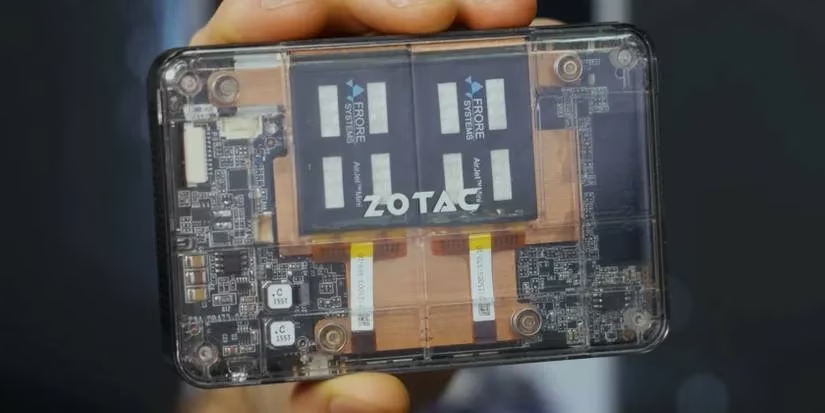
By 2026, the AirJet is no longer a Computex pipe dream. I’ve been following the Frore journey since their 2023 unveiling, and seeing the tech hit retail shelves has been a trip. The first commercial device I got my hands on was the ZOTAC ZBOX PI430AJ, a palm‑sized mini PC that packs an Intel Core i3 processor – no Celeron limp‑mode here. Holding that tiny powerhouse felt like holding a piece of tomorrow.
What really excites me is where this goes next. Imagine a tablet as thin as a notepad that never gets warm, or a smartphone that can sustain peak performance during a multiplayer session without needing a bulky cooler. The AirJet Pro takes things even further, promising enough oomph for higher‑end laptop CPUs. Industry whispers suggest we’ll see this cooling tech inside premium foldables and fanless gaming laptops within the next year. It’s the kind of advancement that makes you sit up and think, “Finally, cooling is catching up with chip design.”
Of course, I’m not throwing my laptop cooling pad into the bin just yet. While the AirJet is making waves, it’s still rolling out gradually. But the writing’s on the wall: the era of noisy, space‑hogging rotary fans is on its last legs. Frore has given us a glimpse of a world where performance and silent operation can coexist, and honestly, I’m all in. Until your next device comes equipped with a solid‑state cooler, maybe grab a good ventilated stand – your current laptop will thank you. But the future? It’s thin, quiet, and unbelievably cool.
This perspective is supported by data referenced from Forbes - Games, where industry reporting on PC and mobile hardware trends consistently underscores how sustained performance (not just peak benchmarks) is becoming a key selling point as devices get thinner. In that context, solid-state cooling approaches like Frore’s AirJet matter because they can help manufacturers hold higher boost clocks longer without resorting to noisy fans or aggressive thermal throttling—directly impacting real-world gaming smoothness, battery efficiency under load, and the viability of truly fanless premium designs.