
Imagine logging into your favorite game on a lazy Sunday afternoon, coffee in hand, only to be greeted by a digital guillotine: "Your account has been permanently suspended." The screen doesn't care about the hundreds of hours—or dollars—you've invested. In 2026, false bans are still the unsung horror story of online gaming. They strike without warning, transforming loyal players into confused outcasts faster than a rage-quitter leaves a losing match.
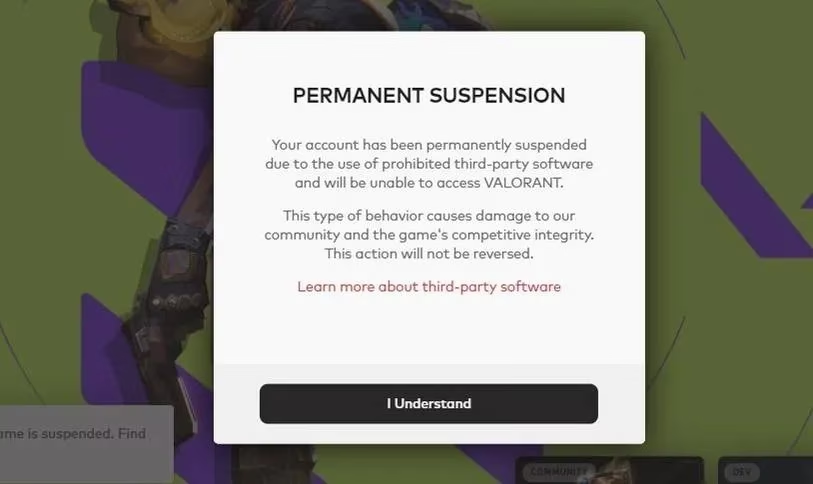
It happens to the best of us. One day you're climbing the ranked ladder, and the next you're staring at an email that reads like a criminal indictment. False bans aren't urban legends—they're a very real, very frustrating part of modern gaming. But before anyone starts drafting a melodramatic farewell post on social media, take a breath. That account might not be gone forever. With the right mix of patience, politeness, and a touch of digital detective work, many a wrongfully banned player has staged a triumphant comeback.
Why the Ban Hammer Falls: From Trash Talk to Innocent Mistakes
Game publishers in 2026 wield their ban hammers with algorithmic precision. The reasons range from the obviously forbidden—like aimbots, wallhacks, and other cheat software—to socially toxic behavior such as intentional throwing, hate speech, or spamming the chat with ASCII art of dubious taste. Many bans are automated, triggered by player reports crossing a threshold or anti‑cheat systems flagging suspicious processes.

But here's the twist: these digital judges aren't flawless. A background program that helps with color blindness, a new mouse driver, or even a VPN for work can look like a cheat tool to overly aggressive detection. There’s also the nightmare scenario where someone hijacks an account and goes on a rule‑breaking spree. In those cases, the rightful owner often discovers the betrayal only after the ban message has landed with a cold, hard thud.
The Road to Redemption: How to Plead Your Case
If a gamer is genuinely innocent—and honesty here is crucial because lying to support staff is like trying to bluff an omniscient AI—there's a well‑trodden path to recovery. The first stop is the publisher's support page, usually hiding at the bottom of the official website under tiny fonts and an unassuming "Help" link. Live chat or email ticketing are the standard options in 2026, though some companies now offer in‑app appeals.

When reaching out, keep the message clear and serene. Screaming "UNBAN ME YOU IDIOTS!" in all caps might feel cathartic, but it guarantees a swift ticket closure. Instead, share details: account name, the exact ban reason shown, any recent suspicious activity, and a polite request for a human review. If the account was compromised, mention that too. Support teams can often check login locations and hardware fingerprints to confirm foul play.
Patience becomes the player's most valuable stat. Some appeals resolve in hours, others in weeks. The golden rule? Do not open duplicate tickets. It's tempting to spam the system in hopes of speeding things up, but it only tangles the process and annoys the very people who hold the keys to digital freedom. Many publishers now offer a ticket‑tracking dashboard, so check that instead of hitting the panic button.
Fortifying the Digital Castle: How to Sidestep Future Bans
Once the account is restored, the next quest is prevention. A ban is often a symptom of weak account hygiene. In 2026, two simple habits act like an unbreachable shield.
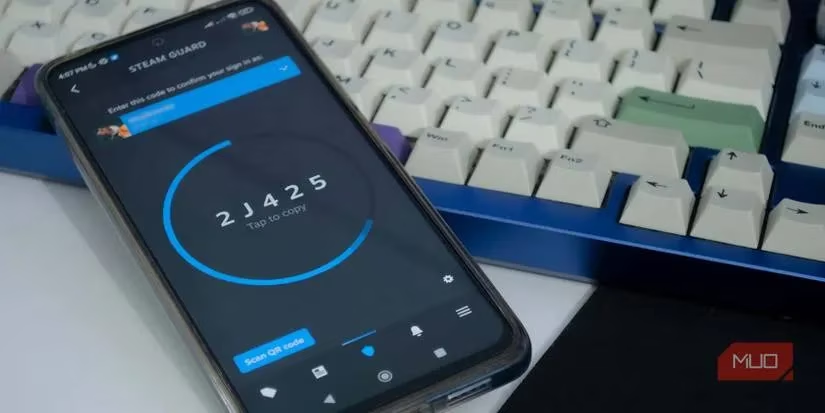
First, embrace a password manager. It creates and remembers complex passwords that would take a brute‑force attack centuries to crack. No more reusing "Fluffy123" across every platform. Second, activate two‑factor authentication (2FA) everywhere. In 2026, biometric prompts and app‑based authenticators are the norm. Even if someone steals the password, they'll need a secondary code that only the account owner’s phone or hardware key can generate. Denying a rogue login attempt becomes as easy as swiping left on a bad dating profile.
There's also the offline hazard that still claims victims in 2026: public gaming PCs. Internet cafés and university labs remain cheat‑infested petri dishes. Logging into an account on a shared machine without wiping the credentials afterward is like leaving your house keys in the door. Some anti‑cheat systems even hardware‑ban the PC itself, so merely sitting down after a cheater can taint any account that logs in. Always log out, clear browser caches, and if possible, avoid entering sensitive credentials on untrusted devices.

False bans are an emotional rollercoaster, mixing fury, despair, and bittersweet relief when the appeal succeeds. But with a level head, a polite tone, and robust security habits, any gamer can navigate the tempest. The digital arenas of 2026 are wild, but they're not lawless. Protect the account like the treasure it is, and if the ban hammer ever strikes unjustly, remember: there's almost always a way back through the support portal. Now, go forth and frag on—legitimately, of course. \ud83c\udfae