
For the dedicated gamer, the allure of a pre-assembled PC is understandable—a promise of convenience and instant gratification. However, a deeper dive into the 2025 PC landscape reveals a compelling reality: the premium paid for this convenience often comes at a significant cost in terms of financial value, component quality, long-term flexibility, and personal fulfillment. While system integrators and major OEMs continue to offer plug-and-play solutions, the case for building your own gaming rig has never been stronger, offering a level of control and optimization that pre-built systems simply cannot match.
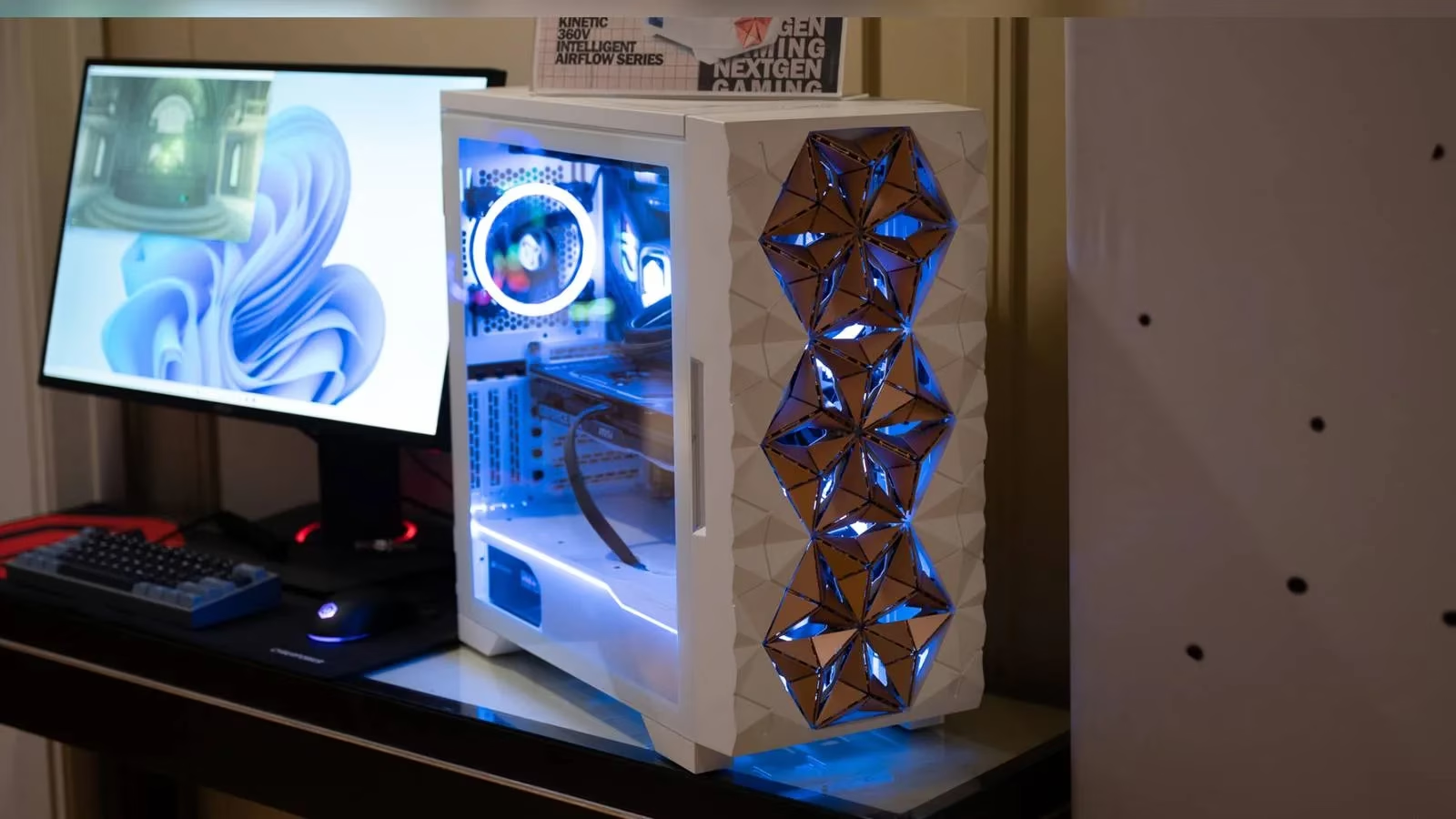
Let's talk about the most immediate factor: cost. The price premium on pre-built PCs is not a myth; it's a substantial markup. Consider a typical $1,400 gaming PC from a major retailer. When you strip away the cost of assembly, branding, and retail margin, the actual hardware inside often totals a mere $900 to $1,000. That's a staggering 30-40% premium for an hour's worth of assembly work. That extra $400 could be transformative in a custom build, enabling a significant GPU upgrade, doubling your RAM capacity, or investing in a high-refresh-rate monitor that truly elevates the visual experience. In a recent comparative analysis, a custom parts list matching the specifications of popular pre-built models was consistently priced $380 cheaper.
Component shopping also unlocks the power of the dynamic market. Prices for CPUs, GPUs, and memory fluctuate constantly, with major sales events like Black Friday and Prime Day offering deep discounts. Savvy builders can cherry-pick parts during these sales, compounding their savings. In contrast, pre-built PC discounts are infrequent and often signal the impending release of newer models, meaning you might be buying outdated hardware at a slightly reduced price.
Perhaps even more critical than initial savings is the issue of upgradeability and long-term value. When you purchase from major OEMs like HP, Dell, or Lenovo, you're often buying into a closed ecosystem. These systems frequently use proprietary cases, power supplies, and motherboards with non-standard form factors and connectors. What does this mean for you? When it's time for an upgrade—say, a new graphics card or CPU—you can't simply install the new part. You may be forced to replace the motherboard, power supply, and case simultaneously, effectively building a new PC anyway. This lack of flexibility is not only frustrating but also environmentally unsustainable, as perfectly functional components are prematurely discarded.
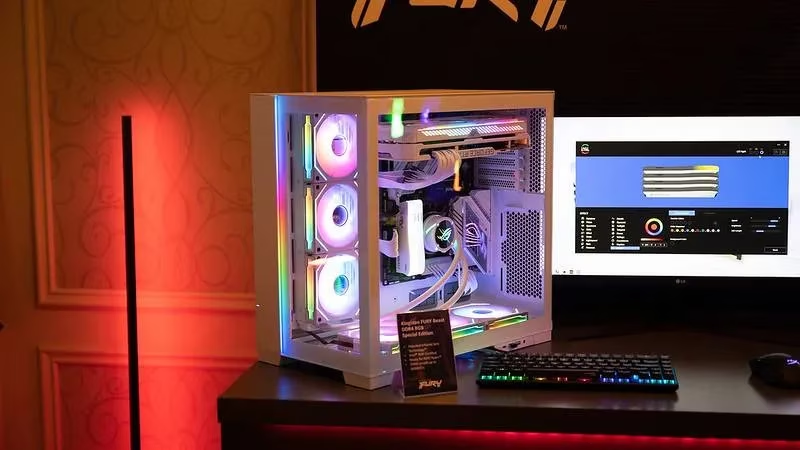
Building with standard, off-the-shelf components future-proofs your investment. A quality ATX motherboard will support multiple generations of CPUs and GPUs. A robust power supply with sufficient wattage and modern connectors can last through several upgrade cycles. This modular approach is the cornerstone of a sustainable and cost-effective PC ownership experience.
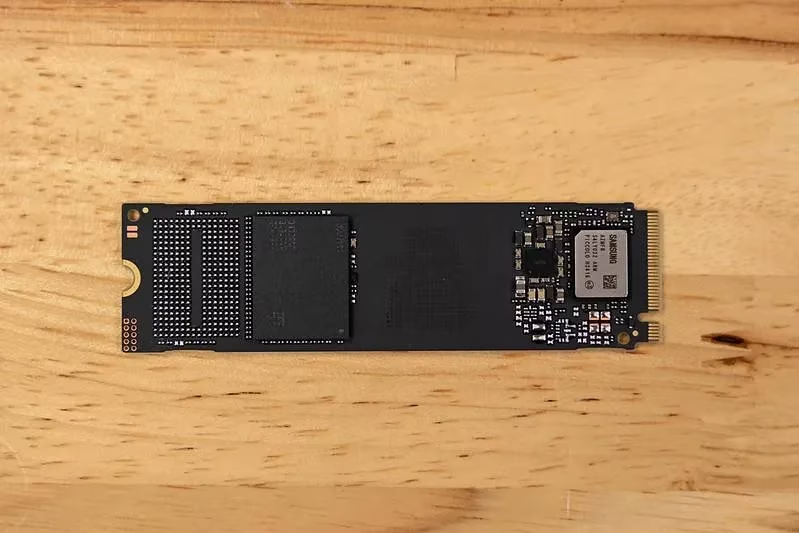
Then there's the question of quality, which extends far beyond the listed specifications. A pre-built spec sheet might proudly advertise a "1TB NVMe SSD" and "16GB DDR5 RAM," but it rarely discloses the brand or model. That SSD could be a blisteringly fast Samsung 990 Pro or a sluggish, no-name drive that bottlenecks your entire system. The RAM might be high-performance modules with tight timings or budget sticks running at the bare minimum speed. The same opacity applies to the power supply (the most critical component for system stability), the CPU cooler, case fans, and the motherboard itself. Manufacturers have a strong incentive to cut costs here, and they often do, populating their systems with the most affordable components that still meet the spec.
For enthusiasts, this is a deal-breaker. We develop preferences for certain brands—be it Corsair for memory, Seasonic for power supplies, or Noctua for cooling—based on years of reliable performance. With a custom build, you have complete visibility and control. You know exactly what you're getting, and you can prioritize quality in areas that matter most to you, whether that's silent operation, maximum overclocking headroom, or sheer reliability.
Warranty and support present another stark contrast. The industry standard for pre-built PCs is a one-year warranty, with a rare extension to two years. When that expires, you're entirely on your own. Even during the warranty period, the repair process can be arduous, often requiring you to ship the entire bulky tower at your own expense for a service that can take weeks.
Individual components, however, frequently come with far more generous protection plans:
| Component | Typical Warranty Length |
|---|---|
| Power Supply | 5–10 years |
| Memory (RAM) | Lifetime to 10 years |
| Solid State Drive (SSD) | 3–5 years |
| Motherboard | 3 years (often more) |
| Graphics Card | 3 years |
If a component fails, you deal directly with its manufacturer—experts who understand their product intimately. You only ship the faulty part, not your entire system, making the process faster and cheaper. This decentralized support model is generally more efficient and knowledgeable than the generalized support offered by a PC OEM.
Of course, we must acknowledge the valid use cases for pre-built systems. 🎯 They are ideal for:
-
Users who need a working machine immediately, with zero time for research or assembly.
-
Those who find a genuinely exceptional clearance or liquidation deal.
-
Businesses that require the simplicity of a single point of contact for all IT support.
-
Individuals who are genuinely intimidated by the building process and value absolute convenience over all other factors.
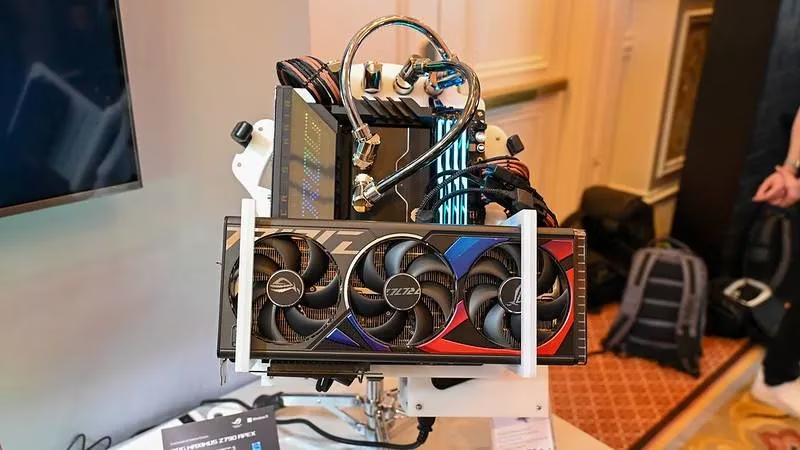
The intimidation factor of building a PC is often overstated. In 2025, the process is more accessible than ever. Countless detailed video guides, comprehensive forum communities, and intuitive tools like PCPartPicker (which checks compatibility for you) have demystified the process. It's an afternoon project that requires patience and careful attention to instructions, not an advanced engineering degree. The reward is immense: not just a machine, but a deep understanding of how it works, the pride of creation, and the invaluable skill to troubleshoot and upgrade it for years to come.
Ultimately, the choice between custom and pre-built comes down to your priorities. If your primary goal is to minimize upfront time investment and delegate all responsibility, a pre-built may suffice. But for gamers and power users who care about performance-per-dollar, long-term value, component quality, and having a system tailored to their exact needs, building your own PC is the unequivocally superior path. You gain complete control, avoid costly proprietary traps, and invest in a platform designed to evolve with you. Once you experience the satisfaction and superior results of a custom build, the compromises of the pre-built world become difficult to ignore.