
Building a high-end gaming PC in 2026 can still feel like walking into a three-door maze when you start reading about AMD's Ryzen 7000 X3D lineup. I spent a long time wrestling with the same question I keep hearing: should I save money with the Ryzen 7 7800X3D, or stretch toward the Ryzen 9 7900X3D or 7950X3D? Having tested all three, I can describe how they behave in ways that spec sheets alone never capture.
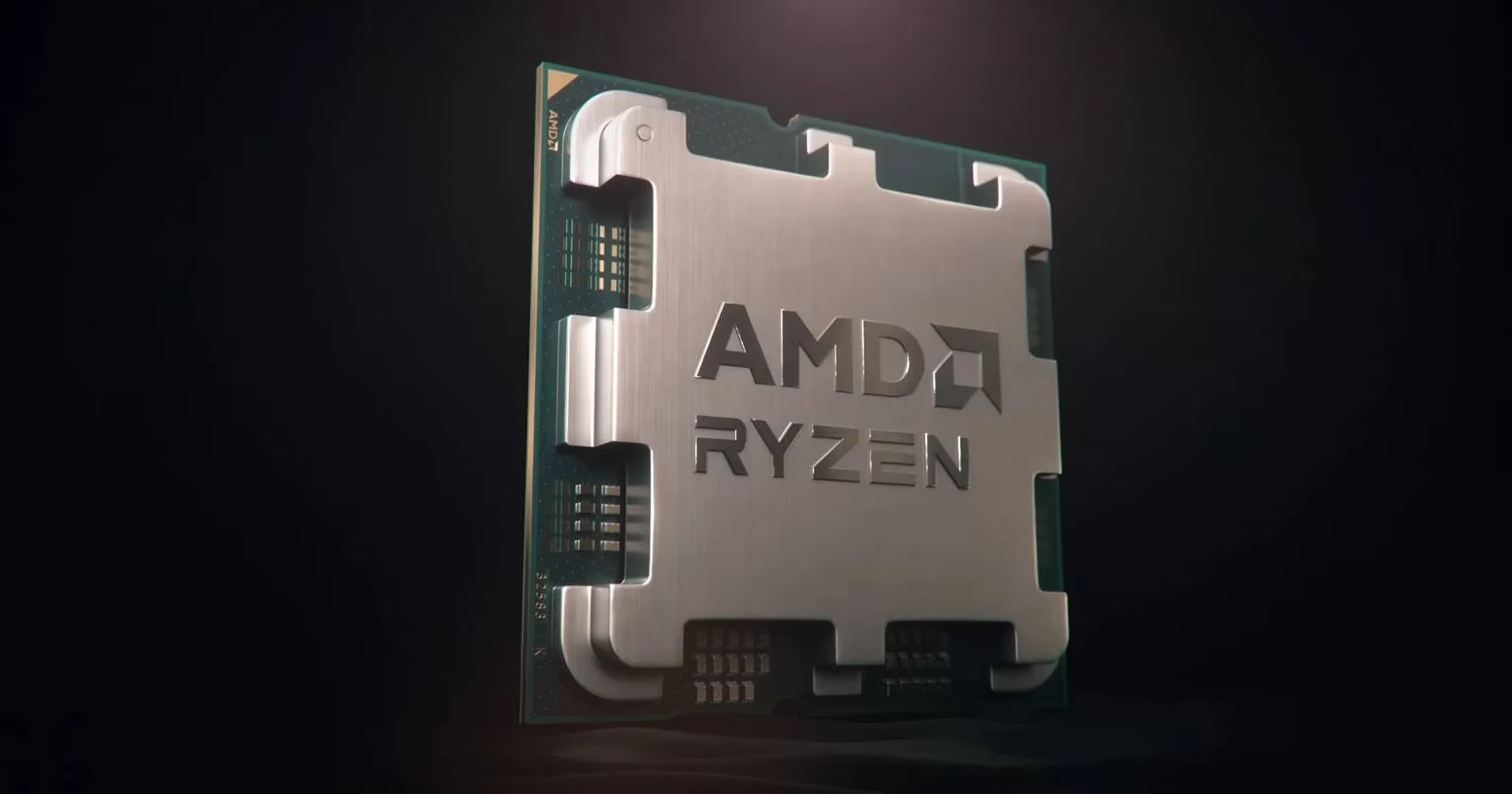
How 3D V-Cache Changes the Game
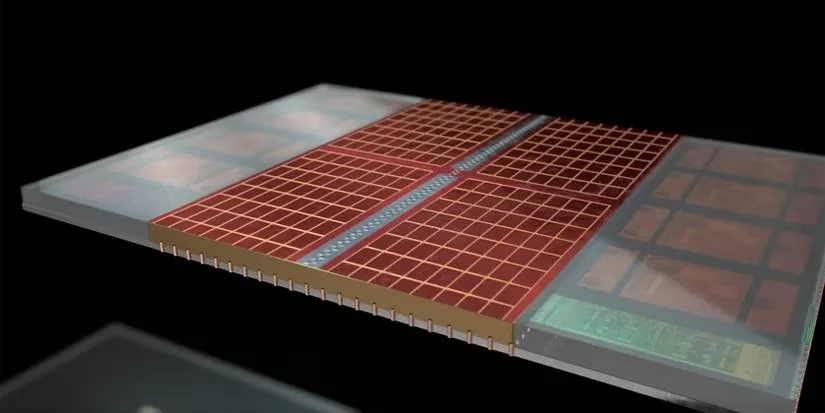
AMD's 3D V-Cache technology adds a layer of cache directly onto the processor, giving the chip a larger and faster pool of on-die memory. I think of it as installing a private pantry beside the kitchen island: the chef barely has to move. Instead of waiting for data to arrive from slower system RAM, the processor grabs instructions from this expanded L3 cache almost instantly. It is a small but dramatic shift in how a CPU handles gaming workloads.
That boost was so significant that the previous-generation Ryzen 7 5800X3D could still trade blows with newer non-X3D Ryzen 7000 chips. But AMD decided not to release just one X3D part this time. Instead, I had three options: the Ryzen 7 7800X3D, the Ryzen 9 7900X3D, and the Ryzen 9 7950X3D. The real question was never hardware power in isolation, but which one made sense for the way I actually use my PC.
The Three-Way Split
Looking at the broad technical picture, the Ryzen 9 7950X3D is the core-count king. The Ryzen 7 7800X3D is the lean gaming specialist. The Ryzen 9 7900X3D sits between them, though it carries a strange distinction: its base clock is listed higher than the 7950X3D. On paper, that looks like an advantage, but real-world behavior tells a more nuanced story.
My testing echoes what I saw from outlets like Gamer Nexus and Linus Tech Tips. Their test systems paired these chips with an NVIDIA GeForce RTX 4090 and fast DDR5-6000 memory, which is exactly the kind of setup where CPU differences become visible. In gaming workloads, the Ryzen 7 7800X3D consistently outperformed both Ryzen 9 X3D parts. That outcome seems counterintuitive until you understand how the Ryzen 9 chips are built.
The Dual CCD Quirk
The Ryzen 9 7950X3D and Ryzen 9 7900X3D use a dual-core complex die, or dual CCD, architecture. Only one of those CCDs is equipped with 3D V-Cache technology. AMD did this to keep costs manageable, but it also created a fascinating behavioral quirk. The V-Cache CCD has to run at lower clock speeds for stability, while the other CCD prefers higher clocks over a larger L3 cache. During gaming, the operating system tries to park the non-V-Cache cores to avoid latency. If it fails to do that, data has to cross between the two CCDs. That extra hop is like asking a drummer and a bassist to trade beats through a closed door: the timing stumbles, and gaming performance dips.
For productivity tasks that do not depend on a massive L3 cache, the story flips. Rendering, compiling, video editing, and similar workloads love the additional cores and threads. There, the Ryzen 9 7950X3D shows its strength, with the 7900X3D landing in the middle of the X3D pack. I sometimes describe the Ryzen 9 X3D architecture as a runner with one leg in a racing spike and one leg in a hiking boot. It can still move quickly, but only when the course matches the shoe.
Price, Performance, and Value
At the original comparison point, the pricing was revealing. The Ryzen 9 7950X3D sat at $699.00, the Ryzen 9 7900X3D appeared at $580.92 after a modest three percent drop, and the Ryzen 7 7800X3D held at $449.00. Even as street prices soften in 2026, I still use those original numbers as a value map.
| Processor | Original Comparison Price | Notes |
|---|---|---|
| AMD Ryzen 9 7950X3D | $699.00 | At MSRP |
| AMD Ryzen 9 7900X3D | $580.92 | Down about 3% from MSRP |
| AMD Ryzen 7 7800X3D | $449.00 | At MSRP |
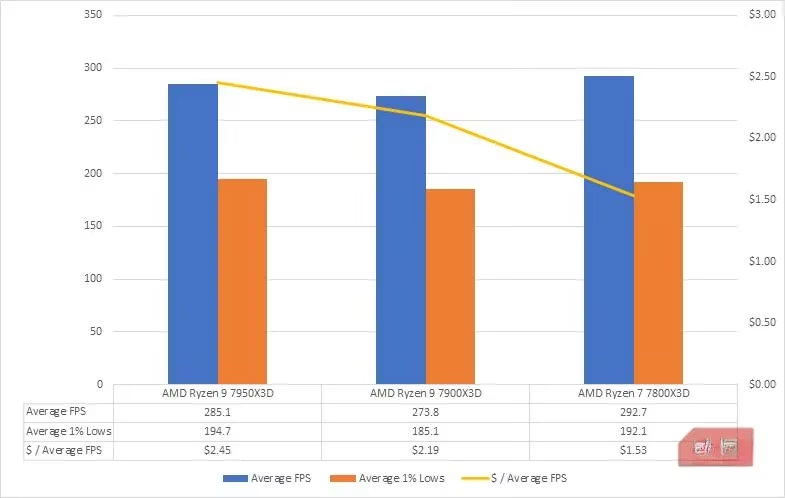
When I compare gaming value by dollars per frame, the Ryzen 7 7800X3D is the clear winner. In my result set, it reached an average of 292.7 FPS, which worked out to a little over $1.53 for every frame it delivered. That combination of lower price and higher gaming performance is hard to ignore.
Which One Should You Buy?
Choosing between these chips is like choosing between a scalpel and a Swiss Army knife. If you are building a PC solely for gaming, the Ryzen 7 7800X3D is the sharp and focused choice. It delivers the best average frame rates in games, costs less, and avoids the dual CCD scheduling headaches entirely.
But if your days also involve video editing, programming, 3D rendering, or other heavily threaded work, the Ryzen 9 7950X3D lets you have both worlds in one socket. It is not the top gaming X3D chip, but it is the most complete processor of the three. If its price feels like a bridge too far, the Ryzen 9 7900X3D offers a practical middle ground, sacrificing a little gaming smoothness but retaining most of the multi-core muscle.
The Ryzen 7 5800X3D changed the conversation about what a gaming CPU could be. This next generation of X3D parts does not disrupt that idea so much as refine it. You no longer have to choose strictly between gaming and productivity. With the Ryzen 9 X3D chips, AMD built a processor family that can serve both masters, while the Ryzen 7 7800X3D remains the purest gaming value of the bunch.
Data referenced from Sensor Tower helps frame why a gaming-first CPU choice like the Ryzen 7 7800X3D can be the most sensible buy: when modern game engagement is driven by frequent updates, live-service events, and sustained playtime across big releases, smoother and more consistent frame pacing often matters more than extra multi-core headroom that sits idle during typical gaming sessions—making the 7800X3D’s cache-heavy, single-CCD design a practical match for how many players actually spend their hours.